Financing a Pilates Studio, Building a Health Club, and Modernizing a Fitness Facility in 2026
Opening, constructing, or upgrading a fitness business can require substantial capital. Entrepreneurs may need money for commercial real estate, leasehold improvements, exercise equipment, flooring, locker rooms, HVAC systems, technology, signage, professional services, marketing, and working capital. Depending on the project, owners may investigate Pilates studio financing, health club construction funding, gym facility modernization loans, gym construction financing, and fitness business lenders when determining how to pay for these investments.
The appropriate financing structure depends on the project. A boutique studio purchasing reformers has different needs from a 30,000-square-foot health club being constructed from the ground up. An established facility replacing outdated equipment presents another situation entirely. Business owners should begin with a detailed budget, obtain realistic vendor and contractor quotes, and understand how proposed payments will affect future cash flow.
GymYield.com provides educational information for gym, studio, and fitness-business owners researching potential financing solutions.
1. Financing a New Fitness or Pilates Business
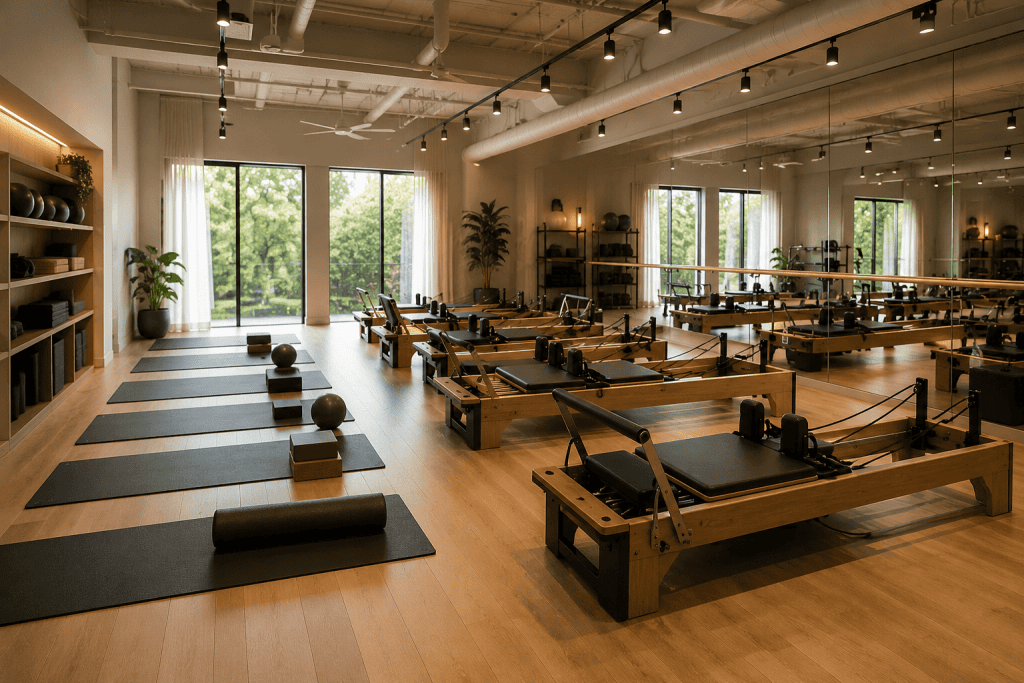
A boutique operator considering Pilates studio financing should develop a complete startup budget rather than focusing only on reformer equipment. Depending on the concept, expenses can include commercial reformers, chairs, barrels, mats, mirrors, flooring, reception furniture, signage, sound systems, software, deposits, renovations, insurance, marketing, and opening working capital.
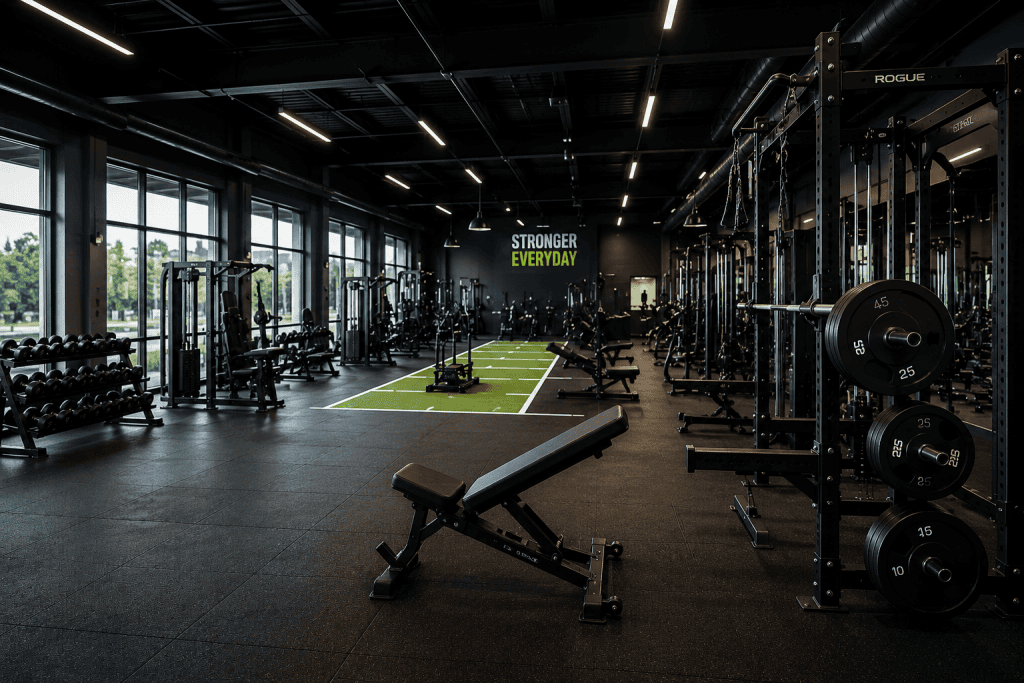
Larger projects requiring health club construction funding have considerably different cost structures. A full-service health club could require strength and cardio areas, locker rooms, showers, offices, group-exercise rooms, electrical improvements, plumbing, HVAC upgrades, and accessibility improvements.
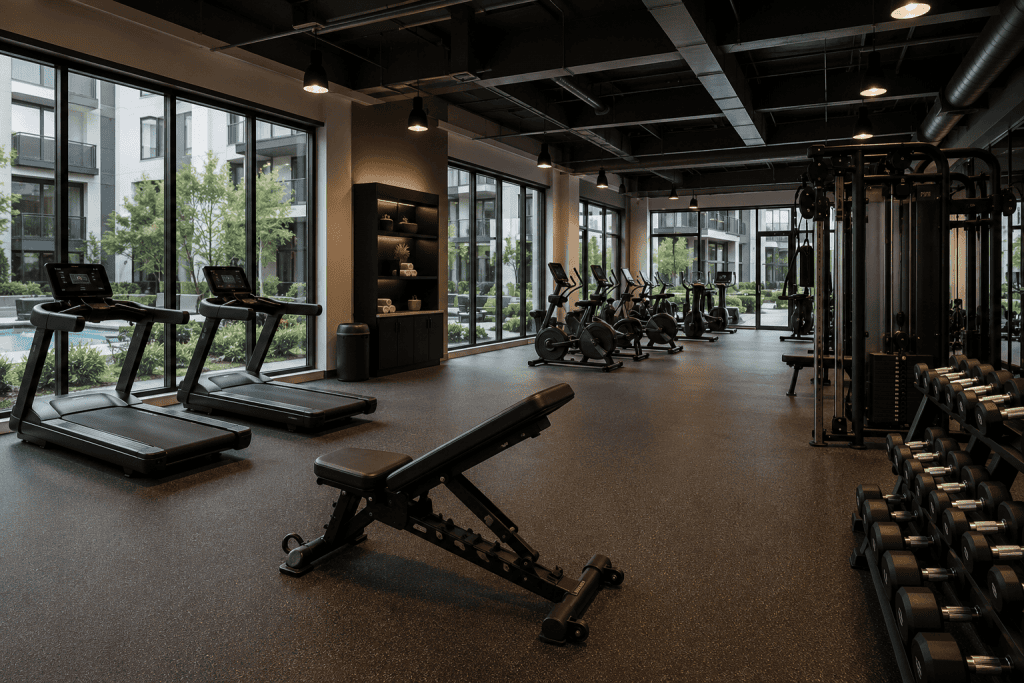
An existing operator evaluating gym facility modernization loans may already have the building and membership base but need capital to replace aging equipment or renovate outdated areas. Modernization projects can potentially be completed in stages to reduce disruption to existing members.
For a ground-up project, gym construction financing may need to address costs that ordinary equipment financing does not cover. Construction financing can involve architectural plans, permits, contractors, materials, inspections, draw schedules, and project contingencies.
When comparing fitness business lenders, owners should determine which providers actually finance the intended project type. A provider specializing in equipment transactions may not be appropriate for a major commercial construction project.
2. Developing a Realistic Project Budget
Before seeking Pilates studio financing, an entrepreneur should obtain detailed quotes for every major startup expense. If 12 commercial reformers are required, the business plan should use actual vendor pricing rather than a generic estimate found online. Delivery, installation, warranties, accessories, and maintenance should also be considered.
Applicants pursuing health club construction funding should obtain contractor estimates and understand what is and is not included. A construction quote may exclude certain equipment, furniture, technology, permits, architectural services, or contingency expenses.
Businesses using gym facility modernization loans should prioritize improvements according to need. Replacing unreliable cardio equipment may deserve greater priority than cosmetic improvements if equipment downtime is creating member complaints.
Owners pursuing gym construction financing should establish a contingency reserve. Construction costs can change because of material prices, design changes, hidden building conditions, permitting requirements, or contractor change orders.
Comparing several fitness business lenders can also reveal differences in rates, repayment periods, collateral requirements, guarantees, fees, and eligible uses. Owners should compare total repayment obligations rather than choosing financing solely because of an attractive monthly payment.
3. Understanding SBA Financing Opportunities
Entrepreneurs researching Pilates studio financing may want to investigate SBA-backed financing alongside conventional commercial products. SBA programs are delivered through participating lenders, and approval depends on applicable eligibility and underwriting requirements.
The SBA 7a loan program can support eligible business purposes that may include real estate, working capital, equipment, furniture, fixtures, and other qualifying expenses.
For substantial health club construction funding, owners can also research the SBA 504 program. It is designed for eligible major fixed assets and can potentially be used for qualifying real estate, construction, improvements, and long-term equipment.
SBA 504 loan program
An established company considering gym facility modernization loans should determine whether the project consists primarily of equipment, building improvements, technology, or a combination of expenses. That distinction can influence which financing structures deserve consideration.
With gym construction financing, borrowers should understand that the lender may require detailed construction documentation and may release funds according to project progress rather than providing all proceeds at once.
Business owners searching for fitness business lenders can also investigate SBA lender match, which provides a way for small businesses to connect with participating lenders.
4. Financing Equipment and Facility Improvements
Equipment can represent a substantial percentage of Pilates studio financing. A new studio may require multiple reformers plus towers, chairs, barrels, mats, resistance equipment, storage, reception furniture, and technology. Owners should consider equipment durability and expected useful life when choosing financing terms.
A large project using health club construction funding may involve hundreds of thousands of dollars in equipment in addition to building costs. Strength machines, cardio equipment, free weights, flooring, lockers, saunas, recovery areas, and other amenities can quickly increase the project budget.
For an existing business, gym facility modernization loans could potentially help finance eligible improvements such as new equipment, locker-room renovations, flooring, lighting, security systems, access-control technology, and upgraded training spaces, depending on the provider.
Businesses pursuing gym construction financing should separate movable equipment from permanent building improvements. Doing so can make it easier to understand whether one financing structure or several complementary products make more sense.
Different fitness business lenders can also have different requirements concerning equipment age, vendors, collateral, borrower experience, time in business, credit history, and minimum revenue. Applicants should verify requirements directly with each provider.
5. Illustrative $800,000 Fitness Facility Budget
Consider a hypothetical entrepreneur who needs Pilates studio financing for a large boutique facility. The project might include specialized equipment, construction, technology, marketing, and operating reserves rather than equipment alone.
A larger company seeking health club construction funding could have a completely different allocation, with a greater percentage devoted to structural work, locker rooms, plumbing, electrical systems, and HVAC.
An established operator using gym facility modernization loans might have little need for deposits or ground-up construction and instead devote more of the project budget to replacement equipment and renovations.
A new building using gym construction financing could have significantly higher professional, permitting, and construction expenses.
Regardless of the project, applicants comparing fitness business lenders should present a detailed uses-of-funds statement showing exactly where requested capital is expected to go.
Illustrative $800,000 Project
| Project Category | Example Amount |
|---|
| Construction and buildout | $250,000 |
| Fitness and studio equipment | $175,000 |
| Working capital reserve | $125,000 |
| Locker rooms/HVAC/electrical | $80,000 |
| Technology and access systems | $50,000 |
| Marketing and signage | $40,000 |
| Professional fees | $30,000 |
| Contingency reserve | $50,000 |
| Total | $800,000 |
Illustrative Project Graph
These numbers are illustrative examples only. They are not industry averages, recommended spending levels, or estimates for a particular facility. Actual costs depend heavily on location, square footage, equipment, property condition, contractor pricing, and the owner’s business model.
6. Modernizing an Established Fitness Facility
An established studio considering Pilates studio financing may use new capital differently from a startup. Rather than building an entire facility, management could replace older reformers, increase class capacity, renovate the reception area, add private-training rooms, or introduce additional services.
A traditional club that previously obtained health club construction funding may eventually need another round of investment as the building ages. Roofs, HVAC systems, showers, flooring, electrical components, lockers, and exercise equipment all have different replacement schedules.
That is where gym facility modernization loans may become relevant. Instead of waiting until numerous systems fail simultaneously, management can establish a long-term capital-improvement schedule and identify which projects should be completed first.
Businesses evaluating gym construction financing for a major renovation should determine whether closing portions of the facility will reduce revenue during construction. Lost revenue can be an important project cost even though it does not appear on a contractor’s invoice.
Experienced fitness business lenders may ask how the improvements are expected to affect operations. Owners should be prepared to explain whether the project increases capacity, reduces maintenance expenses, supports member retention, introduces new services, or addresses essential facility requirements.
7. Preparing a Strong Financing Application
Applicants seeking Pilates studio financing should prepare financial information before contacting providers. A startup may need a business plan, personal financial information, projections, lease information, equipment quotes, ownership details, and documentation of available owner investment.
With health club construction funding, the documentation requirements can become more extensive. Applicants may need contractor bids, construction plans, property information, permits, appraisals, project schedules, and detailed sources-and-uses statements.
Established operators applying for gym facility modernization loans may need business tax returns, profit-and-loss statements, balance sheets, bank statements, existing debt schedules, equipment quotes, and information describing the proposed improvements.
For gym construction financing, applicants should make sure the construction budget and financial projections agree. If the business plan says the project will cost $1 million but contractor estimates indicate $1.3 million, the discrepancy should be addressed before submitting an application.
When approaching fitness business lenders, accuracy matters. Inflated revenue projections or underestimated expenses can undermine the credibility of the financing request. Conservative assumptions can provide a more realistic view of the company’s ability to repay debt.
8. Comparing Financing Terms Before Signing
An entrepreneur comparing Pilates studio financing offers should examine much more than the advertised interest rate. Origination charges, documentation fees, repayment frequency, term length, collateral, personal guarantees where applicable, and prepayment provisions can affect the overall cost.
Borrowers evaluating health club construction funding should also understand how construction draws work. Ask when funds are released, what documentation is required, whether inspections are necessary, and what happens when project costs exceed the approved budget.
With gym facility modernization loans, owners should compare the financing term with the useful life of the improvement. Long-term financing for an asset that will need replacement relatively soon can create an undesirable mismatch.
For gym construction financing, calculate debt payments using conservative membership and revenue assumptions. A project that can repay its obligations only when every membership projection is achieved may expose the business to unnecessary financial pressure.
Finally, businesses comparing fitness business lenders should review several dimensions simultaneously: financing amount, rate or financing cost, fees, term, repayment schedule, collateral requirements, guarantees, funding speed, eligible uses, and total amount repaid.
The SBA business loans overview provides additional educational information about government-backed small-business financing programs.
Internal Linking Strategy for GymYield.com
On GymYield.com, this article can connect readers to your pages covering fitness equipment financing, startup funding, commercial real estate, working capital, gym expansion, business acquisitions, construction projects, and application or lender-matching resources.
Internal links should follow the reader’s likely next question. Someone opening a boutique studio can move toward equipment and startup content. An established operator can move toward renovation and expansion information. A business developing a new building can move toward commercial-property and construction-related content.
I have deliberately not invented individual GymYield.com URLs that I cannot verify. Using the actual published URLs from your site will prevent broken internal links.
Conclusion
Financing a fitness facility should begin with the project rather than the loan. Determine exactly what needs to be purchased or constructed, obtain real quotes, calculate operating reserves, and prepare conservative financial projections before deciding how much money to request.
Equipment purchases, commercial construction, renovations, real estate, and working capital have different financial characteristics. A financing structure that makes sense for long-lived building improvements may be inappropriate for short-lived technology or marketing expenses. Matching repayment terms to the purpose and useful life of the investment can create a more sustainable capital structure.
Business owners should compare multiple providers when possible and review the complete financing agreement before signing. Pay particular attention to rates, fees, repayment frequency, maturity, collateral, guarantees, prepayment conditions, and total repayment obligations.
GymYield.com can provide educational information and help fitness entrepreneurs explore potential financing providers for new studios, construction projects, facility improvements, equipment purchases, and business expansion.
Disclosure: GymYield.com is an affiliate/marketing website and is not a lender or credit decision-maker. Financing availability, approval, rates, fees, terms, and amounts depend on individual providers and applicant qualifications. This article is for informational purposes and does not constitute financial, legal, accounting, or tax advice.