Financing Martial Arts, CrossFit, Wellness, and Functional Fitness Businesses in 2026
The modern fitness industry includes far more than traditional health clubs. Martial arts schools, CrossFit facilities, wellness centers, functional training studios, and technology-driven gyms all have different equipment, real estate, staffing, and operating requirements. Entrepreneurs may investigate Martial arts studio financing, Crossfit gym financing, wellness business growth funding, gym software financing, and functional fitness studio funding when launching, modernizing, or expanding their businesses.
Financing should be matched to a clearly defined business purpose. Purchasing mats and training equipment is different from renovating a commercial building, while financing membership-management technology presents another type of investment. Owners should determine how much capital they actually require, how the proceeds will be used, and whether projected cash flow can support the resulting payments.
GymYield.com provides educational information for fitness-business owners researching potential financing options and funding providers.
1. Financing a Martial Arts Business
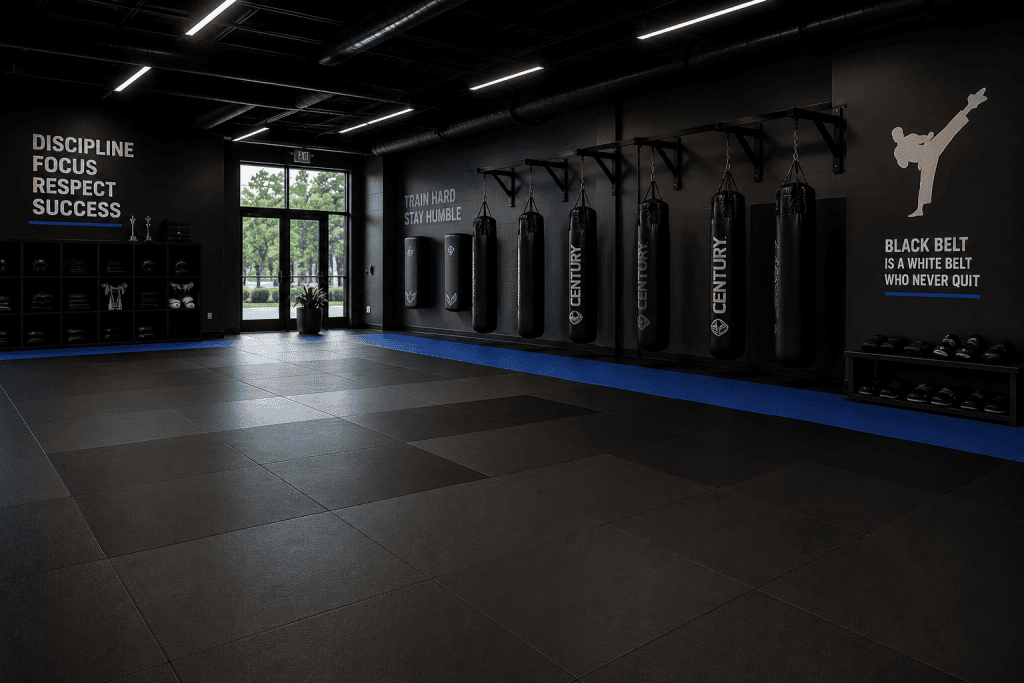
Entrepreneurs considering Martial arts studio financing should begin by developing a complete startup or expansion budget. Depending on the discipline and business model, a facility could require mats, heavy bags, wall padding, mirrors, strength equipment, lockers, changing rooms, signage, security systems, software, and leasehold improvements.
A facility seeking Crossfit gym financing may have a different equipment list. Commercial rigs, barbells, bumper plates, rowing machines, bikes, kettlebells, plyometric boxes, ropes, flooring, and open training areas can account for a substantial portion of startup costs.
Existing health-oriented businesses can use wellness business growth funding to investigate eligible expansion projects such as adding services, purchasing equipment, remodeling facilities, or increasing operational capacity.
Technology is another important expense. gym software financing could potentially help qualified businesses pay for eligible technology investments, depending on the provider and financing structure. Membership management, scheduling, billing, access control, customer relationship management, and reporting systems can all affect daily operations.
Meanwhile, functional fitness studio funding may help qualified entrepreneurs address the specialized requirements of facilities built around strength, mobility, conditioning, and group training.
2. Creating a Complete Startup Budget
A business applying for Martial arts studio financing should avoid budgeting only for visible equipment. Rent deposits, permits, insurance, marketing, professional services, utilities, opening payroll, and working capital can be just as important as training equipment.
Owners pursuing Crossfit gym financing should also consider the physical requirements of the property. Ceiling height, floor strength, noise, parking, ventilation, bathrooms, showers, and outdoor training access can influence whether a location works for the concept.
For an established company, wellness business growth funding should have a clearly defined purpose. Owners should identify whether additional capital is expected to increase capacity, introduce a new revenue stream, renovate the property, or provide appropriate operating liquidity.
When evaluating gym software financing, include implementation expenses in addition to the advertised software cost. Data migration, hardware, employee training, integrations, access-control devices, and ongoing subscriptions can increase the overall technology budget.
Businesses pursuing functional fitness studio funding should also maintain a contingency reserve. Equipment prices, construction changes, and slower-than-expected membership growth can increase the amount of cash required before the operation becomes self-sustaining.
3. Exploring SBA Financing Programs
Entrepreneurs investigating Martial arts studio financing may want to compare conventional commercial financing with SBA-backed programs. SBA loans are provided through participating lenders and remain subject to eligibility and underwriting requirements.
The SBA 7a lender program can support eligible business purposes including working capital, equipment, furniture, fixtures, real estate, and certain other costs.
Applicants researching Crossfit gym financing may therefore want to discuss SBA options with participating lenders in addition to evaluating conventional term loans or equipment financing.
Businesses seeking wellness business growth funding can also review SBA lender match to learn about connecting with lenders participating in SBA programs.
Applicants interested in gym software financing should verify that their intended software and technology expenses qualify under the particular financing product being considered. Eligibility can differ by provider and program.
Large projects involving functional fitness studio funding and owner-occupied real estate may also warrant researching the SBA 504 loan program, which focuses on qualifying major fixed assets.
4. Equipment Financing and Facility Improvements
For many schools, Martial arts studio financing is closely connected with facility improvements. Specialized flooring and wall padding can be fundamental to operations, while bags, training pads, lockers, storage, and strength equipment may represent additional expenses.
A company evaluating Crossfit gym financing should create a detailed equipment inventory before applying. Separating essential opening equipment from purchases that can wait can reduce unnecessary borrowing.
Businesses using wellness business growth funding should take the same approach. A wellness center might want to purchase multiple new technologies simultaneously, but management should prioritize investments according to customer demand and expected business value.
With gym software financing, owners should investigate the total cost of ownership. Subscription charges, payment-processing arrangements, hardware replacement, customer support, integrations, cybersecurity, and future upgrades can matter as much as initial implementation costs.
Facilities seeking functional fitness studio funding should consider equipment durability. Commercial racks, benches, bars, plates, flooring, sleds, and conditioning equipment may receive intensive daily use, making quality and maintenance important purchasing considerations.
5. Growing Beyond the First Location
A successful business using Martial arts studio financing for expansion should evaluate whether its original location has repeatable operating systems. Instructor training, class scheduling, sales procedures, billing, customer service, and marketing should not depend entirely on the owner.
The same issue arises when Crossfit gym financing is used to support a larger location or expansion. More square footage can accommodate additional members, but it can also increase rent, utilities, cleaning, staffing, insurance, and maintenance expenses.
For established operators, wellness business growth funding may potentially support carefully planned expansion when there is measurable demand. Owners should distinguish genuine capacity constraints from optimistic assumptions about future customers.
Technology can become particularly important as a company grows. gym software financing may help qualified operators invest in systems that centralize memberships, scheduling, billing, employee permissions, reporting, and communications across an expanding business.
Likewise, functional fitness studio funding can potentially support expansion when an operator has demonstrated demand and has realistic projections for the additional facility or training capacity.
6. Illustrative $600,000 Fitness Project
Consider a hypothetical business developing a $600,000 facility. An owner using Martial arts studio financing might allocate more capital toward flooring, buildout, and specialized training areas, while another facility could prioritize strength equipment.
A project supported through Crossfit gym financing might dedicate a larger percentage to racks, free weights, conditioning equipment, and an open training floor.
An established company using wellness business growth funding could direct more of its budget toward facility improvements and new services.
Technology purchased through gym software financing might represent a relatively small percentage of total startup costs but still play an important role in membership management and operations.
A business pursuing functional fitness studio funding could combine equipment, construction, technology, marketing, and working capital into a broader capital plan.
Illustrative $600,000 fitness facility budget
Example capital allocation for a hypothetical training facility.
These figures are illustrative rather than industry averages or recommendations. Actual expenses should be based on contractor estimates, vendor quotes, lease information, professional fees, and realistic operating projections.
7. The Importance of Working Capital
Applicants pursuing Martial arts studio financing should avoid using every available dollar on construction and equipment. The business still needs money after opening to pay rent, employees, utilities, insurance, marketing, and other operating expenses.
The same principle applies to Crossfit gym financing. A facility filled with excellent equipment can still encounter cash-flow problems if membership grows more slowly than projected.
For established operators, wellness business growth funding should ideally strengthen the business rather than repeatedly compensate for structural operating losses. Owners should understand why additional capital is needed and what is expected to change after the investment.
When using gym software financing, calculate recurring technology costs alongside financing payments. A system that requires significant monthly subscription and processing expenses can affect the facility’s operating budget long after implementation.
Businesses considering functional fitness studio funding can create multiple revenue scenarios. Modeling slower membership growth can help determine whether proposed debt remains manageable under less favorable conditions.
8. Evaluating Revenue and Break-Even Performance
Before accepting Martial arts studio financing, owners should estimate the number of active students needed to cover monthly expenses. Tuition levels, class schedules, instructor compensation, rent, insurance, marketing, utilities, and financing payments all contribute to break-even calculations.
Applicants seeking Crossfit gym financing can perform a similar analysis based on membership tiers, personal training, specialty programs, and other legitimate revenue streams.
For companies considering wellness business growth funding, historical operating data can provide a stronger basis for projections. Management can examine customer retention, service utilization, margins, acquisition costs, and seasonal patterns before deciding whether expansion is justified.
Investments supported by gym software financing should also have defined objectives. Better technology may reduce administrative work, simplify billing, improve reporting, support customer retention, or enable more efficient operations, but owners should establish what success looks like before investing.
With functional fitness studio funding, owners should calculate the maximum realistic capacity of the facility. Class size, available floor space, coach-to-member ratios, schedule utilization, and membership pricing can place practical limits on revenue.
9. Comparing Financing Offers
Business owners evaluating Martial arts studio financing should compare rates or financing costs, origination fees, repayment frequency, term length, collateral requirements, guarantees where applicable, and total repayment amounts.
When comparing Crossfit gym financing, borrowers should also consider whether repayment terms match the expected useful life of the assets being purchased. Long-lived equipment may justify a different financing structure from short-term marketing expenses.
Applicants researching wellness business growth funding should compare several providers when possible. An offer with a lower payment is not necessarily less expensive if it has a much longer repayment period or additional fees.
For gym software financing, borrowers should be particularly careful about financing technology over a period that extends well beyond its useful life. Software systems can change rapidly, and subscription-based products may create ongoing expenses even after financing has been repaid.
Similarly, owners comparing functional fitness studio funding should understand whether there are restrictions on how proceeds can be used. Never assume that approval for a particular amount means every planned expense is eligible.
The SBA business loans overview provides additional information about government-backed small-business financing.
10. Building a Sustainable Fitness Business
The goal of Martial arts studio financing should not simply be obtaining the largest possible approval. Financing should support a business plan that can reasonably produce enough cash flow to operate successfully and repay its obligations.
Likewise, Crossfit gym financing should be based on realistic membership demand, equipment needs, property costs, and staffing requirements rather than an unnecessarily large facility.
Businesses considering wellness business growth funding should identify measurable reasons for expansion. Greater customer capacity, additional services, stronger retention, improved operational efficiency, or entry into a demonstrated market can provide clearer objectives for invested capital.
With gym software financing, technology should support the operation instead of making it unnecessarily complicated. Owners should prioritize systems that solve specific problems and integrate effectively with existing processes.
Finally, functional fitness studio funding should support a balanced capital structure that accounts for construction, equipment, technology, marketing, and sufficient operating reserves.
Internal Linking Opportunities for GymYield.com
On GymYield.com, connect this article to relevant pages covering gym startup loans, fitness equipment financing, working capital, facility expansion, commercial real estate, technology upgrades, gym acquisitions, and construction financing.
A martial arts operator can be directed toward startup and equipment content, while an established wellness business can move toward expansion and working-capital resources. Owners focused on technology can be sent toward software and access-control content, and functional-training operators can move toward equipment and facility-development pages.
I have not invented individual internal URLs that I cannot verify. Using your actual published GymYield.com page URLs will avoid creating broken internal links.
Conclusion
Martial arts schools, CrossFit facilities, wellness businesses, and functional-training studios have different operating models, but all require careful capital planning. Owners should calculate the complete project cost rather than focusing exclusively on equipment or construction.
Before applying, obtain vendor quotes, contractor estimates, lease information, software pricing, and realistic operating projections. Maintain sufficient reserves for the period after opening or expansion, and model what happens if membership or revenue develops more slowly than anticipated.
Business owners should compare financing providers carefully and evaluate rates, fees, repayment frequency, term length, collateral, guarantees, eligible uses, and total repayment costs. For larger transactions, professional legal, accounting, or financial advice may also be appropriate.
GymYield.com can provide educational information and help fitness entrepreneurs explore potential financing providers for startups, equipment, technology, expansion, and facility improvements.
Disclosure: GymYield.com is an affiliate/marketing website and is not a lender or credit decision-maker. Financing availability, approval, rates, fees, terms, and amounts depend on individual financing providers and applicant qualifications. This article is informational and does not constitute financial, legal, accounting, or tax advice.