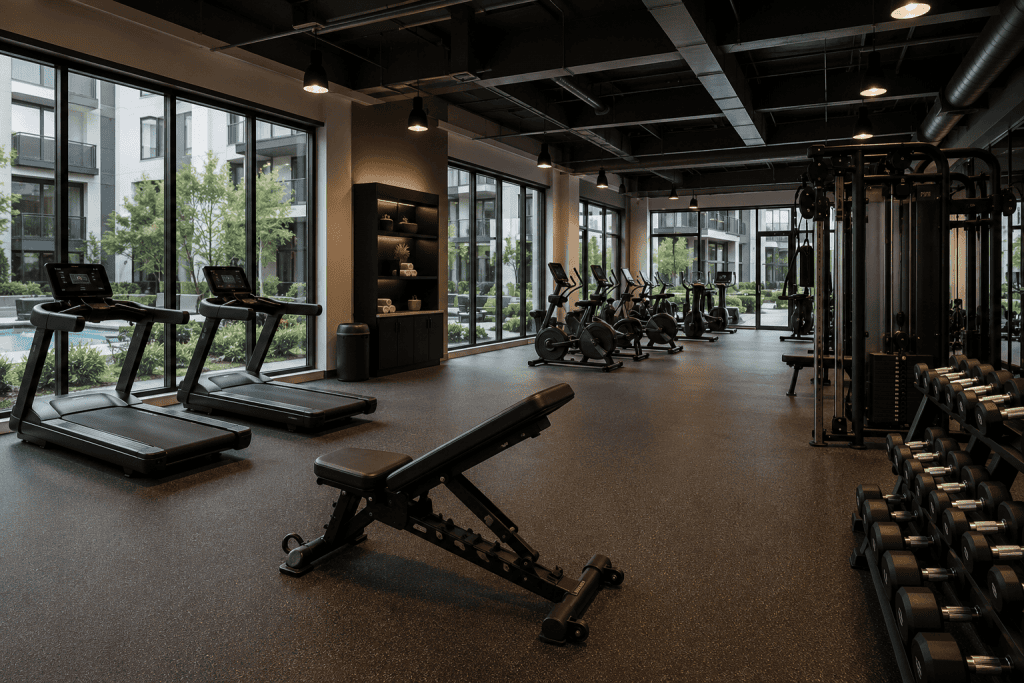
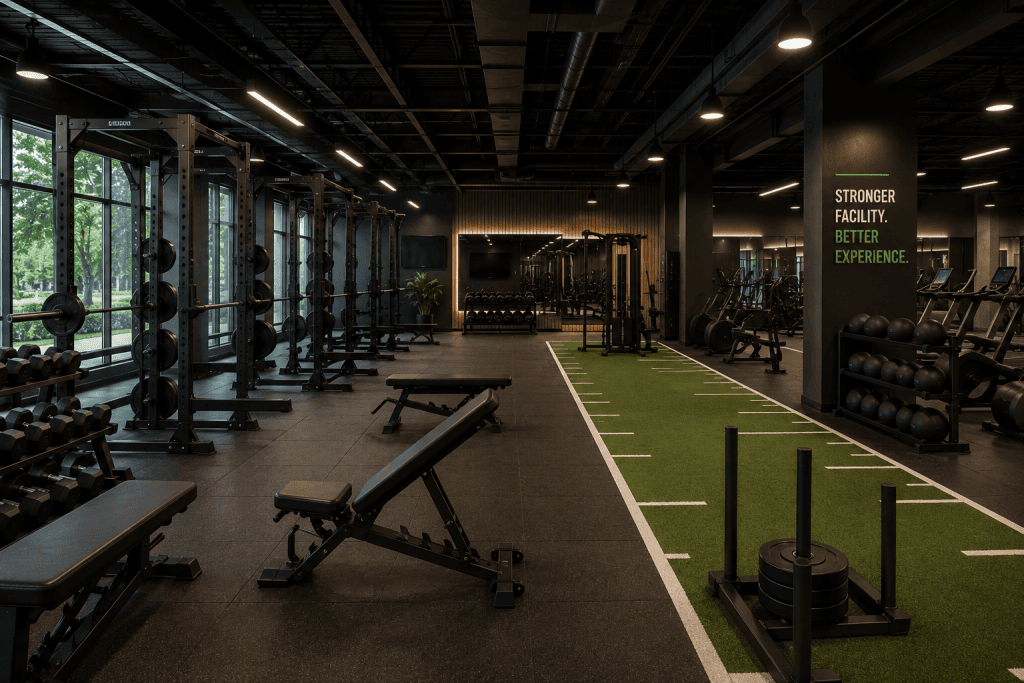
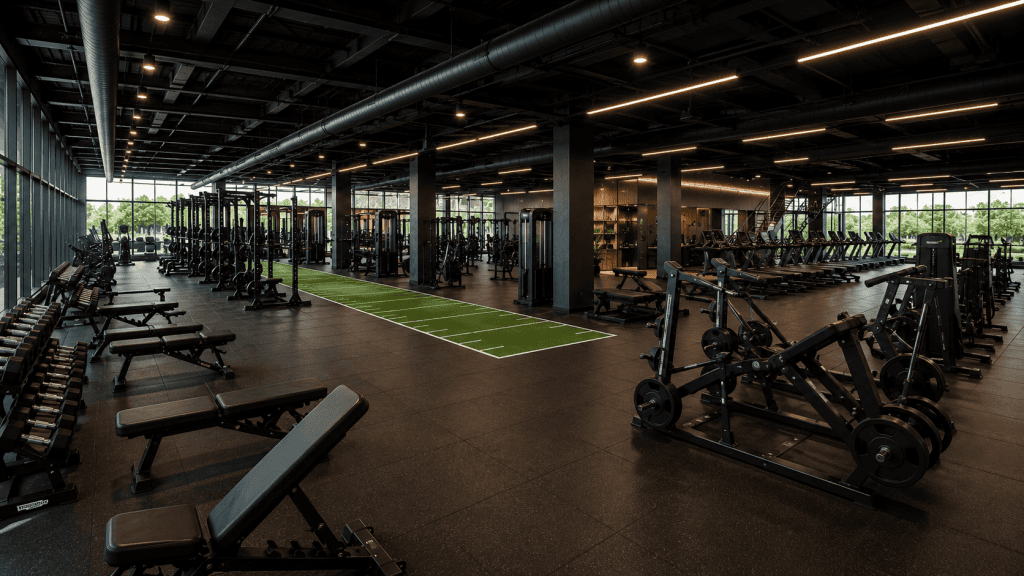
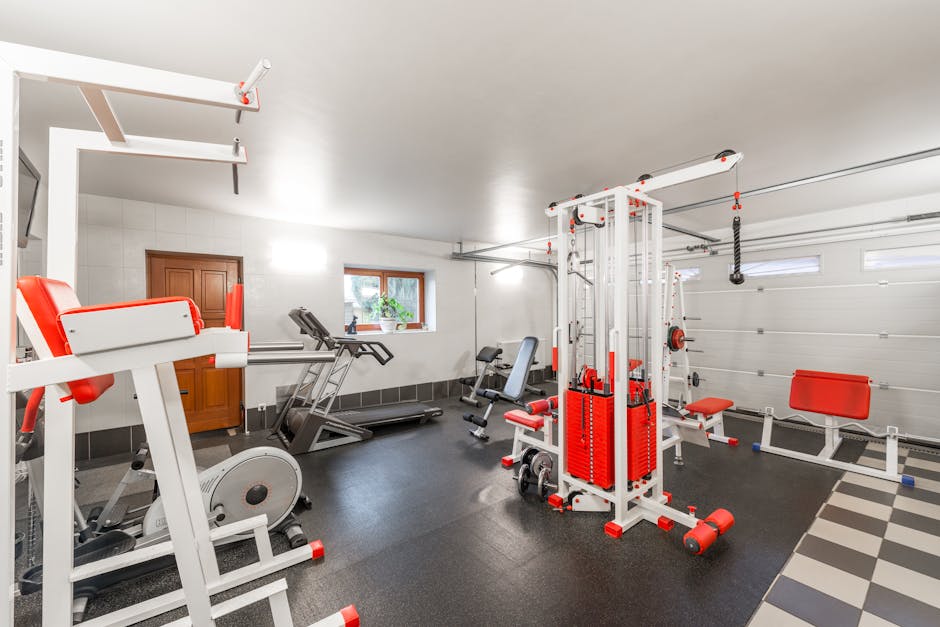
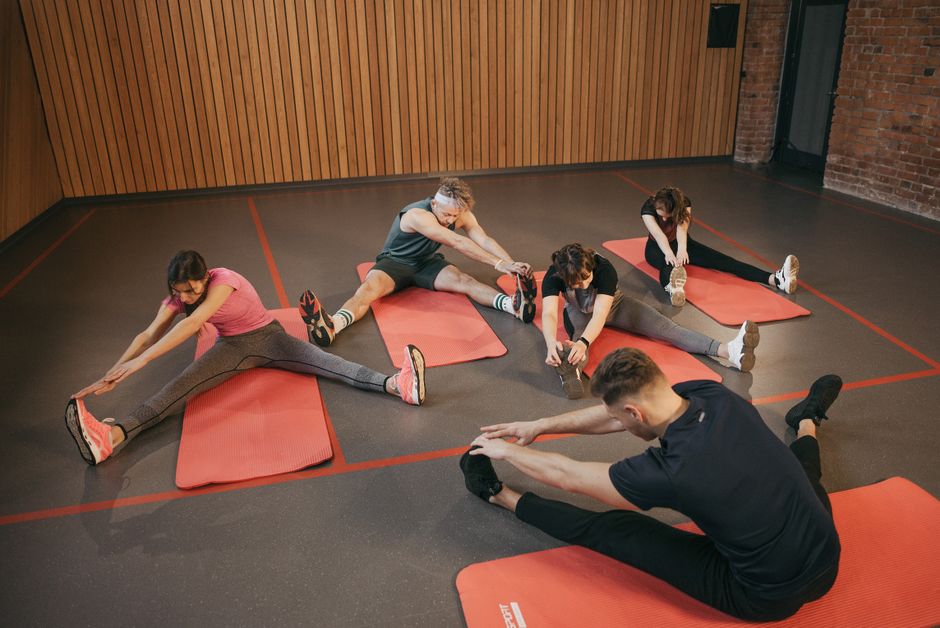
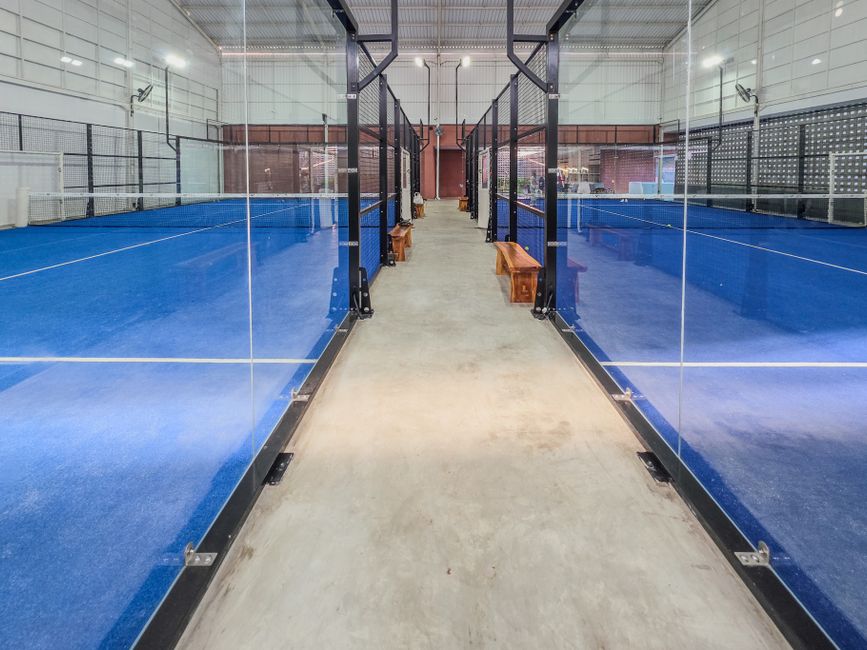
Whether you’re opening a new gym, expanding your facility, upgrading equipment, or renovating your space, we help you secure the financing you need to grow your fitness business with confidence.
Whether you’re opening your first facility or expanding an established business, Boxing gym financing, fitness business acquisition loans, fitness center startup loans, health club start funding, and gym facility construction loans can help cover equipment purchases, property improvements, working capital, and new construction costs.
From purchasing an existing gym to building a state-of-the-art training center, comparing Boxing gym financing, fitness business acquisition loans, fitness center startup loans, health club start funding, and gym facility construction loans can help fitness entrepreneurs secure funding that aligns with their long-term business goals.
Equipment Financing
Get the equipment you need without large upfront costs.
Startup Funding
Secure capital to launch your dream fitness facility.
Expansion Loans
Expand your business and reach more members.
Industry Expertise
Specialized financing solutions tailored for fitness businesses.
Competitive Rates
Access financing options from trusted lending partners.
Flexible Terms
Solutions tailored to your business goals and budget.
Nationwide Coverage
Supporting fitness businesses throughout the United States.
Affiliate Disclosure: We are an affiliate marketing website and may receive compensation from lending partners. We are not a lender, do not make credit decisions, and do not guarantee approval. Loan terms and rates are determined by individual lenders.
WHAT CAN YOU FINANCE?
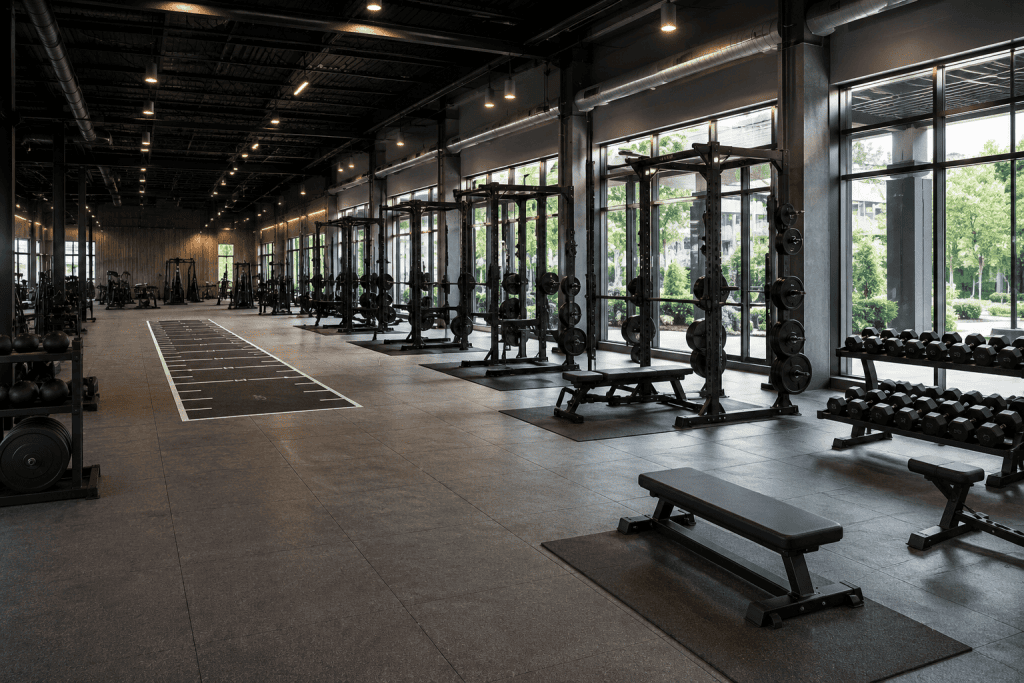
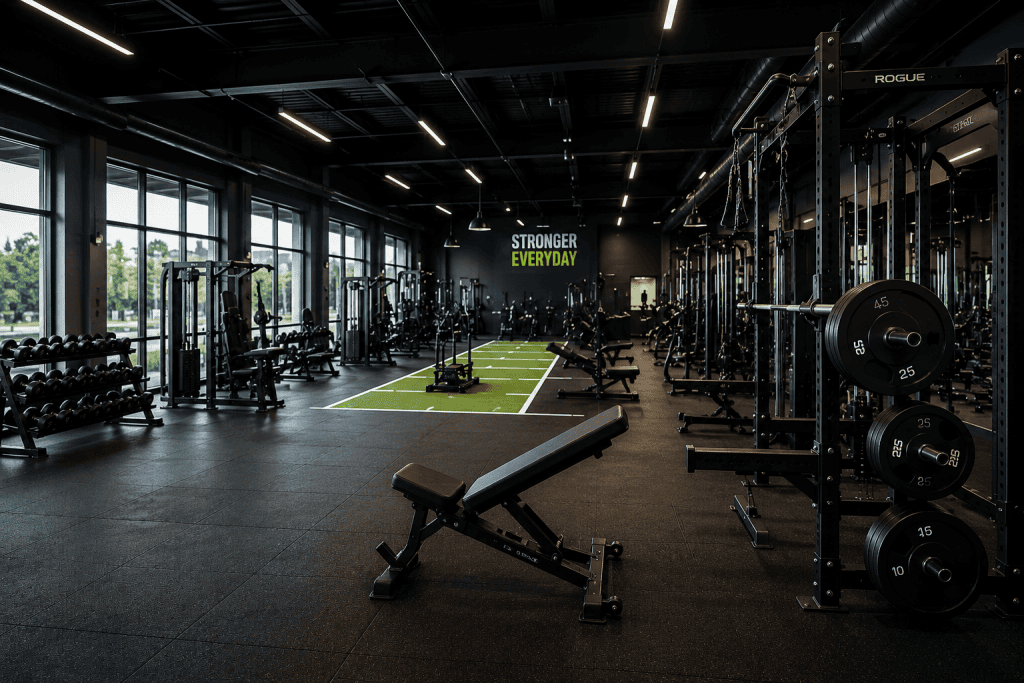
Commercial Gyms
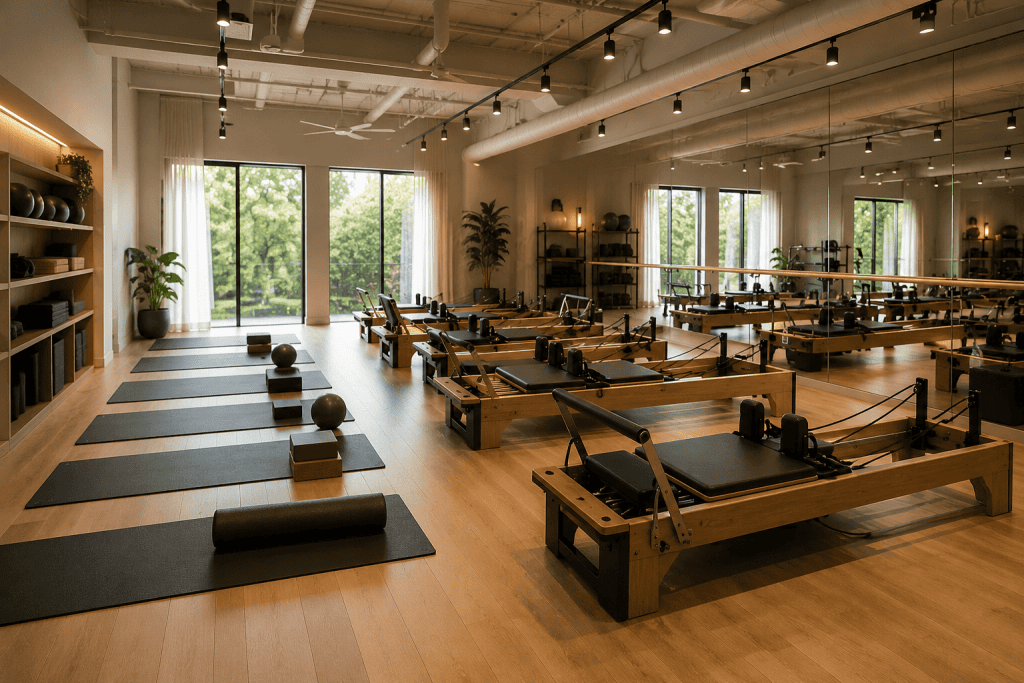
Pilates & Yoga Studios
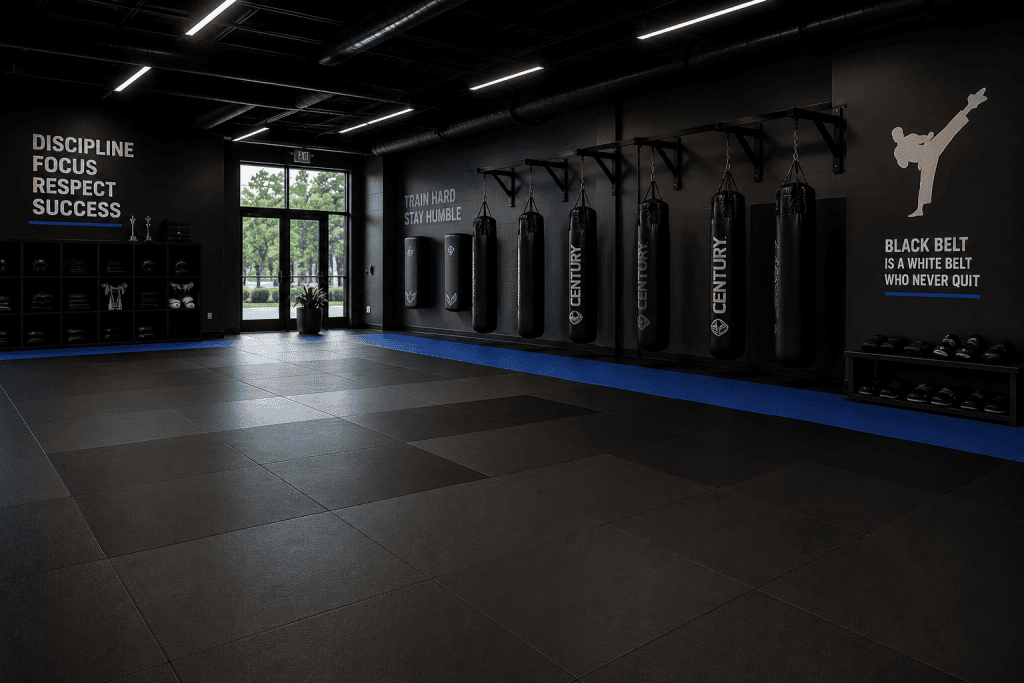
Martial Arts Schools
Hotel Fitness Centers
Facility Build-Outs
Equipment Purchases
Renovations & Upgrades
Business Expansion
Business Expansion
How it works
1
Apply
Complete a short financing application.
2
Get Matched
We connect you with the right lending options.
3
Receive Funding
Get the capital you need to bring your plans to life.
4
Grow Your Business
Launch, expand, and take your business to the next level.
FINANCING SOLUTIONS
Startup Financing
Funding designed for entrepreneurs entering the fitness industry.
Equipment Financing
Purchase equipment while preserving working capital.
Expansion Loans
Support growth initiatives and new facility locations.
Working Capital
Maintain healthy cash flow and day-to-day operations.
Whether you’re opening your first training facility or purchasing an established business, Boxing gym financing, fitness business acquisition loans, fitness center startup loans, health club start funding, and gym facility construction loans can help provide funding for equipment, renovations, and operating expenses.
Entrepreneurs can use Boxing gym financing, fitness business acquisition loans, fitness center startup loans, health club start funding, and gym facility construction loans to build modern training spaces, purchase commercial fitness equipment, and create a welcoming environment for members.
By comparing options for Boxing gym financing, fitness business acquisition loans, fitness center startup loans, health club start funding, and gym facility construction loans, fitness business owners can choose financing solutions that support long-term growth and sustainable success.
Ready to Fund Your Next Fitness Project?
Whether you’re launching a new venture, upgrading equipment, or expanding operations, we’re here to help you find the right financing solution.
Financing a Gym Business: Startup, Acquisition, Construction, and Expansion Options in 2026
Starting or expanding a fitness business can require a significant amount of capital. Owners may need money for real estate, leasehold improvements, exercise equipment, flooring, locker rooms, technology, marketing, payroll, and working capital. Depending on the project, entrepreneurs may explore Boxing gym financing, fitness business acquisition loans, fitness center startup loans, health club startup funding, and gym facility construction loans to help turn a business plan into an operating facility.
Financing is not one-size-fits-all. A first-time owner opening a 4,000-square-foot training facility has different financial needs from an established operator purchasing a profitable 20,000-square-foot health club. Understanding how the money will be used, how much the business can reasonably repay, and which financing structure fits the project is essential before submitting an application.
Gym Yield can serve as a starting point for fitness entrepreneurs researching financing solutions for their businesses.
1. Matching Financing to the Type of Fitness Business
The first step is defining exactly what you are financing. Boxing gym financing might be used for heavy bags, boxing rings, flooring, strength equipment, buildout expenses, signage, or working capital. A boxing facility may have relatively modest cardio-equipment requirements but significant expenses associated with specialized training areas and commercial construction.
Purchasing an existing facility creates a different financing situation. Fitness business acquisition loans may potentially finance an ownership transition when an entrepreneur purchases an established gym, studio, training facility, or other eligible fitness operation. The buyer should understand exactly what is included in the sale, such as equipment, memberships, intellectual property, furniture, lease rights, and other business assets.
Entrepreneurs building businesses from the ground up may investigate fitness center startup loans. Startup borrowers should be prepared to explain their business concept, projected membership, pricing, competition, operating expenses, and management experience.
Similarly, health club startup funding may be needed for a larger facility offering cardio equipment, weights, group exercise, locker rooms, showers, childcare, recovery services, or other amenities.
Projects involving a new building or extensive property improvements may require gym facility construction loans rather than a simple equipment loan. Construction projects can involve land, architectural plans, contractors, permits, utilities, parking, and substantial contingency reserves.
2. Creating a Realistic Startup Budget
A financing plan should begin with a detailed budget. Entrepreneurs seeking Boxing gym financing should obtain actual quotes for rings, heavy bags, mounting systems, mats, gloves, strength equipment, lockers, showers, flooring, and other necessary improvements instead of relying entirely on rough estimates.
For acquisitions, buyers evaluating fitness business acquisition loans should look beyond the asking price. Professional fees, equipment replacement, marketing, working capital, deposits, renovations, and post-acquisition improvements can increase the total capital requirement.
Applicants researching fitness center startup loans should also account for expenses incurred before opening day. Rent may begin before the business generates membership revenue. Insurance, licenses, software, utilities, marketing, employee training, and deposits can all consume capital.
The same principle applies to health club startup funding. A larger facility can require considerably more working capital because payroll, utilities, rent, maintenance, and insurance expenses may be substantial before membership reaches its projected level.
With gym facility construction loans, owners should build contingencies into their budgets. Construction costs can change because of material prices, site conditions, design modifications, permitting requirements, and contractor change orders.
3. Startup Versus Acquisition Financing
Entrepreneurs sometimes assume that starting a gym will automatically be less expensive than purchasing one. That is not necessarily the case. A startup using Boxing gym financing may have complete freedom over branding and layout, but the owner must develop a customer base from zero.
An acquisition can provide an established membership base and operating history. Applicants considering fitness business acquisition loans should carefully review financial statements, tax returns, membership trends, equipment condition, lease terms, employee expenses, and customer retention.
The SBA currently states that its 7(a) program can support eligible changes of ownership as well as real estate, working capital, machinery, equipment, furniture, fixtures, and other qualifying business purposes.
SBA 7a loan program
For a brand-new business, fitness center startup loans may require owners to demonstrate the viability of projections without years of operating history. Personal financial strength, relevant experience, owner investment, creditworthiness, collateral where required, and a well-supported business plan can become particularly important.
Entrepreneurs comparing health club startup funding should therefore evaluate startup costs against acquisition costs rather than assuming one approach is always cheaper.
Meanwhile, gym facility construction loans may be appropriate when neither leasing an existing space nor purchasing an existing operation satisfies the business plan.
4. Understanding Real Estate and Construction Costs
Real estate can transform a relatively straightforward gym opening into a multimillion-dollar project. Even a specialized facility using Boxing gym financing may need substantial modifications for bathrooms, showers, HVAC, electrical systems, fire protection, flooring, accessibility, and parking.
An acquisition financed through fitness business acquisition loans can sometimes include real estate, although transactions vary considerably. Buyers should determine whether they are purchasing only the operating company, purchasing the building separately, or assuming a commercial lease.
With fitness center startup loans, leasing can reduce the upfront cost of purchasing property, but significant leasehold improvements may still be required. Owners should understand who owns improvements at the end of the lease and whether the lease term supports the proposed financing period.
For larger facilities, health club startup funding may need to cover extensive buildouts involving locker rooms, showers, saunas, studios, pools, recovery areas, offices, and retail sections.
Owners investigating gym facility construction loans should also review the SBA 504 program when appropriate. The SBA states that 504 financing can be used for qualifying major fixed assets, including purchasing, constructing, or renovating buildings and acquiring certain long-term machinery and equipment.
SBA 504 loan program
5. Equipment and Working Capital Requirements
Equipment is often one of the most visible expenses in a gym, but it is not the only expense. An owner obtaining Boxing gym financing should avoid spending the entire available budget on bags, rings, weights, and training equipment while leaving insufficient cash for payroll and marketing.
Similarly, fitness business acquisition loans should be evaluated alongside the working capital required after closing. An acquired gym may need immediate equipment repairs, new advertising, employee changes, software upgrades, or facility improvements.
For startups, fitness center startup loans may be structured differently depending on what is being financed. Some financing products focus specifically on equipment, while broader business financing may cover multiple eligible costs.
When developing a plan for health club startup funding, owners should estimate how many months it could take to reach operating break-even. Memberships generally do not appear instantly on opening day, making adequate liquidity particularly important.
Businesses considering gym facility construction loans must also remember that construction financing and operating capital are separate considerations. Completing a building does not automatically provide enough cash to operate the business during its membership-growth period.
6. Illustrative Gym Project Budget
Consider an entrepreneur developing a hypothetical $750,000 fitness project. The owner might use Boxing gym financing for specialized training areas while allocating separate funds to general exercise equipment and construction.
If purchasing an existing business instead, fitness business acquisition loans might represent the largest portion of the transaction, with additional capital reserved for improvements after closing.
A startup could use fitness center startup loans to address eligible opening expenses, while health club startup funding could potentially support a broader full-service facility depending on the lender and financing structure.
A construction-heavy project could place more emphasis on gym facility construction loans, particularly when a new building or major renovation is involved.
Illustrative $750,000 Fitness Facility Budget
Illustrative fitness facility budget
Example allocation for a hypothetical $750,000 project. These figures are illustrative, not typical or guaranteed costs.
$0$75K$150K$225K$300KConstruction and…Fitness equipmentWorking capitalLease and depositsTechnology and se…Marketing and sig…Professional and…
Actual project costs vary by location, facility size, equipment, contractor, and business model.
This graph is an example rather than a representation of average industry costs. Owners should replace these figures with contractor bids, equipment quotes, lease information, and financial projections specific to their projects.
7. What Lenders May Evaluate
Applicants seeking Boxing gym financing should expect underwriting requirements to vary among lenders. Factors can include creditworthiness, available cash, existing debt, industry experience, business projections, collateral, and the ability of the proposed operation to repay its obligations.
When considering fitness business acquisition loans, historical performance can be particularly important. A buyer should be prepared to explain changes in revenue, profitability, membership levels, payroll, rent, and other major expenses.
Applicants pursuing fitness center startup loans do not have the same historical business financial statements available. Consequently, a thorough business plan and realistic projections can become especially useful.
For health club startup funding, lenders may also want to understand the membership model. Owners should be able to explain membership prices, expected customer acquisition costs, cancellation assumptions, staffing levels, personal training revenue, and other major revenue sources.
Large gym facility construction loans can require considerably more documentation because lenders may need information concerning property, construction budgets, contractors, plans, permits, appraisals, and project timelines.
The SBA explains that eligibility requirements vary by program and lender, with repayment ability and a sound business purpose among the general considerations.
8. Comparing Financing Offers Carefully
A business owner evaluating Boxing gym financing should compare more than the monthly payment. Interest rates, financing charges, origination fees, collateral requirements, guarantees, repayment frequency, term length, and prepayment provisions can materially change the cost of borrowing.
The same applies to fitness business acquisition loans. Buyers should calculate whether projected cash flow leaves sufficient room for debt payments after payroll, rent, utilities, insurance, equipment maintenance, marketing, taxes, and other expenses.
With fitness center startup loans, optimistic membership projections can be dangerous. A stronger approach is to model several scenarios, including slower-than-expected enrollment.
Owners seeking health club startup funding can perform a similar stress test. What happens if membership reaches only 70% or 80% of the original projection during the first year? Understanding that scenario before borrowing can expose weaknesses in the business plan.
For gym facility construction loans, owners should pay special attention to project overruns. A facility that costs significantly more to complete than expected can create financial pressure before the doors even open.
For additional financing education, business owners can review the SBA’s overview of government-backed small-business lending programs.
9. Building a Sustainable Fitness Business
Financing should support a viable business rather than substitute for one. Entrepreneurs considering Boxing gym financing should first determine how many members, classes, personal-training sessions, or other services are necessary to cover operating expenses and debt payments.
A buyer evaluating fitness business acquisition loans should independently verify the economics of the target company rather than relying solely on the seller’s asking price or projections. Professional accounting, legal, and financial advice may be appropriate for a significant acquisition.
Likewise, borrowers considering fitness center startup loans should develop conservative revenue forecasts and adequate reserves. The objective is not simply to obtain approval; it is to obtain an amount the business can realistically manage.
The same discipline should guide health club startup funding. A large facility with expensive amenities can attract customers, but every additional feature may increase construction costs, maintenance expenses, utilities, staffing, and financing requirements.
Finally, businesses exploring gym facility construction loans should coordinate financing decisions with the project’s contractor, architect, landlord or property seller, insurance professionals, and financial advisers where appropriate. A well-planned facility combines the right building, equipment, capital structure, and operating model.
Internal Linking Strategy for GymYield.com
Throughout this article, you can link readers back to Gym Yield and to relevant pages on your site covering gym startup financing, equipment financing, fitness-center acquisitions, commercial real estate, working capital, and fitness-business expansion. I have not invented page URLs that I could not verify; once those individual pages are published, their exact URLs can replace the suggested internal-link locations.
A strong internal-link structure can move visitors from educational articles to more specific financing topics and ultimately to your funding or lender-matching pages. Use descriptive anchor text that accurately explains the destination rather than filling the article with repetitive links.
Conclusion
Opening, purchasing, or constructing a gym requires more than choosing exercise equipment. Owners need to understand acquisition costs, construction expenses, working capital, projected membership, staffing, marketing, and long-term repayment obligations before committing to financing.
For eligible small businesses, SBA-backed programs are among the options worth researching. The SBA’s 7(a) program can support uses that include changes of ownership, real estate, working capital, and equipment, while the 504 program focuses on qualifying major fixed assets such as buildings and long-term equipment.
GymYield.com can help fitness entrepreneurs research financing possibilities for new facilities, acquisitions, equipment purchases, expansions, and construction projects. Applicants should compare offers carefully and understand rates, fees, terms, collateral requirements, guarantees, and total repayment obligations before accepting any financing.
Disclosure: GymYield.com is an affiliate/marketing website and is not a lender. Financing approval, rates, terms, fees, and funding amounts depend on the financing provider and applicant qualifications. This article is for informational purposes and is not financial, legal, accounting, or tax advice.
What Does PR Mean in the Gym? Your Complete Guide to Personal Records
If you’ve ever overheard someone at the squat rack say they “hit a new PR” and felt like you missed a memo, you’re not alone. PR meaning gym terminology is refreshingly straightforward: it stands for Personal Record, your absolute best performance in a specific exercise. But understanding the acronym is just the starting line. Whether you’re a new lifter trying to decode gym slang or a fitness business owner looking to build a culture where members consistently break through plateaus, this guide covers everything you need to know about setting, tracking, and improving PRs the right way.
A PR, or Personal Record, is the single best performance you have ever achieved in a given exercise under consistent, repeatable conditions. It is not a comparison to the person on the next bench. It is a benchmark measured against your past self, and that distinction matters more than most people realize.
Photo by Alesia Kozik on Pexels
The concept applies far beyond simply hoisting the heaviest barbell. A PR can be the heaviest squat you have ever completed with proper depth, the fastest mile you have ever run on a treadmill, or the first time you performed an unassisted pull-up after months of banded progressions. In strength training, the most commonly tracked PRs revolve around compound lifts: squats, deadlifts, bench press, and overhead press. In endurance-focused programming, PRs show up as faster 5K row times, more reps completed in a 20-minute AMRAP, or a longer distance covered during interval training.
What makes a PR legitimate is consistency in how you measure it. The same bar, the same range of motion, the same equipment setup. If you squat 315 pounds to parallel on a calibrated barbell one month and quarter-squat 335 on a thicker bar the next, you have not set a meaningful PR. You have changed the test. Gym owners who invest in standardized equipment and clearly marked stations give their members a reliable environment where PRs actually mean something, which builds trust and keeps people coming back.
PR vs. 1RM: What’s the Difference?
One of the most common points of confusion in gym terminology is the relationship between a PR and a 1RM. A 1RM, or one-rep max, is the heaviest weight you can lift for exactly one repetition with proper form. It is a specific type of PR, but it is not the whole picture.
Photo by Julia Larson on Pexels
Think of PR as the umbrella term and 1RM as one category beneath it. Your 1RM on the deadlift is a PR, but so is your 5-rep max, your 10-rep max, your fastest 2,000-meter row, or the first time you string together five double-unders. The 1RM designation is typically reserved for compound barbell lifts where maximum strength output is the goal. You would not typically talk about a 1RM on bicep curls or lateral raises, but you can absolutely set a PR on those movements by completing more reps at a given weight than ever before.
This distinction matters because fixating exclusively on 1RM can lead newer lifters down a risky path. Chasing a one-rep max every week is a recipe for joint stress and central nervous system fatigue. Tracking a broader range of PRs, rep-based achievements, endurance milestones, skill unlocks, gives you more opportunities to win without redlining your body every session.
Types of PRs Every Gym-Goer Should Know
Strength PRs
Strength PRs are what most people picture when they hear the term. This category includes your heaviest single repetition on a lift, your 1RM, as well as your best performance across specific rep ranges, such as a 3RM or 5RM. The big three powerlifts, squat, bench press, and deadlift, dominate this space, but overhead press, barbell rows, and weighted dips also count.
For a strength PR to be valid, the conditions need to match your previous attempts. Grip width, bar type, depth on a squat, and whether you used a belt or wrist wraps should all be noted in your training log. If you switch from a commercial gym’s thick power bar to a thinner deadlift bar and pull 20 pounds more, you have not necessarily gotten stronger. You have changed the tool. This is one reason facility owners who standardize their equipment across squat racks and platforms make it easier for members to trust their own numbers.
Endurance PRs
Endurance PRs measure how long you can sustain output or how quickly you can cover a set distance. These are the domain of runners, rowers, cyclists, and anyone doing high-intensity conditioning work. A new PR might be a 5K run completed 30 seconds faster than your previous best, a 2,000-meter row that finally dips below the seven-minute mark, or completing 12 rounds of a couplet instead of 11 in a 15-minute AMRAP.
Endurance PRs are particularly useful for athletes who do not train primarily for maximal strength. They provide the same motivational jolt and objective feedback loop that a heavier deadlift gives a powerlifter. Tracking these numbers over months reveals improvements in cardiovascular efficiency and muscular endurance that the mirror or the scale might miss entirely.
Skill-Based PRs
Skill-based PRs are often the most emotionally rewarding because they represent a binary breakthrough: you could not do the thing before, and now you can. A first unassisted pull-up, a first muscle-up, a handstand push-up without a wall, a pistol squat with full range of motion. These milestones are not about weight on the bar. They are about coordination, body control, and months of patient progression work.
For beginners especially, skill-based PRs deserve as much celebration as any strength milestone. A new member who walks into your gym unable to perform a single push-up and leaves three months later completing ten has made a dramatic improvement in relative strength and movement quality. Gym owners who publicly recognize these achievements, not just the heaviest deadlifts, create an inclusive environment where every member feels their progress matters.
Why PRs Matter for Your Fitness Journey
Chasing PRs gives your training a compass. Without specific performance targets, workouts drift into maintenance mode, and maintenance mode eventually slides into boredom. A PR gives you something concrete to work toward next Tuesday, next month, and next quarter.
The psychological benefit runs deeper than motivation. Hitting a PR delivers objective proof that your program is working. The scale might stall for three weeks. The mirror might show the same reflection. But if your squat climbed from 185 for five reps to 205 for five reps during that same period, you have undeniable evidence of progress. That evidence builds self-trust, and self-trust is what keeps people showing up when life gets busy.
For gym owners, PR tracking is a retention tool hiding in plain sight. Members who can point to specific, measurable improvements in their performance are far less likely to cancel their memberships than those who feel like they are spinning their wheels. When your facility integrates PR tracking into the member experience, whether through trainer check-ins, leaderboard challenges, or simple workout logging prompts, you give people a reason to stay. Some gym owners use expansion loans to add dedicated testing platforms or upgrade their tracking technology specifically because they see how PR culture drives long-term loyalty.
How to Set and Improve Your PRs Safely
The Principle of Progressive Overload
PRs do not appear by accident. They are the result of progressive overload, the gradual, systematic increase in training stimulus over time. For strength PRs, this typically means adding 2.5 to 5 pounds to the bar each week on your primary lifts. That pace feels slow in the moment but compounds into 130 to 260 pounds of progress over a year, which is extraordinary for any natural lifter.
Endurance PRs follow the same logic applied differently. Add one or two reps per set each session. Shave five to ten seconds off your interval pace each week. The key is that the jumps are small enough that your body can adapt without breaking down. Big, reckless leaps in load or volume are how PR attempts turn into injury statistics.
Nutrition and Recovery for PR Performance
You cannot out-train poor recovery. Protein intake should land between 0.7 and 1.0 grams per pound of bodyweight daily to support the muscle repair that PR training demands. Sleep is equally non-negotiable. Seven to nine hours per night is the range where central nervous system recovery happens, and CNS fatigue is the hidden ceiling on most people’s PR potential.
Deload weeks, planned periods of reduced volume and intensity every four to six weeks, are not optional for serious trainees. They allow accumulated fatigue to dissipate so you can walk into a PR attempt fresh rather than fried. The athletes who skip deloads are the same ones who wonder why they have been stuck at the same bench press for six months.
Training with a Partner or Coach
A reliable spotter does more than catch a failed bench press. They give you the psychological permission to attempt weights you might shy away from alone. They also provide an external set of eyes on your form, catching the subtle knee cave or hip shift that you cannot feel mid-rep but that will eventually lead to injury if uncorrected.
For gym owners, structured PR testing days with coaches on the floor serve double duty. They keep members safe during heavy attempts and they create an electric, community-driven atmosphere that people want to be part of. Some facilities use equipment financing to add competition-grade bars and plates specifically for these testing events, signaling to members that their PRs are taken seriously.
Common PR Mistakes That Hold You Back
The most damaging mistake is sacrificing form for weight. A squat that misses depth by three inches is not a PR. It is a different exercise performed with a heavier load, and it teaches your body bad movement patterns that take months to undo. A PR only counts if it is performed through the full, controlled range of motion you have trained.
Testing PRs too frequently is the second trap. Maximum-effort attempts tax the nervous system heavily, and most lifters need 48 to 72 hours between true max-effort sessions on the same lift. Trying to PR your deadlift every Friday is a fast track to fatigue, frustration, and eventual regression.
Inconsistent conditions sabotage progress tracking. Switching from a stiff power bar to a whippy deadlift bar, changing your bench setup, or altering your foot placement between attempts makes it impossible to know whether you actually improved. Pick your setup and stick with it. Note it in your log so there is no ambiguity when you review your numbers months later.
Small PRs count. A 2.5-pound increase on your overhead press is a legitimate win. Overhead pressing progresses slowly for nearly everyone, and waiting until you can add 10 pounds at once means leaving months of earned recognition on the table. Finally, comparing your PRs to someone else’s defeats the entire purpose. The word “personal” is in the name for a reason.
PR Tracking Tools and Best Practices
A training log is the simplest and most reliable PR tracking tool you will ever use. Whether it is a notebook in your gym bag or a digital app, the act of recording every set, rep, and weight creates a searchable history of your training. When you wonder whether today’s top set actually beat your previous best, the answer is in the log, not in your memory.
Apps like Strong, Hevy, and FitNotes automate some of this process by calculating estimated one-rep maxes and flagging when you hit a new volume or weight PR. For gym owners, integrating PR tracking into your membership management software turns progress into a gamified experience. Members get push notifications when they log a new record. Leaderboards highlight the week’s biggest breakthroughs. This kind of digital engagement keeps your facility top of mind and gives members a reason to open your app between visits.
Consistent notation matters. Every entry should include the date, exercise, weight, sets and reps completed, and any relevant notes on form, equipment, or how the set felt. Review your log at the end of each month. If a lift has not budged in four weeks, that is a signal to adjust volume, frequency, or recovery before the plateau becomes a rut.
PRs for Beginners: Where to Start
If you are new to structured training, do not chase a one-rep max in your first month. Your priority is learning movement patterns and building the connective tissue strength that prevents injury when the loads eventually get heavy. Start with rep-based PRs instead. Ask yourself: can I complete three more reps at this weight than I did last week? That is a PR, and it is a safer, more instructive one for a beginner to chase.
Non-weight PRs deserve celebration from day one. Your first full push-up from the floor. Your first ten-minute run without stopping to walk. Your first bodyweight squat set where your form felt locked in from start to finish. These milestones build the foundation that heavier PRs will eventually rest on.
Beginners enjoy the fastest rate of progress they will ever experience, often called “newbie gains.” This is not a myth. Neurological adaptations, improved coordination, and rapid initial strength increases mean you can set PRs frequently during your first six to twelve months of consistent training. Take advantage of this window with structured programming, not random workouts. For gym owners, creating beginner-friendly PR challenges, like a “first pull-up club” or a monthly rep-based benchmark workout, gives new members an on-ramp to your community without the intimidation of a max-effort squat test.
Frequently Asked Questions About PRs in the Gym
What does PR mean in gym slang?
It is simply shorthand for Personal Record. You will hear it used the same way in casual conversation as in structured programming: “I hit a new PR on deadlifts today” means the speaker lifted more weight, completed more reps, or achieved a faster time than ever before on that exercise.
What is PR or ER in gym?
ER stands for Estimated Rep max or Estimated 1RM. It is a calculated prediction of your maximum strength based on a submaximal set, not an actual lift you performed. For example, if you squat 225 pounds for five reps, an ER calculator might estimate your 1RM at around 255 pounds. This is useful for programming and for tracking progress during phases when you do not want to test a true max, such as during a deload or when managing an injury. But an ER is not a PR. A PR is something you have actually done. An ER is something a formula predicts you might be able to do.
How often should I test my PR?
For strength PRs, most lifters benefit from testing every four to eight weeks. Beginners can test more frequently because their rate of adaptation is faster. Endurance PRs can be tested every two to four weeks depending on your program structure. The most important rule is to listen to your body. If you are still carrying fatigue or soreness from your last hard training block, pushing a PR attempt is more likely to produce a disappointing number than a breakthrough. Wait until you feel genuinely fresh.
Can you set a PR every workout?
Not realistically, and certainly not for long. As you move past the beginner stage, PRs become harder to earn because you are operating closer to your genetic potential. Intermediate and advanced lifters might target a PR attempt on a specific lift every four to six sessions, with normal training volume in between. One exception is the “volume PR,” completing more total reps across all sets than you have before at a given weight. These are more achievable on a regular basis and still represent meaningful progress.
Key Takeaways
PR stands for Personal Record, your best performance in any measurable gym activity, and it applies to strength, endurance, and skill-based achievements alike. A 1RM is a specific type of PR for single-rep max weight, but PRs encompass a much wider range of milestones. Track your PRs under consistent conditions with the same equipment and setup so your comparisons are meaningful. Use progressive overload, adding 2.5 to 5 pounds per week for strength or small incremental improvements for endurance, supported by proper nutrition and adequate recovery. Avoid the common traps of ego lifting, testing too frequently, and inconsistent form. If you are new to the gym, focus on rep-based and skill-based PRs before chasing heavy singles. Your PRs are a personal scoreboard, and the only person you are competing against is the version of yourself who walked in last month.
The Ultimate Guide to Garage Gym Ideas: Transform Your Space Into a High-Performance Fitness Studio (2026)
If you have been searching for garage gym ideas that go beyond Pinterest boards and actually solve the problems of limited square footage, tight budgets, and confusing equipment choices, you are in the right place. This guide walks you through everything from mapping your floor plan and choosing flooring to navigating the legal requirements most articles skip entirely. Whether you want a minimalist bodyweight corner or a commercial-grade training studio that can host paying clients, you will finish this article with a clear, actionable plan tailored to your space, your training style, and your long-term goals. A well-designed garage gym is more than a convenience: it is a personal asset and, for fitness entrepreneurs, a legitimate business foundation.
Why Building a Garage Gym Is Smarter Than Ever in 2026
The post-pandemic fitness landscape has permanently shifted. Home gyms are no longer temporary workarounds but long-term investments in health and business infrastructure. You eliminate commute time, monthly membership fees, and the frustration of waiting for equipment during peak hours. Your garage becomes a private, always-available training environment that fits your schedule exactly.
For fitness business owners, a garage gym carries even more strategic weight. It can serve as a proof-of-concept space before you commit to a commercial lease, letting you refine your training methodology and build a client base with minimal overhead. Many successful personal trainers started by converting their garage into a low-overhead studio, then scaled up only when demand justified the expense.
Equipment costs have stabilized considerably since the supply chain disruptions of the early 2020s. The secondary market for used commercial-grade gear is robust, meaning you can source a power rack, barbell, and plates at a fraction of retail cost. Advances in garage insulation, ventilation, and smart home technology make year-round training comfortable and practical, even in extreme climates. A properly outfitted garage gym in 2026 is not a compromise: it is a competitive advantage.
Assessing Your Garage Space Before You Buy a Single Dumbbell
Measure and Map Your Floor Plan
Before you spend a dollar on equipment, measure your garage’s exact dimensions: length, width, and ceiling height. Note every obstruction, including water heaters, shelving units, support columns, and garage door tracks. A typical one-car garage measures roughly 12 feet by 20 feet, giving you about 240 square feet to work with, but your specific layout may differ significantly.
Create a simple floor plan on graph paper or use a free online tool to visualize equipment placement. This step prevents the expensive mistake of buying a squat rack that blocks your garage door or a treadmill that leaves no room for lunges. Pay special attention to the garage door’s arc of motion: you cannot place tall equipment where the door swings open. For shared garages, clearly define your training zone and mark it on the floor so vehicles can still park without interference.
Evaluate Your Concrete Floor
Inspect the concrete slab for cracks, uneven settling, or moisture issues before placing heavy equipment on it. Most garage floors are graded with a slight slope for drainage, which can affect squat rack stability and rubber mat placement. Use a level to check the grade and plan to shim your rack if necessary.
Moisture is the enemy of both your equipment and your flooring. Consider applying an epoxy coating or laying down a moisture barrier before installing gym mats. This protects against humidity rising through the concrete and prevents rust on barbells and plates. Confirm that your concrete thickness, typically four inches for residential slabs, can support the concentrated weight of a squat rack loaded with 500 or more pounds. If you have doubts, consult a structural engineer before proceeding.
Check Electrical Capacity and Lighting
Determine your garage’s current electrical load and whether you need additional circuits for treadmills, fans, heaters, or sound systems. Most attached garages share a circuit with interior rooms, which may not handle the draw of multiple high-powered machines. If you plan to run a treadmill, a mini-split HVAC unit, and a sound system simultaneously, you may need a sub-panel installed by a licensed electrician.
Plan for overhead lighting that delivers at least 50 lumens per square foot. LED shop lights are cost-effective, energy-efficient, and provide bright, even illumination without the flicker of older fluorescent fixtures. Install dedicated outlets near your workout zone for charging devices, running fans, or powering smart speakers. Good lighting is not just about visibility: it directly impacts your energy, focus, and safety during early-morning or late-night sessions.
10 Garage Gym Ideas for Every Training Style and Budget
1. The Minimalist Bodyweight Gym (Under $500)
Focus on gymnastic rings, a pull-up bar, resistance bands, and a quality yoga mat. Everything stores in a single corner or a wall-mounted bin, keeping the floor completely clear when you are not training. This setup is ideal for calisthenics enthusiasts, yoga practitioners, and anyone prioritizing mobility and bodyweight strength. When you are ready to expand, add a plyometric box and a set of parallettes for under $200 total.
2. The Budget Powerlifting Garage Gym ($1,000 to $2,500)
Invest in a power rack with multiple hole positions, an Olympic barbell, a flat bench, and a set of bumper plates. Buy used plates and barbells from local classifieds or gym liquidations to stretch your budget further. Use stall mats from a farm supply store, typically $40 to $60 each, for durable, cost-effective flooring that protects both your concrete and your equipment. Prioritize rack safety features over aesthetics: a sturdy rack with spotter arms is non-negotiable when you train alone.
3. The Compact CrossFit Box ($3,000 to $5,000)
Combine a foldable squat rack, plyometric boxes, kettlebells, a rower or assault bike, and wall ball targets. Use vertical storage solutions for jump ropes, bands, and PVC pipes to keep the floor open for dynamic movements. Install a pull-up bar that mounts to the wall or ceiling joists to save floor space. Add a whiteboard for WOD programming and a timer that is visible from any point in the room.
4. The Half-Garage Shared Space Solution
Designate one half of a two-car garage with a rolling divider curtain or portable partition wall. Choose foldable or wall-mounted equipment that collapses when a vehicle needs to park. A mobile weight tree and a folding bench can tuck against the wall in under 30 seconds. Mark the floor with tape to define the gym zone and prevent accidental vehicle encroachment. This approach lets you maintain a dedicated training space without sacrificing parking.
5. The Cardio-Focused Studio ($2,000 to $4,000)
Select one primary cardio machine, such as a treadmill, bike, or rower, plus a secondary option like a jump rope or battle ropes. Mount a TV or tablet arm for entertainment and virtual training classes. Include a small fan system and a hydration station to support longer cardio sessions. Use sound-dampening mats under machines to reduce noise transmission to the house, especially important if you train early in the morning.
6. The Commercial-Grade Home Gym ($8,000+)
Source commercial equipment from gym liquidators: plate-loaded machines, a functional trainer, and a premium power rack. Install rubber flooring designed for commercial gyms, at least 3/8-inch thick, to protect the concrete and dampen noise. Add a dedicated sound system, wall mirrors, and a mini-split HVAC unit for climate control. This setup is a legitimate business asset if you plan to train clients or produce content from your garage. When the equipment quality matches what clients expect in a commercial facility, your garage gym commands professional rates.
7. The Boxing and Martial Arts Gym
Mount a heavy bag from ceiling joists using a heavy-duty spring suspension system to reduce structural stress on your home. Add a speed bag platform, wall-mounted focus mitts, and foldable foam mats for ground work. Install a wall-mounted mirror panel for technique review and shadowboxing. Ensure adequate ceiling height, at least eight feet, for overhead punches and bag work.
8. The Yoga and Recovery Studio
Prioritize flooring: interlocking foam tiles over rubber mats provide comfort for floor poses and joint protection. Install dimmable lighting or smart bulbs to create a calming atmosphere for evening sessions. Include wall-mounted storage for blocks, straps, bolsters, and blankets to keep the space serene. Add a small sound system for guided meditation or music, and consider a wall-mounted tablet for streaming classes.
9. The Multi-Use Family Gym
Design distinct zones: a strength corner, a cardio area, and a flexibility and mobility zone that can double as a kids’ play space. Choose equipment that adjusts for multiple users, such as adjustable dumbbells, a cable machine with multiple attachments, and a bench with variable angles. Use color-coded storage bins or labeled hooks so every family member can find and return their gear. Include a small desk or bench area for workout programming and tracking.
10. The Garage Gym for Personal Training Clients
Meet local business licensing requirements and confirm your homeowner’s insurance covers client sessions before you accept a single paying client. Invest in commercial-grade equipment that withstands daily use by multiple people: consumer-grade gear will fail under that load. Create a separate entrance or clearly marked pathway so clients do not walk through your home. Add a small waiting area with water, towels, and basic amenities to create a professional experience that justifies your rates.
Flooring, Ventilation, and Climate Control Essentials
Rubber stall mats measuring four by six feet and 3/4-inch thick are the gold standard for durability and cost. Place them over a moisture barrier on bare concrete to prevent mold and rust. For soundproofing, add an underlayment layer beneath the rubber flooring and seal gaps around the garage door with weatherstripping. This reduces noise transmission to both your home and your neighbors.
Install a wall-mounted exhaust fan or a mini-split HVAC system to manage temperature and humidity year-round. In humid climates, a dehumidifier is essential to prevent rust on barbells and plates and mold on mats. Garage door insulation kits stabilize temperature and reduce energy costs during extreme weather. A comfortable training environment is not a luxury: it is what keeps you consistent through summer heat waves and winter cold snaps.
Legal and Regulatory Considerations Most Guides Ignore
Zoning Laws and HOA Restrictions
Check your local zoning ordinances before investing in equipment. Some residential areas prohibit commercial activity in garages, including personal training, and violations can result in fines or cease-and-desist orders. Review your HOA covenants carefully: many restrict structural modifications, exterior equipment storage, or business operations conducted from the home. Obtain any required permits for electrical work, structural changes, or garage conversions before starting construction. If you receive verbal approval from your HOA or local planning department, document it in writing.
Insurance Coverage for Garage Gym Equipment
Standard homeowner’s policies may not cover gym equipment damage or liability if a client is injured on your property. Ask your insurance agent about adding a personal articles rider for expensive equipment or an umbrella policy for liability coverage. If you train clients, you will likely need commercial liability insurance and possibly workers’ compensation coverage, depending on your state’s requirements. Keep receipts and photos of all equipment for insurance documentation purposes.
Building Codes and Safety Requirements
Any structural modifications, such as removing walls or adding support beams, must meet local building codes. Verify that your garage’s electrical system meets code for the additional load you are placing on it: overloaded circuits are a fire hazard. Install smoke and carbon monoxide detectors in the garage, especially if you park vehicles in the same space. Keep a fire extinguisher rated for electrical and chemical fires within easy reach of your workout area.
Equipment Financing Options for Your Garage Gym
If you are building a commercial-grade setup for personal training or content creation, equipment financing can preserve your cash flow for other business investments. Many fitness equipment suppliers offer financing programs specifically for gym owners, with terms ranging from 12 to 60 months. This approach lets you acquire the quality gear your clients expect without draining your operating capital.
For startup funding, consider equipment leasing options that allow you to upgrade gear as your business grows without large upfront costs. If your garage gym is part of a larger business expansion plan, look into expansion loans that bundle equipment, renovation, and working capital into a single financing package. Compare interest rates and terms across multiple lenders. Industry-specific financing often offers more flexible terms than general small business loans because lenders understand the revenue potential of a well-equipped training facility. When you treat your garage gym as a business asset from day one, you make smarter purchasing decisions and position yourself for sustainable growth.
Storage and Organization Systems That Maximize Vertical Space
Install wall-mounted pegboards or slatwall panels for hanging bands, jump ropes, foam rollers, and light accessories. Use heavy-duty shelving units rated for 500 or more pounds per shelf for storing plates, kettlebells, and medicine balls. Mount a gun rack-style barbell holder on the wall to keep bars organized and off the floor, protecting both the equipment and your shins.
Consider ceiling-mounted pulley systems for hanging bikes, rowers, or heavy bags when not in use. Label everything. When your space is tight, knowing exactly where each item lives saves minutes of search time per workout and keeps your training flow uninterrupted. A well-organized garage gym feels larger, functions more efficiently, and signals professionalism to any client who walks through the door.
Frequently Asked Questions About Garage Gyms
Can I make a gym in my garage?
Yes, but success depends on proper planning. You need adequate ceiling height, at least eight feet for most exercises, a structurally sound floor, proper ventilation, and compliance with local building codes. Start by measuring your space and identifying any obstacles before purchasing equipment. Address moisture, electrical, and lighting issues early to avoid costly corrections later.
Can you run a gym from your garage?
Yes, but operating a commercial gym from your garage requires business licensing, commercial insurance, and compliance with zoning laws. You may also need to meet accessibility requirements and obtain a certificate of occupancy depending on your location. Consult a local business attorney before accepting paying clients to ensure you are fully compliant with municipal and state regulations.
How much does a garage gym cost?
A basic bodyweight setup can cost under $500, while a fully equipped commercial-grade garage gym can exceed $10,000. Most serious home gym owners spend between $2,000 and $5,000 for a well-rounded setup with a rack, barbell, plates, bench, and cardio machine. Your specific training style and whether you buy new or used equipment will determine where you fall on that spectrum.
What flooring is best for a garage gym?
Rubber stall mats at 3/4-inch thick are the most popular and cost-effective choice for most garage gyms. For heavier commercial use, consider 3/8-inch or thicker rolled rubber flooring that provides a seamless surface. Always install a moisture barrier between the concrete and your flooring to prevent mold and rust, regardless of which rubber product you choose.
Conclusion: Your Garage Gym Journey Starts With One Decision
The best garage gym is not the most elaborate setup you see online. It is the one that matches your training style, your space constraints, and your budget with precision. Start with a clear floor plan and a prioritized equipment list rather than buying impulsively. Treat the planning process with the same seriousness as any business decision because a garage gym is an investment in your health and, potentially, your livelihood. The freedom to train on your terms, without compromise, is worth every hour of planning and every dollar you spend. Your garage already has the square footage. Now it just needs your vision.
One Gen Gym Review: Inside Larry Wheels’ 15,000-Sq-Ft Bodybuilding Powerhouse
One Gen Gym has quickly become one of the most talked-about training facilities in Southern California, and for good reason. Tucked into the heart of Claremont at 455 W Foothill Boulevard, this 15,000-square-foot facility represents something rare in the fitness industry: a space where elite powerlifting heritage and modern recovery science genuinely coexist. For fitness business owners, the gym offers more than just an impressive equipment list. It serves as a living case study in high-end facility design, strategic amenity selection, and brand positioning that commands attention in a crowded market. This review breaks down exactly what makes the facility tick, from its founder-driven story to the revenue-generating amenities that keep members coming back.
One Gen Gym opened its doors with a pedigree most fitness businesses can only dream of. The facility was co-founded by Larry Wheels, a three-time world record holder in powerlifting whose name carries serious weight in strength sports circles, and Ryan Bentson, a trainer and coach who has worked with Olympians. That pairing creates a rare “elite athlete plus elite coach” dynamic that instantly establishes brand authority. Members are not just joining a gym; they are stepping into an environment shaped by two people who have operated at the highest levels of human performance.
The physical footprint matches the ambition. The gym occupies 15,000 square feet at 455 W Foothill Blvd in Claremont, California, and houses 120 pieces of equipment. Operating hours run from 4:00 AM to 11:00 PM on weekdays and 7:00 AM to 7:00 PM on weekends, a schedule that accommodates everyone from pre-dawn lifters to late-night training sessions. The entire operation runs on WellnessLiving for booking and management, a tech choice worth noting if you are currently evaluating membership management software financing for your own facility. The gym’s tagline, “Where Symmetry Meets Strength,” telegraphs a dual focus on bodybuilding aesthetics and raw power output, a positioning that immediately separates it from the generic fitness centers dotting the Inland Empire.
Equipment and Facility Design: What Sets It Apart
Premium Equipment Brands and Layout
Walk into One Gen Gym and the equipment tells you exactly who this space was built for. The brand roster reads like a who’s who of commercial and specialty fitness manufacturing: Cybex, Panatta, Tuff Stuff, RealLeader, Free Motion, Flex Fitness, Hammer Strength, and Atlantis all have a presence on the floor. This is not a facility that ordered one brand’s catalog and called it a day. Each manufacturer was selected for specific strengths, creating a training environment that serves bodybuilders and powerlifters with equal precision.
The dumbbell selection alone signals serious intent. Ivanko dumbbells run all the way up to 200 pounds, a range that far exceeds the standard 120-pound cap found in most commercial gyms. For advanced lifters who have outgrown the typical big-box offering, this detail matters. The 15,000-square-foot layout gives each training zone room to breathe, with dedicated areas for powerlifting platforms, bodybuilding machines, and cardio equipment that do not bleed into each other. For gym owners planning renovation and upgrade loans, this spatial strategy is worth studying. The 120 pieces of equipment spread across the footprint suggest a member-to-machine ratio engineered to handle high-traffic periods without creating bottlenecks at prime stations.
Recovery and Amenities as Revenue Drivers
Where One Gen Gym truly separates itself from competitors is in its recovery and wellness offerings. A cold plunge pool and sauna sit at the center of the member experience, not tucked away as afterthoughts. These are positioned as core features, the kind of amenities that justify premium membership pricing and, more importantly, keep members retained month after month. When a gym gives people a reason to stay beyond just lifting weights, churn rates drop.
The facility also offers a SECA body composition scan, a piece of medical-grade analysis equipment that most commercial gyms never invest in. This tool gives personal trainers a powerful way to track client progress with precision, creating natural upsell opportunities for training packages. A juice bar serving protein smoothies and meal prep rounds out the ancillary revenue streams, turning what could be a simple vending machine corner into a built-in profit center that enhances the overall member experience. If you are considering adding similar amenities to your own facility, gym automation financing or expansion loans can help fund these upgrades without pulling from operating capital.
The Grand Opening Event: A Marketing Masterclass
The grand opening of One Gen Gym was not a ribbon-cutting with light refreshments. It was a spectacle. Larry Wheels set a world record for weighted dips at 352 pounds in front of more than 4,000 guests, an event that generated organic social media coverage and local news attention that most gyms would spend years trying to earn. The moment was engineered for virality, and it delivered. Videos of the record attempt spread across fitness communities online, putting the new facility on the map before most members had even walked through the doors for a regular workout.
For gym owners, the lesson here is not that you need a world record holder on your founding team. It is that a launch event built around a unique challenge or community moment can compress years of brand awareness into a single day. Those 4,000 attendees represented a highly qualified lead pool of local fitness enthusiasts. Smart follow-up with contact information capture and membership offers likely converted a meaningful percentage into founding members. Pulling off a launch at this scale requires capital. Startup funding or fitness franchise financing can cover event production costs, equipment deposits, and the pre-opening marketing push needed to fill a parking lot with thousands of prospects.
Membership Pricing and Accessibility: The Missing Piece
Here is where the picture gets less clear. One Gen Gym does not publish membership pricing anywhere online. For local residents searching “one gen gym membership cost,” the absence of concrete numbers creates friction. In a market where comparison shopping is the norm, forcing potential members to call or visit for rates can cost leads who simply move on to the next option.
Based on the equipment quality, founder pedigree, and recovery amenities like the cold plunge, sauna, and SECA scan, the pricing almost certainly lands in premium territory. That is not a criticism. Premium positioning is the right play for a facility of this caliber. The question is whether transparency would help or hurt conversion. Some high-end gyms hold rates back to encourage consultations where staff can sell the value before naming a price. Others find that publishing at least a base rate reduces the number of unqualified inquiries.
On the accessibility front, the gym’s website emphasizes personal training for all levels, including beginners. The People Also Ask data confirms that prospective members wonder whether a gym founded by elite powerlifters and Olympian coaches is welcoming to newcomers. The answer, per the gym’s own messaging, is yes. Free introductory sessions lower the barrier to entry. For gym owners launching a premium facility, equipment financing can help stock top-tier brands like Hammer Strength or Panatta without a massive upfront cash outlay, letting you compete on quality even before membership revenue stabilizes.
User Reviews and Reputation: What Members Are Saying
One Gen Gym currently holds a 4.3-star rating on Yelp based on 10 reviews. The rating is positive, but the sample size is small. For a facility that drew 4,000 people to its grand opening, 10 reviews represent a fraction of the member base. More volume is needed to build the kind of social proof that influences local search rankings and conversion rates.
The praise that does exist centers on equipment quality, facility cleanliness, and the unique cold plunge and sauna combination. These are exactly the differentiators the gym has invested in, and members are noticing. On the critique side, the absence of group fitness classes like yoga or cycling may limit appeal for those who want more than solo training. No published membership tiers or student discounts appear in any available information, which could be a missed opportunity in a college-adjacent market like Claremont.
Reddit discussions mention the gym in passing, but detailed user testimonials remain scarce. That gap represents an opportunity for the facility to actively solicit reviews from satisfied members. For gym owners watching this case study, the takeaway is clear: a strong online reputation starts with the member experience you deliver every day. If you are scaling, expansion loans can fund the customer experience upgrades that turn happy members into five-star reviewers.
How One Gen Gym Compares to Other Claremont Gyms
Stack One Gen Gym against the general fitness chains in the area, and the differences are immediate. A competitor like Fitness 19 operates at a lower price point and includes group fitness classes, but it cannot match the equipment density or the recovery amenities. No Fitness 19 location is stocking Ivanko dumbbells up to 200 pounds or offering a cold plunge and sauna as standard features.
Against boutique bodybuilding gyms, One Gen Gym holds its own and then some. Few independent facilities in the region combine the brand-name equipment roster, the recovery suite, and the medical-grade body composition scanning under one roof. Compared to big-box gyms, the facility makes no attempt to be everything to everyone. There is no pool, no basketball court, and no childcare. This is a focused strength and recovery facility, not a family recreation center, and that clarity of purpose is a competitive advantage.
The “elite athlete plus elite coach” narrative that Larry Wheels and Ryan Bentson bring to the brand is difficult for any competitor to replicate. It creates a defensible brand moat that goes beyond equipment lists and square footage. For gym owners considering a similar niche focus, fitness franchise financing can help replicate this model in an underserved market where the demand for serious training exists but the supply does not.
Key Takeaways for Fitness Business Owners
Equipment is a differentiator that members feel every session. Investing in premium brands like Hammer Strength and Panatta signals quality and supports higher membership fees. Recovery amenities drive retention by giving members reasons to stay at the facility beyond their workout. Cold plunges, saunas, and body composition scans create stickiness that reduces churn in ways that another row of treadmills cannot.
Founder stories sell. The Larry Wheels and Ryan Bentson partnership demonstrates how personal branding can accelerate a gym’s launch and establish local authority from day one. Pricing transparency matters, and even publishing a base rate online can reduce friction for local searchers comparing options. Most importantly, funding is the enabler behind every element of this facility. Whether you need equipment financing, renovation and upgrade loans, or startup funding, having capital in place lets you execute a vision like One Gen Gym without cutting corners on the details that members notice.
Frequently Asked Questions About One Gen Gym
Is One Gen Gym good for beginners? Yes. Personal training is available for all experience levels, and the facility offers free introductory sessions to help new members get comfortable with the equipment and layout.
How much does One Gen Gym cost? Membership pricing is not publicly listed online. Contact the gym directly or visit in person at 455 W Foothill Blvd, Claremont, CA 91711 for current rates.
What equipment does One Gen Gym have? The facility houses 120 pieces of equipment from brands including Cybex, Hammer Strength, Panatta, Atlantis, Free Motion, and others. Ivanko dumbbells go up to 200 pounds.
Does One Gen Gym have a sauna or cold plunge? Yes, both a cold plunge pool and a sauna are available as core amenities for members.
Who owns One Gen Gym? The gym was co-founded by Larry Wheels, a three-time powerlifting world record holder, and Ryan Bentson, a coach who has trained Olympians.
Conclusion: Is One Gen Gym Worth the Hype?
One Gen Gym delivers on its core promises. The equipment is elite, the recovery amenities are genuinely world-class, and the founder-driven brand story gives the facility a personality that most commercial gyms lack. The areas for improvement are straightforward: more online reviews would strengthen local search presence, and transparent pricing would remove a friction point for prospective members.
For fitness business owners, this facility is worth studying not as a distant ideal but as a proof of concept. The focus on equipment quality, recovery amenities, and a clear brand identity is replicable in markets across the country. If you are opening a new facility or upgrading an existing one, take inspiration from what One Gen Gym has built. When you are ready to bring that vision to life, GymYield offers nationwide coverage with tailored expansion loans and equipment financing to help you execute without compromise.
One Gen Gym Review: Inside Larry Wheels’ 15,000-Sq-Ft Bodybuilding Powerhouse
One Gen Gym has quickly become one of the most talked-about training facilities in Southern California, and for good reason. Tucked into the heart of Claremont at 455 W Foothill Boulevard, this 15,000-square-foot facility represents something rare in the fitness industry: a space where elite powerlifting heritage and modern recovery science genuinely coexist. For fitness business owners, the gym offers more than just an impressive equipment list. It serves as a living case study in high-end facility design, strategic amenity selection, and brand positioning that commands attention in a crowded market. This review breaks down exactly what makes the facility tick, from its founder-driven story to the revenue-generating amenities that keep members coming back.
One Gen Gym opened its doors with a pedigree most fitness businesses can only dream of. The facility was co-founded by Larry Wheels, a three-time world record holder in powerlifting whose name carries serious weight in strength sports circles, and Ryan Bentson, a trainer and coach who has worked with Olympians. That pairing creates a rare “elite athlete plus elite coach” dynamic that instantly establishes brand authority. Members are not just joining a gym; they are stepping into an environment shaped by two people who have operated at the highest levels of human performance.
The physical footprint matches the ambition. The gym occupies 15,000 square feet at 455 W Foothill Blvd in Claremont, California, and houses 120 pieces of equipment. Operating hours run from 4:00 AM to 11:00 PM on weekdays and 7:00 AM to 7:00 PM on weekends, a schedule that accommodates everyone from pre-dawn lifters to late-night training sessions. The entire operation runs on WellnessLiving for booking and management, a tech choice worth noting if you are currently evaluating membership management software financing for your own facility. The gym’s tagline, “Where Symmetry Meets Strength,” telegraphs a dual focus on bodybuilding aesthetics and raw power output, a positioning that immediately separates it from the generic fitness centers dotting the Inland Empire.
Equipment and Facility Design: What Sets It Apart
Premium Equipment Brands and Layout
Walk into One Gen Gym and the equipment tells you exactly who this space was built for. The brand roster reads like a who’s who of commercial and specialty fitness manufacturing: Cybex, Panatta, Tuff Stuff, RealLeader, Free Motion, Flex Fitness, Hammer Strength, and Atlantis all have a presence on the floor. This is not a facility that ordered one brand’s catalog and called it a day. Each manufacturer was selected for specific strengths, creating a training environment that serves bodybuilders and powerlifters with equal precision.
The dumbbell selection alone signals serious intent. Ivanko dumbbells run all the way up to 200 pounds, a range that far exceeds the standard 120-pound cap found in most commercial gyms. For advanced lifters who have outgrown the typical big-box offering, this detail matters. The 15,000-square-foot layout gives each training zone room to breathe, with dedicated areas for powerlifting platforms, bodybuilding machines, and cardio equipment that do not bleed into each other. For gym owners planning renovation and upgrade loans, this spatial strategy is worth studying. The 120 pieces of equipment spread across the footprint suggest a member-to-machine ratio engineered to handle high-traffic periods without creating bottlenecks at prime stations.
Recovery and Amenities as Revenue Drivers
Where One Gen Gym truly separates itself from competitors is in its recovery and wellness offerings. A cold plunge pool and sauna sit at the center of the member experience, not tucked away as afterthoughts. These are positioned as core features, the kind of amenities that justify premium membership pricing and, more importantly, keep members retained month after month. When a gym gives people a reason to stay beyond just lifting weights, churn rates drop.
The facility also offers a SECA body composition scan, a piece of medical-grade analysis equipment that most commercial gyms never invest in. This tool gives personal trainers a powerful way to track client progress with precision, creating natural upsell opportunities for training packages. A juice bar serving protein smoothies and meal prep rounds out the ancillary revenue streams, turning what could be a simple vending machine corner into a built-in profit center that enhances the overall member experience. If you are considering adding similar amenities to your own facility, gym automation financing or expansion loans can help fund these upgrades without pulling from operating capital.
The Grand Opening Event: A Marketing Masterclass
The grand opening of One Gen Gym was not a ribbon-cutting with light refreshments. It was a spectacle. Larry Wheels set a world record for weighted dips at 352 pounds in front of more than 4,000 guests, an event that generated organic social media coverage and local news attention that most gyms would spend years trying to earn. The moment was engineered for virality, and it delivered. Videos of the record attempt spread across fitness communities online, putting the new facility on the map before most members had even walked through the doors for a regular workout.
For gym owners, the lesson here is not that you need a world record holder on your founding team. It is that a launch event built around a unique challenge or community moment can compress years of brand awareness into a single day. Those 4,000 attendees represented a highly qualified lead pool of local fitness enthusiasts. Smart follow-up with contact information capture and membership offers likely converted a meaningful percentage into founding members. Pulling off a launch at this scale requires capital. Startup funding or fitness franchise financing can cover event production costs, equipment deposits, and the pre-opening marketing push needed to fill a parking lot with thousands of prospects.
Membership Pricing and Accessibility: The Missing Piece
Here is where the picture gets less clear. One Gen Gym does not publish membership pricing anywhere online. For local residents searching “one gen gym membership cost,” the absence of concrete numbers creates friction. In a market where comparison shopping is the norm, forcing potential members to call or visit for rates can cost leads who simply move on to the next option.
Based on the equipment quality, founder pedigree, and recovery amenities like the cold plunge, sauna, and SECA scan, the pricing almost certainly lands in premium territory. That is not a criticism. Premium positioning is the right play for a facility of this caliber. The question is whether transparency would help or hurt conversion. Some high-end gyms hold rates back to encourage consultations where staff can sell the value before naming a price. Others find that publishing at least a base rate reduces the number of unqualified inquiries.
On the accessibility front, the gym’s website emphasizes personal training for all levels, including beginners. The People Also Ask data confirms that prospective members wonder whether a gym founded by elite powerlifters and Olympian coaches is welcoming to newcomers. The answer, per the gym’s own messaging, is yes. Free introductory sessions lower the barrier to entry. For gym owners launching a premium facility, equipment financing can help stock top-tier brands like Hammer Strength or Panatta without a massive upfront cash outlay, letting you compete on quality even before membership revenue stabilizes.
User Reviews and Reputation: What Members Are Saying
One Gen Gym currently holds a 4.3-star rating on Yelp based on 10 reviews. The rating is positive, but the sample size is small. For a facility that drew 4,000 people to its grand opening, 10 reviews represent a fraction of the member base. More volume is needed to build the kind of social proof that influences local search rankings and conversion rates.
The praise that does exist centers on equipment quality, facility cleanliness, and the unique cold plunge and sauna combination. These are exactly the differentiators the gym has invested in, and members are noticing. On the critique side, the absence of group fitness classes like yoga or cycling may limit appeal for those who want more than solo training. No published membership tiers or student discounts appear in any available information, which could be a missed opportunity in a college-adjacent market like Claremont.
Reddit discussions mention the gym in passing, but detailed user testimonials remain scarce. That gap represents an opportunity for the facility to actively solicit reviews from satisfied members. For gym owners watching this case study, the takeaway is clear: a strong online reputation starts with the member experience you deliver every day. If you are scaling, expansion loans can fund the customer experience upgrades that turn happy members into five-star reviewers.
How One Gen Gym Compares to Other Claremont Gyms
Stack One Gen Gym against the general fitness chains in the area, and the differences are immediate. A competitor like Fitness 19 operates at a lower price point and includes group fitness classes, but it cannot match the equipment density or the recovery amenities. No Fitness 19 location is stocking Ivanko dumbbells up to 200 pounds or offering a cold plunge and sauna as standard features.
Against boutique bodybuilding gyms, One Gen Gym holds its own and then some. Few independent facilities in the region combine the brand-name equipment roster, the recovery suite, and the medical-grade body composition scanning under one roof. Compared to big-box gyms, the facility makes no attempt to be everything to everyone. There is no pool, no basketball court, and no childcare. This is a focused strength and recovery facility, not a family recreation center, and that clarity of purpose is a competitive advantage.
The “elite athlete plus elite coach” narrative that Larry Wheels and Ryan Bentson bring to the brand is difficult for any competitor to replicate. It creates a defensible brand moat that goes beyond equipment lists and square footage. For gym owners considering a similar niche focus, fitness franchise financing can help replicate this model in an underserved market where the demand for serious training exists but the supply does not.
Key Takeaways for Fitness Business Owners
Equipment is a differentiator that members feel every session. Investing in premium brands like Hammer Strength and Panatta signals quality and supports higher membership fees. Recovery amenities drive retention by giving members reasons to stay at the facility beyond their workout. Cold plunges, saunas, and body composition scans create stickiness that reduces churn in ways that another row of treadmills cannot.
Founder stories sell. The Larry Wheels and Ryan Bentson partnership demonstrates how personal branding can accelerate a gym’s launch and establish local authority from day one. Pricing transparency matters, and even publishing a base rate online can reduce friction for local searchers comparing options. Most importantly, funding is the enabler behind every element of this facility. Whether you need equipment financing, renovation and upgrade loans, or startup funding, having capital in place lets you execute a vision like One Gen Gym without cutting corners on the details that members notice.
Frequently Asked Questions About One Gen Gym
Is One Gen Gym good for beginners? Yes. Personal training is available for all experience levels, and the facility offers free introductory sessions to help new members get comfortable with the equipment and layout.
How much does One Gen Gym cost? Membership pricing is not publicly listed online. Contact the gym directly or visit in person at 455 W Foothill Blvd, Claremont, CA 91711 for current rates.
What equipment does One Gen Gym have? The facility houses 120 pieces of equipment from brands including Cybex, Hammer Strength, Panatta, Atlantis, Free Motion, and others. Ivanko dumbbells go up to 200 pounds.
Does One Gen Gym have a sauna or cold plunge? Yes, both a cold plunge pool and a sauna are available as core amenities for members.
Who owns One Gen Gym? The gym was co-founded by Larry Wheels, a three-time powerlifting world record holder, and Ryan Bentson, a coach who has trained Olympians.
Conclusion: Is One Gen Gym Worth the Hype?
One Gen Gym delivers on its core promises. The equipment is elite, the recovery amenities are genuinely world-class, and the founder-driven brand story gives the facility a personality that most commercial gyms lack. The areas for improvement are straightforward: more online reviews would strengthen local search presence, and transparent pricing would remove a friction point for prospective members.
For fitness business owners, this facility is worth studying not as a distant ideal but as a proof of concept. The focus on equipment quality, recovery amenities, and a clear brand identity is replicable in markets across the country. If you are opening a new facility or upgrading an existing one, take inspiration from what One Gen Gym has built. When you are ready to bring that vision to life, GymYield offers nationwide coverage with tailored expansion loans and equipment financing to help you execute without compromise.
How to Find and Choose the Best Bodybuilding Gym in 2026
If you are a fitness business owner or entrepreneur, the decision to open, expand, or invest in a bodybuilding gym is not just a lifestyle choice. It is a strategic business move in a segment of the fitness industry that commands fierce loyalty and premium pricing. The term “bodybuilding gym” gets thrown around loosely, but serious lifters know the difference between a commercial health club with a few squat racks and a facility built for the specific demands of hypertrophy, posing, and contest preparation. This guide gives you a framework for evaluating what makes a facility legitimate, how to position your own gym to attract the bodybuilding demographic, and how to fund the specialized equipment and build-out that this market requires.
A bodybuilding gym is not defined by a logo or a marketing slogan. It is defined by the equipment on the floor and the culture in the air. The distinction starts with the tool set. A general fitness center allocates significant square footage to cardio decks, circuit machines, and functional training rigs. A true bodybuilding gym prioritizes plate-loaded machines from brands like Icarian, Flex, and Nautilus, heavy dumbbell racks that often exceed 150 pounds, specialty bars for targeting specific muscle groups, and multiple cable stations configured for isolation work. You will also find a dedicated posing area with mirrors and proper lighting, something a commercial gym rarely provides.
The atmosphere is equally telling. Chalk dust on the platform is not a mess; it is a feature. Music volume trends higher, and the unspoken rule is that intensity is respected, not stared at. The best facilities operate as a no-judgment zone where a 300-pound off-season competitor and a first-time lifter can coexist because the focus is on the work, not the appearance. Credibility in this space comes from who trains there. Gyms that attract and retain IFBB pros, national-level competitors, and respected coaches signal to the market that the environment is legitimate. Access has also shifted. 24/7 key-fob entry is now a baseline expectation, not a premium perk.
The Business Case for Opening or Expanding a Bodybuilding Gym
Understanding the Target Demographic
The bodybuilding gym member is a different economic profile from the casual fitness consumer. Retention rates run higher because training is not a hobby for these members; it is a non-negotiable part of their identity. They are willing to pay premium monthly dues, they stay longer, and they churn at lower rates. This demographic also travels with purpose. The destination gym model proves the point. Kissimmee Muscle Gym in Florida reports over 500,000 traveler visits from more than 10 countries, turning a local facility into an international training hub. When you build a gym that becomes a destination, you stop competing solely on local population density and start drawing revenue from visiting athletes. Pro athlete associations amplify this effect. Butler Pro Gym in Utah features a wall of fame with over 25 IFBB pros and celebrities including Jay Cutler and Kai Greene. That association drives organic social media exposure and positions the gym as an authority without a dollar spent on traditional advertising.
Revenue Streams Beyond Memberships
Monthly dues are the foundation, but the revenue model for a bodybuilding gym extends well beyond recurring memberships. Traveler passes represent a high-margin revenue stream with pricing benchmarks already established by the market. Daily passes at $30 and weekly passes at $75 are standard, with instant online sign-up removing friction for visiting lifters. Personal training and contest preparation coaching command premium hourly rates, especially when delivered by coaches with competition experience. On-site supplement sales, branded merchandise, and recovery services like red light therapy and sauna access create additional transaction points. Some facilities have even moved into brand consulting and athlete development, helping competitors build their personal brands while generating consulting fees for the gym. Each of these streams turns a single facility into a multi-revenue business.
Key Factors to Evaluate When Scouting a Bodybuilding Gym Location
Location strategy for a bodybuilding gym does not follow the same rules as a general fitness center. The localized search results for “bodybuilding gym” in the United States reveal strong presences in markets like Orlando, Salt Lake City, Las Vegas, Chicago, Austin, and Akron. These are not all top-tier metro areas, and that is instructive. Secondary markets often outperform major cities because rent is lower, competition is thinner, and community loyalty runs deeper. Butler Pro Gym branded itself as “The Mountain Mecca of Utah,” turning a geographic location into an aspirational identity that draws members from surrounding states.
Proximity matters in specific ways. Being near supplement retailers, sports physical therapy clinics, and hotels creates natural referral traffic and traveler convenience. You also need to think about the full lifecycle of the business. The Body Builders Gym in Akron, Ohio, operated for 46 years before announcing its closure in 2025. That longevity is admirable, but the closure highlights risks every gym owner must plan for: lease renewal terms, equipment depreciation schedules, and succession planning. A location decision in 2026 must account for what happens to the business in year 10, year 20, and beyond.
Equipment Financing and Facility Upgrades for Bodybuilding Gyms
Outfitting a bodybuilding gym is capital-intensive. The SERP results for top facilities consistently reference specific manufacturers: Eleiko, Flex, BodyMaster, Icarian, Cybex, and Nautilus. These are not commodity pieces. They are precision-engineered machines that serious lifters seek out by name. A facility like Madtown Fitness in Madison, Wisconsin, operates 20,000 square feet with dedicated zones for powerlifting, bodybuilding, strongman, and recovery. Building out a space of that scale requires significant upfront investment in flooring, platforms, racks, and machines.
Equipment financing allows gym owners to acquire premium gear without depleting working capital that needs to cover leasehold improvements, pre-opening marketing, and staffing. The strongman category deserves special attention here. Facilities that add Atlas stones, yokes, logs, and circus dumbbells create a unique differentiator that commercial gyms cannot easily replicate. That equipment requires specialized financing because the vendors are niche and the price tags are substantial. Renovation and upgrade loans also play a role when adding recovery amenities. Saunas, red light therapy rooms, and cold plunge setups command higher membership prices and attract members who prioritize longevity alongside intensity. When you are ready to explore equipment financing options that match your build-out timeline, having a capital partner who understands the fitness industry removes friction from the process.
Pricing Strategies for Bodybuilding Gyms
What Members Actually Pay
The question “Is $40 a month a lot for a gym?” appears frequently in search data, and the answer depends entirely on context. In the bodybuilding gym segment, $40 per month is below market. Facilities with specialized equipment, 24/7 access, and recovery amenities typically command $50 to $150 per month. Members understand what they are paying for: equipment that costs five to ten times what a commercial treadmill costs, higher insurance premiums due to heavy free weights, and a lower member-to-equipment ratio that means less waiting. The cost structure for the operator includes equipment maintenance on machines that take constant abuse, utilities for extended hours, and staffing that includes qualified coaches rather than just front-desk attendants. Compared against a $10-per-month commercial membership, the premium is justified by the experience and the results.
Pricing Models That Work
Tiered membership structures perform well in this market. A basic tier might include standard-hours access, while the premium tier unlocks 24/7 entry, recovery suite access, and guest pass privileges. Traveler passes should be available in daily, weekly, and monthly increments with instant online purchase and digital check-in. Power Strength Gym in Orlando promotes a “No Contracts” model, which eliminates a major friction point for members who have been burned by commercial gym cancellation policies. Family and team discounts build household revenue and create a community dynamic that reinforces retention. The key is transparency. Bodybuilding consumers research everything, and they will respect a gym that posts its pricing openly rather than forcing a consultation to get a number.
Building the Bodybuilding Gym Culture That Retains Members
Culture is what keeps members paying month after month when a cheaper option exists down the street. Butler Pro Gym frames its facility as a “Pitstop with the Pros” on the “Road to Pro,” creating a narrative that members are not just working out; they are on a journey. The gym features artwork by Guy Skocki and a celebrity wall that gives the space a museum-like quality. Members feel they are part of something larger than a training session.
Inclusivity matters just as much as intensity. Power Strength Gym explicitly states “All Fitness Levels Welcome” and reinforces that beginners, experienced lifters, and everyone in between belong there. That messaging prevents the intimidation factor that can drive away new members who might otherwise become long-term loyalists. Community events, guest appearances by pro athletes, and strongman challenges create social media content and word-of-mouth marketing that no ad budget can replicate. Recovery services like red light therapy signal that the gym cares about member longevity, not just pushing intensity until someone gets hurt. That balance of hardcore training and genuine care for member health is what separates a gym with a 10-year waiting list from one that cycles through members every six months.
Common Mistakes to Avoid When Starting a Bodybuilding Gym
The most frequent error new gym owners make is over-investing in cardio equipment. Your members did not choose a bodybuilding gym to run on a treadmill. They want free weights, plate-loaded machines, and cable stations. Allocate your equipment budget accordingly. A related mistake is neglecting beginner-friendly programming. Search data shows users asking about workout protocols like the 3-3-3 rule, yet few gyms provide structured onboarding that teaches these methods. Filling that gap creates a pipeline of educated members who stay longer.
Ignoring injury prevention and recovery education is another missed opportunity. The question “Should you go to the gym with an injury?” surfaces repeatedly in search results, indicating that members want guidance on training around limitations. Providing that expertise builds trust. Finally, underestimate equipment maintenance costs at your peril. Bodybuilding equipment takes a beating, and replacement cycles for cables, upholstery, and bearings are shorter than many new owners anticipate. Build those line items into your operating budget from day one.
How to Finance Your Bodybuilding Gym Startup or Expansion
Securing capital for a bodybuilding gym requires a lender who understands the fitness industry’s unit economics. Startup funding covers leasehold improvements, initial equipment orders, and pre-opening marketing to build a founding membership base before the doors open. If you are adding square footage or a second location, expansion loans can fund the build-out of dedicated zones for strongman training, recovery suites, or posing rooms. For owners who want to operate under an established brand, fitness franchise financing provides a structured path to opening with built-in brand recognition and operational playbooks.
Operational efficiency investments also qualify for financing. Gym automation systems and membership management software reduce administrative overhead and improve the member experience with digital check-in, billing automation, and class scheduling. These tools are not luxuries in 2026; they are expectations. Nationwide coverage means your location does not limit your access to capital. Whether you are opening in a major metro or a secondary market, the right financing partner can structure terms that match your revenue trajectory. When evaluating your options, expansion loans tailored to fitness businesses can bridge the gap between your current operation and your growth targets.
The Future of Bodybuilding Gyms: Trends to Watch in 2026 and Beyond
The bodybuilding gym of 2026 is evolving in several directions. Online and virtual training options are emerging as a supplement to in-person coaching, allowing gyms to monetize expertise beyond their four walls. Recovery technology is becoming standard rather than optional. Red light therapy, cryotherapy, and compression therapy are amenities that members increasingly expect, and they justify higher membership tiers. Strongman and functional fitness equipment continues to cross over into bodybuilding facilities, creating hybrid spaces that attract a broader base of serious lifters. Data-driven membership management and automated check-in systems are streamlining operations and reducing staffing costs. The destination gym model will continue to grow as lifters plan travel around training experiences, creating opportunities for facilities in markets that position themselves as training tourism hubs.
Frequently Asked Questions About Bodybuilding Gyms
What is the 3-3-3 rule in the gym? The 3-3-3 rule is a training protocol that structures a workout around three exercises, three sets per exercise, and three minutes of rest between sets. It is a time-efficient approach that prioritizes compound movements and adequate recovery, making it relevant for bodybuilders who need to manage volume and intensity without spending excessive time in the gym.
Should you go to the gym with an injury? Training with an injury depends on the severity and location. You can often train around an injury by modifying range of motion, reducing load, or targeting unaffected muscle groups. However, pain that alters movement patterns or sharp pain during exercise warrants stopping and consulting a physical therapist or sports medicine professional. Never push through joint pain.
How much does it cost to do bodybuilding? The total cost of bodybuilding extends beyond a gym membership. Expect to spend $50 to $150 monthly on membership, $200 to $600 monthly on coaching, $100 to $300 monthly on supplements, and several hundred to several thousand dollars annually on competition fees, tanning, posing trunks, and travel. Bodybuilding is a financial commitment, and transparency about those costs helps members plan realistically.
What equipment should a bodybuilding gym have? A legitimate bodybuilding gym needs plate-loaded machines from brands like Icarian, Flex, and Nautilus; heavy dumbbells exceeding 150 pounds; specialty bars including cambered and Swiss bars; multiple cable stations; dedicated squat racks and deadlift platforms; and a mirrored posing area with proper lighting. Recovery equipment like saunas and red light therapy beds are increasingly considered essential.
Building Your Bodybuilding Gym Starts with a Plan
Opening or expanding a bodybuilding gym in 2026 is a viable and potentially lucrative business decision when you approach it with the right strategy. The facilities that win in this market combine specialized equipment, a culture that retains serious lifters, and pricing models that reflect the value of the experience. Whether you are building from the ground up or upgrading an existing facility, the path forward starts with a clear understanding of what your target demographic demands and a capital partner who can help you deliver it. The market is ready for more legitimate bodybuilding gyms. The question is whether you are ready to build one.
50+ Powerful Gym Quotes to Motivate Your Members (and Grow Your Business)
Whether you need a caption for a new piece of equipment or a daily dose of motivation for your team, the right gym quotes can transform your facility’s energy. Most articles online will hand you a list of phrases and call it a day. That approach misses the real opportunity. For a fitness business owner, words are not decoration. They are a retention tool, a branding asset, and a low-cost way to shape the culture that keeps members coming back. This collection gives you the quotes, but more importantly, it gives you a framework for using them to strengthen your community and your bottom line.
Why “Gym Quotes” Matter More Than You Think (The Psychology of Motivation)
Walk through any successful gym and you will notice something beyond the equipment. There is a feeling in the air, a shared mindset that members absorb the moment they step inside. That atmosphere does not happen by accident. It is built, reinforced, and protected. Gym quotes are one of the simplest tools you have to shape that environment, yet most owners treat them as an afterthought.
The reason a well-placed phrase works is rooted in cognitive priming. When someone reads a statement like “You are stronger than you think” before stepping onto the gym floor, their brain activates associations linked to effort, resilience, and capability. They are subtly cued to push harder and expect more from themselves. This is not wishful thinking. It is a documented psychological effect where exposure to a stimulus influences the response to a subsequent stimulus. In plain terms, the right words before a set can change how that set feels and what the member gets out of it.
For you as an owner, the implication is clear. A motivated member is a retained member. Someone who walks in feeling mentally prepared is more likely to finish their workout, feel accomplished, and associate that positive experience with your facility. When you use quotes strategically, you are not just decorating walls. You are reducing churn and building a community that reinforces itself. This shifts gym quotes from random motivation to a structured business asset you can deploy with intention.
The Science Behind the Words (Why “Pain is Temporary” Works)
Short, declarative statements bypass the analytical parts of the brain and trigger an immediate emotional response. When a member reads “Pain is temporary, pride is forever,” their limbic system reacts before their prefrontal cortex can argue. This is why the most effective gym quotes are rarely complex. They land fast and create a feeling that overrides hesitation.
Most articles on this topic skip the science entirely. They give you a list and move on. Understanding the mechanism lets you select quotes that specifically target your members’ pain points. A beginner struggling with intimidation needs a different message than a veteran athlete fighting complacency. When you know why a phrase works, you can match it to the exact moment your member needs it most.
The Ultimate Collection of Gym Quotes (Curated for Your Business)
The quotes that follow are not a random assortment pulled from a search engine. They are organized around the specific moments and challenges your members face, because a quote that lands at the right time is worth more than a hundred generic slogans. Each category serves a distinct purpose in your business, from welcoming newcomers to energizing your social media presence.
Quotes for Member Onboarding and First-Timers
The first 30 days make or break a new membership. Newcomers often feel out of place, unsure of equipment, and hyper-aware of everyone around them. The right message can quiet that inner critic and keep them showing up long enough to build the habit.
“The only bad workout is the one that didn’t happen.”
“Strength does not come from what you can do. It comes from overcoming the things you once thought you couldn’t.”
“Everyone starts somewhere. The person you admire was once a beginner too.”
“Your body can handle the work. Give your mind time to catch up.”
“Consistency beats intensity when you are building a foundation.”
As you welcome new members, pairing these quotes with a simple equipment financing plan for updated introductory stations can make them feel invested in their journey from day one. When someone sees that you have put thought into their first experience, they are more likely to trust the process and stick around.
Quotes for Building a “Grind” Culture (Your Core Members)
Your long-term members are the backbone of your gym’s culture. They set the tone for everyone else. These are the people who show up on holidays, who know the regulars by name, and who treat training as a non-negotiable part of their identity. Feed that fire with messages that honor their discipline.
“Your body can stand almost anything. It is your mind you have to convince.”
“The iron never lies. It shows you exactly who you are on any given day.”
“Discipline is choosing what you want most over what you want now.”
“You did not come this far to only come this far.”
“Champions are made when no one is watching.”
For your dedicated members who are pushing limits, consider how renovation and upgrade loans can help you install the heavy-duty rigs and platforms they need to train like beasts. When the most committed people in your gym see you reinvesting in their experience, their loyalty deepens and they become your most powerful referral source.
Quotes for Social Media Engagement (Instagram and TikTok Captions)
Your members are already posting from your facility. Give them the words that make those posts perform better, and your gym gets free exposure with every upload. Short, punchy quotes work best on social media, ideally paired with a relevant hashtag strategy.
“Sweat is just fat crying. #GymLife #NoExcuses”
“Stronger than yesterday. #ProgressNotPerfection”
“Train like a beast, look like a beauty. #FitLife”
“Excuses don’t burn calories. #GetItDone”
“Wake up. Work out. Own the day. #MorningGrind”
“Results happen over time, not overnight. #TrustTheProcess”
“Less thinking, more lifting. #JustShowUp”
Using a membership management software financing plan can free up your time to focus on creating engaging content around these quotes, rather than chasing payments and updating spreadsheets. When your operations run smoothly behind the scenes, you can be the face of your brand online, building the kind of presence that attracts new members organically.
Quotes for Overcoming Plateaus and Setbacks
Every member hits a wall eventually. Progress stalls, motivation dips, and the routine that once felt exciting starts to feel like a chore. This is a dangerous moment for retention. The right message can reframe the plateau as part of the process rather than a reason to quit.
“It is not about being the best. It is about being better than you were yesterday.”
“Plateaus are just the body’s way of preparing for the next breakthrough.”
“When nothing seems to help, I go and look at a stonecutter hammering away at his rock. After a hundred blows, no crack. Then at the hundred and first, it splits. I know it was not that last blow that did it, but all that had gone before.”
“Your mind will quit a thousand times before your body will. Feel the fear and do it anyway.”
“Progress is rarely linear. Trust the work you have already put in.”
When your members hit a plateau, it is the perfect time to introduce new challenges. Gym automation financing can help you integrate new tech that tracks progress and re-ignites their motivation. Sometimes a fresh data point or a new way to measure success is all someone needs to push through a stall.
Funny and Relatable Gym Quotes (For Community Building)
Humor disarms tension and builds connection. A funny quote on the whiteboard or in your email newsletter reminds members that fitness does not have to be grim. It makes your brand feel human and approachable.
“I’m not a gym rat. I’m a gym hamster. I show up, do the same thing, and leave.”
“I thought about skipping my workout today. Then I thought about it some more. And then I went to the gym.”
“My warm-up is your workout. Just kidding. I am also dying.”
“Gym rule: If you drop the weights, you have to pick up my self-esteem.”
“I work out because I really, really like dessert.”
“Some people count reps. I count the minutes until my protein shake.”
These are perfect for locker room boards, social media stories, or the footer of your weekly member email. They lower defenses and remind people that your gym is a place where they can be themselves.
How to Use These Gym Quotes to Grow Your Business (The Action Plan)
Having a collection of quotes is step one. Most gym owners stop there. The real impact comes from deploying them with a system. This three-step framework turns words into a retention and marketing engine that works around the clock.
Step 1: Curate for Your Brand Identity
Random quotes create random results. Before you post anything, define the voice you want your gym to project. A hardcore strength gym should sound different from a boutique yoga and barre studio. A facility focused on functional fitness for adults over 50 needs a different tone than a college-town bodybuilding gym.
Pick a lane. If your brand is the “Supportive Coach,” choose quotes that emphasize progress, self-compassion, and community. If your brand is the “Warrior’s Den,” lean into intensity, discipline, and mental toughness. Then match your quotes to your specific demographic. A female-focused studio might feature “Strong is the new beautiful” prominently, while a powerlifting gym might lead with “The iron never lies.” Consistency in voice builds trust, and trust builds retention.
Step 2: Place Them Strategically (High-Traffic Zones)
Where a quote lives determines how often it gets seen and how deeply it lands. Map your facility into zones and assign messages that fit the moment members are in when they encounter them.
Mirrors are prime real estate for self-talk quotes. Someone checking their form is already in a reflective state. A phrase like “Compare yourself to who you were yesterday” lands harder there than on a random wall. Water fountains and hydration stations get quick, repeated visits. Short, punchy quotes work best here because members only pause for a few seconds. Locker room mirrors catch people at the end of their workout, making them ideal for messages about recovery, pride, and showing up again tomorrow.
Digital placement matters just as much. Add a rotating quote to your email signature. Program automated SMS check-ins to include a short motivational line. Feature a quote of the day on your app’s home screen. These touchpoints reach members even when they are not physically in your building, keeping your brand top of mind between visits.
Step 3: Reinforce with Action (The Business Connection)
A quote alone is hollow if it is not backed by something real. When you pair a message with a tangible action, you turn inspiration into a business outcome.
If a quote about “pushing your limits” resonates with your members, use that energy to announce a new expansion loan project. “We are adding 2,000 square feet of new strength training space because we believe in pushing limits. Join us.” This turns a quote into a sales event and makes members feel like stakeholders in your growth.
Run a “Member of the Month” feature and let the winner choose a quote that represents their journey. Share their story alongside the words they picked. This personalizes the motivation and gives other members someone real to connect with. Launch a progress tracking challenge and use quotes as weekly themes. Week one might be “Commitment,” week two “Resilience,” and so on. Each theme comes with a quote, a mini-goal, and a check-in. Members who engage with structured challenges stay longer and refer more friends.
For owners planning a renovation or equipment refresh, the right timing matters. When you secure fitness franchise financing or startup funding to upgrade your space, announce it with a quote that ties the investment back to your members. “Because you deserve the best tools to become your best self.” That message lands differently than a generic “new equipment coming soon” sign.
Frequently Asked Questions About Gym Quotes
What is a good quote for a gym?
The best quote for your gym depends on your brand. For a general-purpose, powerful option, “The body achieves what the mind believes” is a proven winner that resonates across demographics. For a more aggressive culture, try “Embrace the grind.” For a community-focused facility, “Alone we can do so little; together we can do so much” sets the right tone. Choose based on the feeling you want members to associate with your space.
What are 5 short gym quotes?
“Stronger every day.”
“No excuses.”
“Sweat now, shine later.”
“Train like a beast.”
“Push yourself.”
These work well on mirrors, water bottles, social media graphics, and anywhere space is limited but impact matters.
What to caption a gym pic?
Match the quote to the photo’s energy. For a PR lift or heavy set, use “Hard work beats talent when talent does not work hard.” For a progress or transformation shot, “Do not stop when you are tired. Stop when you are done.” For a sweaty, mid-workout candid, “Sweat is just fat crying” keeps it light and shareable. The key is alignment between the image and the words so the post feels authentic rather than forced.
Are you ready gym quotes?
Yes. Pre-workout quotes should be short and commanding to build anticipation. Examples include “Game face on. Let us do this,” “Ready to crush it,” and “No one is coming to do it for you.” Use them in your morning social media posts, on your gym’s digital signage before peak hours, or in push notifications that go out 30 minutes before popular class times. The goal is to create a sense of momentum before the workout even begins.
The Bottom Line: Turn Words Into Revenue
Gym quotes cost nothing to implement but pay dividends in member engagement, retention, and brand identity. When you move beyond treating them as decoration and start using them as strategic tools, you create an environment where members motivate themselves and each other. That kind of culture is hard for competitors to replicate and easy for your members to sell to their friends.
The right words can inspire your members to show up. The right equipment financing can ensure they have the tools to succeed when they get there. Combine motivation with infrastructure to build a gym that truly lasts. Your members are looking for a reason to believe in themselves. Give them the words, back it up with a facility that delivers, and watch what happens when a community decides to grow together.
The Ultimate Guide to Gym Backgrounds: How to Choose the Right Visuals for Your Fitness Brand
Your gym’s marketing visuals are the front door to your business in 2026. Before a prospect ever walks through your physical doors, they see your website hero image, your Instagram grid, your Facebook ads. That first visual impression, often built around a single gym background, sets the tone for everything that follows. A generic, poorly lit, or overused stock photo can quietly erode trust and make your facility feel like a commodity. This guide gives you a strategic framework for selecting, sourcing, and deploying high-impact backgrounds that turn casual browsers into committed members. Think of your gym background not as a quick design fix but as a core visual asset for your brand, one that deserves the same attention you give your equipment layout or your class schedule. By the end, you will know exactly how to pick the right aesthetic for your specific facility type, saving you time and money while strengthening your market position.
Why Your Gym Background Matters More Than You Think
Visuals are processed by the human brain in roughly 13 milliseconds. That means the gym background you choose for your website header or your latest ad is communicating with your audience before they read a single word of your copy. A cluttered, dimly lit, or obviously staged background signals a lack of attention to detail. For a potential member deciding between your facility and the one three blocks away, that subtle cue can be the difference between a booked tour and a bounced session.
Brand consistency amplifies this effect. When your gym background style stays cohesive across every touchpoint, bright and airy for a yoga studio, dark and gritty for a strength gym, you reinforce a distinct identity that sticks in the mind. That consistency tells a story about what members can expect before they ever set foot on your floor. It separates you from the sea of competitors who treat their visuals as an afterthought.
The conversion math is straightforward. A high-quality, authentic background sets an emotional tone, energy, focus, calm, community, that aligns with the experience you actually deliver. That alignment builds the trust required for someone to hand over their email address or schedule a trial session. Conversely, poor lighting, distracting clutter, or a stock image that clearly is not your facility makes your operation look cheap. When your membership pricing reflects a premium experience, a bargain-basement visual undermines your entire value proposition.
Identifying the Right Gym Background for Your Facility Type
Different fitness niches speak different visual languages. The gym background that electrifies a CrossFit prospect will feel chaotic and off-putting to a Pilates client. Matching your visuals to your facility type is not about following trends. It is about accurately representing the experience you sell.
Strength and conditioning facilities and CrossFit boxes thrive on raw, high-energy aesthetics. The right gym background here leans into dark, moody tones with industrial elements. Think black steel rigs, rubber flooring with visible texture, chalk dust hanging in the air, and dramatic shadows cast by overhead lights. These backgrounds communicate grit, intensity, and a no-nonsense training environment. They attract the client who wants to work hard and get uncomfortable.
Yoga and Pilates studios require the opposite approach. Calm, clean, and minimalist backgrounds set the right expectation. Soft natural light streaming through large windows, neutral wall colors in warm whites or gentle earth tones, bamboo or light wood floors, and plenty of open space create a serene, premium feel. The background should feel breathable and uncluttered, mirroring the mental state your clients seek when they walk through your doors.
Boutique fitness and cycle studios operate in a different visual universe entirely. High-contrast, dramatic lighting defines this category. Dark rooms punctuated by neon accent lights or focused spotlights on the instructor’s stage create a nightclub energy that appeals to a younger, trend-driven demographic. The gym background here should feel electric and immersive, hinting at the sensory experience of a class without giving everything away.
Commercial and family gyms need a different strategy. Bright, clean, and spacious backgrounds communicate safety, accessibility, and professionalism. Show well-organized rows of cardio machines, clearly defined free weight areas, and wide-open walkways with even, flattering lighting. Parents need to see a space where they feel comfortable, and beginners need to see an environment that feels welcoming rather than intimidating. The background should say, “You belong here, and we have everything you need.”
Where to Source High-Quality Gym Backgrounds (Free vs. Paid)
Once you know the style you need, the next question is where to find it. Your options range from free libraries to custom shoots, and each path has trade-offs that affect your brand.
Free stock resources like Unsplash and Pexels offer thousands of gym background images with commercial use rights. They are a viable starting point, especially when cash flow is tight. The catch is that the best images on these platforms get downloaded thousands of times. You risk using the same gym background as a competitor three states over, or worse, the gym across town. If you go this route, plan to customize heavily. Crop differently, apply color grading that matches your brand palette, and overlay text or graphics that make the final asset unmistakably yours.
Paid premium libraries, Shutterstock, Adobe Stock, and iStockphoto, give you more control. These platforms offer higher resolution files, more exclusive content, and extensive video options for backgrounds in motion. Paying for a unique gym background is not an expense. It is an investment in brand differentiation. When you license an image that is not plastered across every free site, your marketing materials look more intentional and professional.
The best option, by a wide margin, is your own facility. Photos and videos of your actual gym floor, your real members training, your specific lighting and layout, create an authenticity that no stock library can match. This builds immediate trust because prospects see exactly what they will get. If your budget allows, hire a professional photographer who understands fitness spaces. If not, modern smartphone cameras are capable of excellent results with good lighting and a steady hand. Either way, owning your visuals gives you complete control over your gym background and ensures no one else can replicate your look.
AI-generated backgrounds, available through tools like Magnific and Shutterstock’s AI search, represent an emerging option. These platforms let you describe a scene and generate a custom gym background in seconds. This technology is useful for mockups, social media graphics, or conceptual work where photorealism is not the primary goal. However, for any image that purports to show your actual facility, AI generation crosses an ethical line and risks damaging your credibility if discovered. Use it as a creative tool, not as a replacement for genuine facility photography.
Best Practices for Using Gym Backgrounds in Your Marketing
Having the right image is only half the battle. How you deploy that gym background across your marketing channels determines whether it helps or hurts your brand.
Website hero images carry the heaviest burden. This is the first thing a visitor sees, and it should focus on the experience rather than empty equipment. Show people training, interacting, and moving with purpose. A wide, high-resolution gym background that captures the energy of a busy floor works far better than a static shot of unused machines. Avoid over-blurring the background to the point where it looks artificial. Depth of field should feel natural, keeping the subject sharp while the environment remains recognizable.
Social media content demands different framing. Vertical and square formats dominate Instagram, TikTok, and Facebook feeds. Your gym background needs to frame the subject, whether that is a trainer demonstrating a movement, a member celebrating a milestone, or a piece of equipment you want to highlight, without overwhelming it. Consistency in color palette across posts builds instant brand recognition as users scroll. When every post shares a cohesive visual DNA, your profile grid becomes a portfolio that sells your facility 24/7.
Video backgrounds for ads and reels introduce motion into the equation. A dynamic, moving gym background, a busy floor during peak hours, a slow-motion barbell lift, a steady pan across your training space, captures attention far more effectively than a static image. The technical bar is higher here. Ensure your footage is high-frame-rate, properly lit, and stable. Shaky, grainy video with poor lighting makes your facility look amateurish regardless of how impressive the space actually is.
Common mistakes are easy to avoid once you know what to look for. Overly cluttered backgrounds distract from your message and make your design feel chaotic. Mismatched lighting, such as a subject shot indoors against a bright outdoor background, looks unnatural and signals low production quality. Watermarked images scream that you did not pay for your assets, which reflects poorly on your business. Low-resolution backgrounds that pixelate on larger screens undermine the professionalism of your entire site. Treat every gym background you publish as a reflection of your standards.
How to Optimize Your Gym Backgrounds for SEO and User Experience
A stunning gym background loses its value if it slows your site to a crawl or fails to appear in image search results. Technical optimization ensures your visuals work as hard as you do.
File naming and alt text are the foundation of image SEO. Before uploading any gym background, rename the file from the camera default, something like “IMG_4829.jpg,” to a descriptive phrase such as “modern-crossfit-gym-background.jpg.” Search engines read file names, and a keyword-rich, accurate name helps your images surface in relevant searches. Alt text serves a dual purpose. It makes your site accessible to visually impaired users and gives search engines context about the image content. Write alt text that describes the image naturally while including your target keyword where it fits. A sample alt text might read, “A bright commercial gym background showing rows of cardio machines and free weights.”
Compression and load speed directly impact user experience and search rankings. Large, unoptimized gym background images are among the biggest culprits behind slow-loading pages. Use tools like TinyPNG or convert images to the WebP format to shrink file sizes below 100KB without visible quality loss. A fast-loading site keeps visitors engaged and signals to Google that your page deserves a higher position.
Responsive design ensures your backgrounds look correct on every device. A gym background that works beautifully on a desktop monitor might crop out the key subject on a mobile phone screen. Test your images across multiple breakpoints and adjust positioning as needed. Most website platforms let you set focal points for responsive images, ensuring the most important part of the background stays visible regardless of screen size.
A consistent visual theme across your website, social profiles, and ad campaigns reinforces your brand at every touchpoint. When the same gym background style follows a prospect from a Google search to your Instagram profile to your booking page, the experience feels seamless and professional. That cohesion reduces bounce rates and builds the familiarity that leads to conversions.
Leveraging Your Gym Backgrounds to Secure Funding for Growth
High-quality visuals do more than attract members. They can play a direct role in securing the capital you need to expand, renovate, or upgrade your facility. Lenders and investors evaluate your professionalism at every touchpoint, and your marketing materials are part of that evaluation.
When you apply for expansion loans or startup funding, the presentation of your brand matters. A polished gym background in your business plan, pitch deck, or loan application demonstrates that you understand branding and take your business seriously. It shows a clear vision that extends beyond spreadsheets and financial projections. Lenders want to back operators who present themselves professionally, and your visual assets are a direct reflection of that professionalism.
If you are seeking renovation and upgrade loans, before-and-after photography becomes a powerful tool. Use clean, consistent gym background shots to document your current facility’s limitations and illustrate exactly what the proposed improvements will achieve. A well-composed “before” image of a dated training floor next to a rendering or inspiration shot of the planned renovation tells a compelling visual story that numbers alone cannot convey.
For fitness franchise financing, standardized gym background photography across all locations protects brand integrity and makes your franchise package more appealing to corporate partners and investors. Consistent visuals prove that your operation is systematized and scalable, two qualities that franchisors and lenders prioritize heavily.
When you finance new equipment or gym automation technology, professional backgrounds in your promotional materials help sell the upgraded experience to your members before the investment even arrives. Showing the vision builds excitement and can drive pre-sales or membership upgrades that offset the financing cost.
Conclusion and Next Steps
Your gym background is a strategic asset, not an afterthought. It shapes how prospects perceive your brand, influences their decision to engage, and ultimately impacts your membership numbers and revenue. The time you invest in selecting, sourcing, and optimizing your visuals pays dividends across every marketing channel and even strengthens your position when seeking funding.
Take an honest look at your current visuals. Audit your website, your social profiles, and your ad creative. If your gym background does not accurately reflect the quality of the experience you deliver, fix that gap. Whether you need capital for a professional photoshoot, a facility refresh, or new equipment that makes your space camera-ready, GymYield offers tailored funding solutions designed specifically for fitness business owners. Investing in high-quality visuals is a direct investment in your gym’s future, and the right financing partner can help you build the brand you have always envisioned.
The Complete Guide to Core Workouts at the Gym: Best Exercises, Machines & Programming for 2026
Most people walk into the gym with good intentions for their core, and most people default to the same thing: a few sets of crunches, maybe a plank if they remember, and then they move on. The reality is that core workouts at the gym can be far more effective, more varied, and honestly more interesting than the floor-bound routine you have been running since high school. This guide is your complete roadmap. You will learn the best exercises across bodyweight and weighted categories, how to use specific gym machines that actually target your midsection, how to structure your training week for real results, and answers to the questions people are searching for right now, including the McGill Big 3 protocol and the 3-3-3 rule. Whether you are training for athletic performance, a more defined midsection, or long-term back health, this is the approach that moves you beyond the basics.
Why Core Training at the Gym Deserves More Than Just Crunches
Training your core at home has hard limits. Bodyweight floor work builds endurance, but it cannot replicate the progressive overload available when you walk into a well-equipped facility. Cables, machines, barbells, and dumbbells let you add resistance systematically, which is the mechanism that drives strength and hypertrophy in every other muscle group. Your core responds to the same stimulus.
To train it intelligently, you need to know what you are working with. The core is not one muscle. The rectus abdominis runs vertically and creates spinal flexion, the external and internal obliques handle rotation and lateral flexion, and the transverse abdominis wraps horizontally like a corset to stabilize your spine. Each of these muscles responds best to different movement patterns, and gym equipment lets you target them with precision.
A common myth is that core work is only about visible abs, or that you need endless high-rep sets. Another is that machines are somehow less effective than floor work. Both miss the point. Core function is about controlling movement: resisting rotation, resisting extension, resisting lateral flexion, and generating rotation when you need it. The gym gives you the tools to train all four functions under load, and that is where real progress happens.
The Best Core Exercises at the Gym (By Equipment Type)
Bodyweight Core Exercises (Warm-Up & Foundation)
Bodyweight movements set the stage for everything else. They teach you to create tension, control your breathing, and move through a full range of motion before you add external load.
Plank variations belong at the top of the list. Standard planks on your forearms train anti-extension, teaching your core to resist gravity pulling your hips toward the floor. Side planks shift the demand to your obliques and challenge anti-lateral flexion. High planks with straight arms increase the lever length and demand more shoulder stability. Rotate through all three to build a complete stability base.
Dead bugs are deceptively difficult and exceptionally effective for the transverse abdominis. Lying on your back with arms extended toward the ceiling and knees bent at 90 degrees, you slowly lower opposite arm and leg while keeping your lower back pressed into the floor. The goal is zero movement through your spine, which forces the deep stabilizers to engage.
Bird dogs build cross-body coordination and spinal stability. From a quadruped position, extend your right arm and left leg simultaneously, hold briefly, then return with control. The key is minimizing any shift in your hips or shoulders during the movement. Hollow body holds round out the foundation work by teaching full-body tension. Lying on your back with legs extended and arms overhead, press your lower back down and lift your shoulders and legs slightly off the floor. Hold for time while breathing steadily.
Leg raises, both lying and hanging, emphasize the lower portion of the rectus abdominis. On the floor, keep your legs straight and lower them slowly without letting your back arch. The hanging version from a pull-up bar removes the floor as a crutch and demands significantly more control.
Weighted Core Exercises for Progressive Overload
Once you can control your body through space, adding weight is the next logical step. Your abs and obliques are muscles like any other, and they grow thicker and stronger when you challenge them with resistance.
Weighted Russian twists use a plate, dumbbell, or medicine ball held at chest height. Sit with your knees bent and feet elevated or anchored, then rotate your torso side to side with control. The weight increases the rotational demand on your obliques far beyond what bodyweight alone can provide.
Cable woodchops are one of the most functional rotational exercises available. Set the cable at a high position, stand sideways to the machine, and pull the handle diagonally across your body to the opposite hip. The low-to-high variation reverses the angle and hits the obliques from a different line of pull. Both versions teach rotational power that transfers directly to sport and daily movement.
Hanging leg raises become an advanced lower-ab exercise when you hold a light dumbbell between your feet. The added weight forces your core to work harder to stabilize your pelvis and control the lift. Start light, because momentum is the enemy here.
Renegade rows combine a high plank with a dumbbell row, demanding serious anti-rotation strength. With a dumbbell in each hand and your body in a straight line, row one arm while keeping your hips square to the floor. Your core must fight the urge to twist toward the working arm.
Weighted sit-ups with a plate held on your chest or behind your head add resistance to spinal flexion. Use a decline bench to increase the range of motion, and control the descent rather than dropping back. Single-arm farmer’s carries round out the weighted category by challenging your obliques to resist lateral flexion while walking under an uneven load.
Gym Machines That Work Your Core
The cable machine is the most versatile core tool in any gym. The Pallof press is the gold standard for anti-rotation training. Set the cable at chest height, stand perpendicular to the stack, hold the handle at your sternum, and press it straight out in front of you. The cable will try to pull you into rotation, and your core must resist. Cable crunches let you load spinal flexion with a rope attachment, and standing oblique twists with a cable handle train rotational power through a full range of motion.
The ab crunch machine often gets dismissed, but it has a legitimate place when used correctly. The advantage is that it stabilizes your upper body and lets you isolate the rectus abdominis through a fixed path. The common mistake is pulling with the neck and hip flexors instead of curling the ribcage toward the pelvis. Set the pad so your spine can flex freely, and focus on a slow, controlled contraction rather than stacking on weight.
The Roman chair, also called a hyperextension bench, targets the often-neglected spinal erectors and obliques. Back extensions strengthen the entire posterior chain that supports your spine. Side bends performed over the pad with a plate in one hand train the obliques through lateral flexion, a movement pattern most people skip entirely.
The captain’s chair provides back support for hanging leg and knee raises, making the movement accessible if you lack the grip strength for a bar hang. Keep your back pressed into the pad and lift your knees with control, avoiding any swinging. Ab rollers, whether wheel-style or with a stability ball, create a massive anti-extension challenge as you roll out and pull back without letting your lower back sag.
The McGill Big 3 – Core Exercises for Back Health
The McGill Big 3 is a protocol developed by spine biomechanics researcher Dr. Stuart McGill, designed to build spinal stability without placing excessive stress on the discs. It consists of three exercises performed with strict form, and it has become a standard recommendation for anyone managing back pain or looking to prevent it.
The modified curl-up is not a full crunch. Lie on your back with one knee bent and the other leg straight. Place your hands under your lower back to maintain the natural arch, then lift your head and shoulders only slightly off the floor, holding for 10 seconds. The movement is small and the focus is on endurance, not range of motion.
The side plank builds oblique and quadratus lumborum endurance. Start on your side with your elbow under your shoulder and knees bent if needed, progressing to straight legs as you get stronger. Hold for 10 seconds per side, breathing deeply throughout. The goal is to build up to longer holds without losing hip position.
The bird dog rounds out the trio. From hands and knees, extend opposite arm and leg while keeping your spine completely still. Hold the extended position for 10 seconds, then switch sides with control. Common errors include rushing the movement, rotating the hips, and holding your breath.
Incorporating the McGill Big 3 into your warm-up or as a standalone session two to three times per week builds a foundation of spinal stability that supports everything else you do in the gym.
The 3-3-3 Rule for Core Training – A Simple Programming Framework
The 3-3-3 rule is a straightforward programming concept that has circulated in fitness communities: three core exercises, three sets each, three times per week. It is simple enough to remember and structured enough to produce results.
This framework works because it balances frequency with recoverable volume. Three exercises let you target different movement patterns in one session without spending 30 minutes on your core. Three sets per exercise provide enough stimulus for adaptation. Three weekly sessions keep the core engaged regularly without overtraining, since core muscles recover faster than larger muscle groups.
A practical weekly template might look like this. On day one, perform cable crunches, side planks, and dead bugs. On day two, switch to Pallof presses, hanging leg raises, and bird dogs. On day three, finish with weighted Russian twists, ab rollouts, and modified curl-ups. Each day covers anti-movement, flexion, and stability patterns.
The 3-3-3 rule is a starting point, not a ceiling. As you progress, you can increase weight, add a fourth set, or extend hold times. The framework fits naturally at the end of your main training sessions or on dedicated core days, depending on your split.
How to Structure Your Core Workouts at the Gym (Weekly Programming)
Training your core two to four times per week covers the spectrum from rehabilitation to performance. Two sessions work for maintenance and back health. Three to four sessions suit those chasing strength and hypertrophy. The key is matching intensity to frequency so you are not training sore muscles.
Periodizing your core work prevents plateaus. Start a four-week block focused on stability and anti-movement patterns: Pallof presses, dead bugs, side planks, and bird dogs. These exercises teach your core to resist unwanted motion and build the neuromuscular control that heavier work depends on. In weeks five through eight, progress to rotational and loaded movement: cable woodchops, weighted Russian twists, ab crunch machine work, and hanging leg raises.
A sample intermediate weekly schedule puts this into practice. Monday starts the week with three anti-movement exercises: Pallof press, dead bug, and side plank. Wednesday shifts to two rotational exercises plus one flexion movement: cable woodchop, Russian twist, and ab crunch machine. Friday combines one full-body stability exercise like renegade rows with two endurance holds such as a front plank and bird dog.
Progressive overload for the core follows the same principles as any other muscle group. Add weight to your cable crunches and Russian twists. Increase reps when form stays solid. Extend plank and side plank hold times. Decrease rest between sets to build endurance. The core adapts, but only if you give it a reason to.
Core Workouts at the Gym for Specific Goals
For Beginners – Getting Started with Confidence
If you are new to structured core training, start with four to six exercises that cover the foundational patterns: plank, dead bug, bird dog, hollow body hold, and a light cable crunch. Your priority is learning to breathe through tension and maintain spinal position, not chasing reps or weight.
A beginner circuit of three rounds with 30 seconds of work and 30 seconds of rest builds work capacity without overwhelming you. The most common mistakes at this stage are holding your breath, using momentum to swing through movements, and neglecting the transverse abdominis by only doing crunch variations. Slow down and focus on control.
For Women – Core Training That Works (Including Post-Pregnancy Considerations)
Core training for women often gets reduced to high-rep, low-resistance routines that ignore the deeper functions of the core. A more effective approach includes the same progressive overload principles that work for any trainee, with additional attention to pelvic floor health.
Breathing mechanics matter. Learning to exhale during exertion and engage the transverse abdominis gently protects the pelvic floor from excessive intra-abdominal pressure. For post-pregnancy training, diastasis recti awareness is critical. Avoid crunches, sit-ups, and heavy rotational work initially, and focus on TVA engagement through dead bugs, bird dogs, side planks, light Pallof presses, and modified curl-ups. Progress slowly and consult a pelvic floor physical therapist if you have specific concerns. The goal is rebuilding strength safely, not rushing back to pre-pregnancy exercises.
For Athletes – Sport-Specific Core Power
Rotational athletes in golf, tennis, and baseball need explosive core power. Cable woodchops, medicine ball rotational throws, and weighted Russian twists develop the ability to generate and transfer force through the torso. Endurance athletes like runners and cyclists benefit more from anti-rotation work that stabilizes the spine during repetitive motion. Pallof presses, single-arm carries, and planks improve posture and reduce energy leaks. Strength athletes in powerlifting and CrossFit rely on bracing mechanics under heavy loads. Heavy farmer’s carries, hanging leg raises, and ab rollouts build the rigid trunk needed to squat and deadlift maximal weight safely. Core training translates directly to performance through better force transfer, fewer injuries, and more efficient movement.
Frequently Asked Questions About Core Workouts at the Gym
Do core exercises help with prolapse?
Specific core exercises can support pelvic floor health, but only when chosen carefully and performed under professional guidance. Gentle transverse abdominis activation, deep diaphragmatic breathing, bird dogs, and modified side planks are generally considered safe starting points. Heavy crunches, sit-ups, hanging leg raises, and loaded rotation should be avoided until cleared by a pelvic floor physical therapist. This is an area where individualized assessment matters more than any general recommendation.
What machines at the gym work your core?
The cable machine handles anti-rotation and rotational work. The ab crunch machine isolates spinal flexion. The Roman chair targets spinal erectors and obliques. The captain’s chair supports hanging leg and knee raises. Ab rollers and stability balls create instability-based challenges for anti-extension. Each machine serves a distinct function, and using several across your week creates a complete stimulus.
How often should you train your core?
Two to four sessions per week works for most people. The core recovers faster than larger muscle groups, so higher frequency is manageable as long as you vary intensity. If you feel lingering back pain or excessive soreness, pull back on frequency or load and check your form on the exercises that aggravate you.
Can you build visible abs with gym core workouts alone?
Core workouts build the abdominal muscles, and weighted exercises will make them thicker and more defined. But visible abs depend primarily on body fat percentage, which is driven by nutrition and overall energy balance. Gym core training gives you the muscular development to reveal. Your kitchen habits determine whether anyone sees it.
Common Mistakes to Avoid During Core Workouts at the Gym
Using momentum instead of controlled tension tops the list of errors, especially on cable crunches and hanging leg raises where swinging creates the illusion of work. Neglecting the transverse abdominis by only doing flexion exercises leaves your deep stabilizers untrained and can contribute to back issues over time. Overtraining the rectus abdominis while ignoring the obliques and spinal erectors creates imbalances that affect posture and performance.
Holding your breath during core work increases intra-abdominal pressure in ways that reduce effectiveness and can strain the pelvic floor. Using too much weight too soon shifts the load to your hip flexors and lower back instead of your abs. And treating core work as an afterthought, a rushed five minutes of crunches at the end of a workout, guarantees you will never see the results you could achieve with a structured approach.
Conclusion – Build a Stronger Core, a Stronger Gym Business, and a Stronger You
Core workouts at the gym offer advantages that bodyweight-only routines cannot match. The variety of equipment, the ability to progressively overload every movement pattern, and the precision to target specific muscles and functions all add up to faster, more meaningful progress. Pick three or four exercises from this guide and start your first structured core workout this week. The McGill Big 3, the 3-3-3 rule, and the programming frameworks are all tools you can put into action immediately.
As a fitness business owner, deepening your own training knowledge helps you understand what your members need and how to serve them better. A gym equipped with the right cable machines, ab stations, and functional training tools keeps members engaged and coming back. If you are considering upgrading your facility to better support member results, explore equipment financing options that align with your budget and growth plans. A stronger core builds a stronger you, and a well-equipped gym builds a stronger business.
The Ultimate Guide to Gym Backgrounds: How to Choose the Right Visuals for Your Fitness Brand
Your gym’s marketing visuals are the front door to your business in 2026. Before a prospect ever walks through your physical doors, they see your website hero image, your Instagram grid, your Facebook ads. That first visual impression, often built around a single gym background, sets the tone for everything that follows. A generic, poorly lit, or overused stock photo can quietly erode trust and make your facility feel like a commodity. This guide gives you a strategic framework for selecting, sourcing, and deploying high-impact backgrounds that turn casual browsers into committed members. Think of your gym background not as a quick design fix but as a core visual asset for your brand, one that deserves the same attention you give your equipment layout or your class schedule. By the end, you will know exactly how to pick the right aesthetic for your specific facility type, saving you time and money while strengthening your market position.
Why Your Gym Background Matters More Than You Think
Visuals are processed by the human brain in roughly 13 milliseconds. That means the gym background you choose for your website header or your latest ad is communicating with your audience before they read a single word of your copy. A cluttered, dimly lit, or obviously staged background signals a lack of attention to detail. For a potential member deciding between your facility and the one three blocks away, that subtle cue can be the difference between a booked tour and a bounced session.
Brand consistency amplifies this effect. When your gym background style stays cohesive across every touchpoint, bright and airy for a yoga studio, dark and gritty for a strength gym, you reinforce a distinct identity that sticks in the mind. That consistency tells a story about what members can expect before they ever set foot on your floor. It separates you from the sea of competitors who treat their visuals as an afterthought.
The conversion math is straightforward. A high-quality, authentic background sets an emotional tone, energy, focus, calm, community, that aligns with the experience you actually deliver. That alignment builds the trust required for someone to hand over their email address or schedule a trial session. Conversely, poor lighting, distracting clutter, or a stock image that clearly is not your facility makes your operation look cheap. When your membership pricing reflects a premium experience, a bargain-basement visual undermines your entire value proposition.
Identifying the Right Gym Background for Your Facility Type
Different fitness niches speak different visual languages. The gym background that electrifies a CrossFit prospect will feel chaotic and off-putting to a Pilates client. Matching your visuals to your facility type is not about following trends. It is about accurately representing the experience you sell.
Strength and conditioning facilities and CrossFit boxes thrive on raw, high-energy aesthetics. The right gym background here leans into dark, moody tones with industrial elements. Think black steel rigs, rubber flooring with visible texture, chalk dust hanging in the air, and dramatic shadows cast by overhead lights. These backgrounds communicate grit, intensity, and a no-nonsense training environment. They attract the client who wants to work hard and get uncomfortable.
Yoga and Pilates studios require the opposite approach. Calm, clean, and minimalist backgrounds set the right expectation. Soft natural light streaming through large windows, neutral wall colors in warm whites or gentle earth tones, bamboo or light wood floors, and plenty of open space create a serene, premium feel. The background should feel breathable and uncluttered, mirroring the mental state your clients seek when they walk through your doors.
Boutique fitness and cycle studios operate in a different visual universe entirely. High-contrast, dramatic lighting defines this category. Dark rooms punctuated by neon accent lights or focused spotlights on the instructor’s stage create a nightclub energy that appeals to a younger, trend-driven demographic. The gym background here should feel electric and immersive, hinting at the sensory experience of a class without giving everything away.
Commercial and family gyms need a different strategy. Bright, clean, and spacious backgrounds communicate safety, accessibility, and professionalism. Show well-organized rows of cardio machines, clearly defined free weight areas, and wide-open walkways with even, flattering lighting. Parents need to see a space where they feel comfortable, and beginners need to see an environment that feels welcoming rather than intimidating. The background should say, “You belong here, and we have everything you need.”
Where to Source High-Quality Gym Backgrounds (Free vs. Paid)
Once you know the style you need, the next question is where to find it. Your options range from free libraries to custom shoots, and each path has trade-offs that affect your brand.
Free stock resources like Unsplash and Pexels offer thousands of gym background images with commercial use rights. They are a viable starting point, especially when cash flow is tight. The catch is that the best images on these platforms get downloaded thousands of times. You risk using the same gym background as a competitor three states over, or worse, the gym across town. If you go this route, plan to customize heavily. Crop differently, apply color grading that matches your brand palette, and overlay text or graphics that make the final asset unmistakably yours.
Paid premium libraries, Shutterstock, Adobe Stock, and iStockphoto, give you more control. These platforms offer higher resolution files, more exclusive content, and extensive video options for backgrounds in motion. Paying for a unique gym background is not an expense. It is an investment in brand differentiation. When you license an image that is not plastered across every free site, your marketing materials look more intentional and professional.
The best option, by a wide margin, is your own facility. Photos and videos of your actual gym floor, your real members training, your specific lighting and layout, create an authenticity that no stock library can match. This builds immediate trust because prospects see exactly what they will get. If your budget allows, hire a professional photographer who understands fitness spaces. If not, modern smartphone cameras are capable of excellent results with good lighting and a steady hand. Either way, owning your visuals gives you complete control over your gym background and ensures no one else can replicate your look.
AI-generated backgrounds, available through tools like Magnific and Shutterstock’s AI search, represent an emerging option. These platforms let you describe a scene and generate a custom gym background in seconds. This technology is useful for mockups, social media graphics, or conceptual work where photorealism is not the primary goal. However, for any image that purports to show your actual facility, AI generation crosses an ethical line and risks damaging your credibility if discovered. Use it as a creative tool, not as a replacement for genuine facility photography.
Best Practices for Using Gym Backgrounds in Your Marketing
Having the right image is only half the battle. How you deploy that gym background across your marketing channels determines whether it helps or hurts your brand.
Website hero images carry the heaviest burden. This is the first thing a visitor sees, and it should focus on the experience rather than empty equipment. Show people training, interacting, and moving with purpose. A wide, high-resolution gym background that captures the energy of a busy floor works far better than a static shot of unused machines. Avoid over-blurring the background to the point where it looks artificial. Depth of field should feel natural, keeping the subject sharp while the environment remains recognizable.
Social media content demands different framing. Vertical and square formats dominate Instagram, TikTok, and Facebook feeds. Your gym background needs to frame the subject, whether that is a trainer demonstrating a movement, a member celebrating a milestone, or a piece of equipment you want to highlight, without overwhelming it. Consistency in color palette across posts builds instant brand recognition as users scroll. When every post shares a cohesive visual DNA, your profile grid becomes a portfolio that sells your facility 24/7.
Video backgrounds for ads and reels introduce motion into the equation. A dynamic, moving gym background, a busy floor during peak hours, a slow-motion barbell lift, a steady pan across your training space, captures attention far more effectively than a static image. The technical bar is higher here. Ensure your footage is high-frame-rate, properly lit, and stable. Shaky, grainy video with poor lighting makes your facility look amateurish regardless of how impressive the space actually is.
Common mistakes are easy to avoid once you know what to look for. Overly cluttered backgrounds distract from your message and make your design feel chaotic. Mismatched lighting, such as a subject shot indoors against a bright outdoor background, looks unnatural and signals low production quality. Watermarked images scream that you did not pay for your assets, which reflects poorly on your business. Low-resolution backgrounds that pixelate on larger screens undermine the professionalism of your entire site. Treat every gym background you publish as a reflection of your standards.
How to Optimize Your Gym Backgrounds for SEO and User Experience
A stunning gym background loses its value if it slows your site to a crawl or fails to appear in image search results. Technical optimization ensures your visuals work as hard as you do.
File naming and alt text are the foundation of image SEO. Before uploading any gym background, rename the file from the camera default, something like “IMG_4829.jpg,” to a descriptive phrase such as “modern-crossfit-gym-background.jpg.” Search engines read file names, and a keyword-rich, accurate name helps your images surface in relevant searches. Alt text serves a dual purpose. It makes your site accessible to visually impaired users and gives search engines context about the image content. Write alt text that describes the image naturally while including your target keyword where it fits. A sample alt text might read, “A bright commercial gym background showing rows of cardio machines and free weights.”
Compression and load speed directly impact user experience and search rankings. Large, unoptimized gym background images are among the biggest culprits behind slow-loading pages. Use tools like TinyPNG or convert images to the WebP format to shrink file sizes below 100KB without visible quality loss. A fast-loading site keeps visitors engaged and signals to Google that your page deserves a higher position.
Responsive design ensures your backgrounds look correct on every device. A gym background that works beautifully on a desktop monitor might crop out the key subject on a mobile phone screen. Test your images across multiple breakpoints and adjust positioning as needed. Most website platforms let you set focal points for responsive images, ensuring the most important part of the background stays visible regardless of screen size.
A consistent visual theme across your website, social profiles, and ad campaigns reinforces your brand at every touchpoint. When the same gym background style follows a prospect from a Google search to your Instagram profile to your booking page, the experience feels seamless and professional. That cohesion reduces bounce rates and builds the familiarity that leads to conversions.
Leveraging Your Gym Backgrounds to Secure Funding for Growth
High-quality visuals do more than attract members. They can play a direct role in securing the capital you need to expand, renovate, or upgrade your facility. Lenders and investors evaluate your professionalism at every touchpoint, and your marketing materials are part of that evaluation.
When you apply for expansion loans or startup funding, the presentation of your brand matters. A polished gym background in your business plan, pitch deck, or loan application demonstrates that you understand branding and take your business seriously. It shows a clear vision that extends beyond spreadsheets and financial projections. Lenders want to back operators who present themselves professionally, and your visual assets are a direct reflection of that professionalism.
If you are seeking renovation and upgrade loans, before-and-after photography becomes a powerful tool. Use clean, consistent gym background shots to document your current facility’s limitations and illustrate exactly what the proposed improvements will achieve. A well-composed “before” image of a dated training floor next to a rendering or inspiration shot of the planned renovation tells a compelling visual story that numbers alone cannot convey.
For fitness franchise financing, standardized gym background photography across all locations protects brand integrity and makes your franchise package more appealing to corporate partners and investors. Consistent visuals prove that your operation is systematized and scalable, two qualities that franchisors and lenders prioritize heavily.
When you finance new equipment or gym automation technology, professional backgrounds in your promotional materials help sell the upgraded experience to your members before the investment even arrives. Showing the vision builds excitement and can drive pre-sales or membership upgrades that offset the financing cost.
Conclusion and Next Steps
Your gym background is a strategic asset, not an afterthought. It shapes how prospects perceive your brand, influences their decision to engage, and ultimately impacts your membership numbers and revenue. The time you invest in selecting, sourcing, and optimizing your visuals pays dividends across every marketing channel and even strengthens your position when seeking funding.
Take an honest look at your current visuals. Audit your website, your social profiles, and your ad creative. If your gym background does not accurately reflect the quality of the experience you deliver, fix that gap. Whether you need capital for a professional photoshoot, a facility refresh, or new equipment that makes your space camera-ready, GymYield offers tailored funding solutions designed specifically for fitness business owners. Investing in high-quality visuals is a direct investment in your gym’s future, and the right financing partner can help you build the brand you have always envisioned.
What Makes a Gym a “Top Gym”? The 2026 Guide to Choosing the Right Facility for Your Business
When you search for “top gym” near you, you might find a local powerhouse with a loyal following. But if you are building or funding one, you need to know what separates a top gym from the rest. The term is subjective, yet successful independent facilities across the country share unmistakable patterns: they command premium pricing, they attract serious members who stay longer, and they operate with a clarity of purpose that generic big-box chains cannot replicate. This article examines those patterns, drawing from real-world facilities that carry the name and the reputation, and shows you how to apply the same principles to your own fitness business with smart capital decisions.
The term “top gym” is subjective, but data from successful independent facilities reveals three consistent pillars: accessibility, equipment quality, and community culture. These are not aspirational buzzwords. They are operational decisions that show up in member retention rates and revenue per square foot.
Photo by Airam Dato-on on Pexels
The shift from 24-hour access being a luxury to a baseline expectation has accelerated. Serious lifters, shift workers, and athletes now treat round-the-clock availability as non-negotiable. Facilities like the Mercedes, Texas location and the Sebastian, Florida location have built their identities around this promise, with the Texas gym open 24 hours Tuesday through Friday and the Florida gym offering full 24/7 access. A top gym is not just about square footage, though a 20,000-square-foot facility certainly makes an impression. It is about specialization. Powerlifting rooms, turf zones, boxing areas, and even posing rooms signal to a specific member that this space was built for them. You do not need to be the biggest gym in your market. You need to be the most intentional with your layout and your offerings.
Pricing Models That Attract Serious Members
Pricing is the first filter a prospective member encounters, and the most successful independent gyms use it to qualify their audience before anyone walks through the door. Three distinct strategies dominate the current landscape.
Photo by Jonathan Borba on Pexels
The flat-rate, no-contract model, exemplified by TOP Gym in Poolesville, Maryland, charges $35 per month with no term contracts, no enrollment fees, and no cancellation fees. This approach removes every friction point between curiosity and commitment. It builds trust through transparency and attracts members who value simplicity. At the opposite end, the Mercedes, Texas location uses a tiered structure: a 12-month commitment at $59 per month, a no-contract option at $89 per month, and a biweekly payment option of $35 for the commitment plan. The biweekly billing structure is a less common but effective cash-flow tool. It lowers the psychological barrier of a single monthly debit while smoothing revenue for the business.
The psychological advantage of advertising “$0 Enrollment Fee” and “no hidden fees” cannot be overstated. In an industry where big chains have conditioned consumers to expect annual rate increases and surprise charges, transparent pricing is a competitive weapon. If you are planning a renovation or an equipment upgrade, your pricing model must support the return on that investment. This is where equipment financing or renovation and upgrade loans can bridge the gap between offering premium amenities and maintaining healthy margins. The math is straightforward: a facility charging $59 per month with 500 members generates predictable revenue that can service financing on a $100,000 equipment package while keeping cash reserves intact.
Amenities That Justify Premium Pricing
Specialized Training Zones
Serious athletes do not want a generic open floor with mirrored walls and rows of ellipticals. They want dedicated spaces that match their training discipline. Powerlifting platforms with competition-grade bars and calibrated plates. Boxing areas with heavy bags and speed bags. Turf zones for sled pushes, farmer’s carries, and functional conditioning. The Mercedes location lists six specialized zones, including a powerlifting room, a boxing area, and a turf zone.
One amenity that deserves particular attention is the posing room. This is a niche feature, highly specific to bodybuilding competitors, and it is not something you will find in a commercial chain. For a gym that wants to attract physique athletes, a posing room with proper lighting and mirrors is a powerful differentiator. It signals that the facility understands the sport beyond just providing weights. Adding specialized zones requires capital for build-out, flooring, and equipment. Expansion loans can help you build these high-ROI areas without draining operating cash, allowing you to generate revenue from the new space before the loan matures.
Integrated Wellness Services
The TG Med Spa housed within the Mercedes, Texas location represents a growing trend: the integration of wellness services directly into the gym environment. Peptide therapy, IV therapy, weight loss programs, and wellness consultations create a second revenue stream that is not dependent on membership sales. A member who pays $79 per month for gym access might spend an additional $200 per month on recovery and wellness services, dramatically increasing their lifetime value to the business.
This model requires infrastructure: private consultation rooms, medical-grade refrigeration, booking software, and compliance protocols. If you are considering adding wellness services to your facility, startup funding or gym automation financing can help you integrate the booking and billing systems that make the experience seamless for members and manageable for your staff.
Premium Equipment as a Trust Signal
Life Fitness, Hammer Strength, and a floor count of “100+ Machines” are not just features. They are credibility markers. When a prospective member tours your facility and sees brand-name equipment, they make an immediate judgment about the quality of their training experience. The Sebastian, Florida location explicitly names Life Fitness and Hammer Strength in its marketing, and the owner’s 28 years of industry experience reinforces the message that this equipment was chosen deliberately, not purchased from a catalog based on price alone.
Premium equipment carries a premium price tag, often ranging from $50,000 to $200,000 for a full facility outfitting. Equipment financing allows you to acquire top-tier gear without a massive upfront hit to your profit and loss statement. The equipment itself generates the revenue that services the financing, making it a self-liquidating investment when structured correctly.
The Power of Community and Credibility
A gym’s reputation is its most durable marketing asset, and the most effective operators build credibility through both personal authority and community engagement. The Sebastian, Florida location leverages a remarkable pedigree: the owner has trained high-profile clients including Cindy Crawford, Tony Bennett, and Charles Oakley. That kind of celebrity trainer background cannot be fabricated, and it provides instant authority that no advertising campaign can match.
Community engagement takes many forms, and the most successful gyms weave it into their operations rather than treating it as a periodic promotion. The Mercedes location hosts community events like 5K races and features member testimonials prominently. The Sebastian gym offers explicit discounts for first responders, students, and seniors. These programs foster loyalty and reduce churn by making members feel like stakeholders in something larger than a commercial transaction.
Your facility’s reputation is your best marketing asset, but managing it at scale requires systems. Investing in membership management software financing can help you automate referral programs, track community engagement metrics, and ensure that every member touchpoint reinforces the culture you have built.
Filling the Gaps: What the SERP Isn’t Telling You
When users search for “top gym,” they ask questions that the current search results do not answer. This represents an opportunity for gym owners who are willing to think beyond their own facility’s website.
The first gap is the absence of national rankings. Users ask, “What are the top 5 gyms in the US?” and find no meaningful answer. The search results return individual business pages for gyms named “Top Gym,” not comparative evaluations. For a gym owner, this means the field is open. You can create your own evaluation criteria: equipment quality, coaching credentials, member retention, and community reputation. If your facility scores high on a checklist you define, you can legitimately claim a position that no aggregator has yet filled.
The second gap is pricing context. Users ask, “Is $25 a month a lot for a gym?” and receive no substantive guidance. The Maryland location at $35 per month is close to that benchmark, but no page explains why a gym charging $89 per month might deliver eight times the value of a $10 budget chain. As an owner, your pricing page should not just list numbers. It should frame those numbers against the value delivered: hours of access, equipment quality, coaching availability, and facility amenities.
The third gap is the near-total absence of science-based content. The search results lack evidence-based training methodology, exercise physiology, or data-backed programming. A gym that invests in data-driven programming tools, whether heart rate monitoring systems, velocity-based training equipment, or structured periodization software, can differentiate itself as a “top gym” on substance rather than marketing alone. Fitness franchise financing can help you replicate a proven model that already fills these gaps, or startup funding can help you build a brand that addresses them from day one.
How to Finance the “Top Gym” Experience
Building a top gym requires capital, and the most successful owners treat financing as a strategic tool rather than a last resort. The typical capital needs break down into clear categories. Equipment costs range from $50,000 to $200,000 depending on the size of your facility and the brands you select. Renovations and build-outs, including specialized zones and wellness spaces, typically run $30,000 to $100,000. Software and automation systems for membership management, booking, and billing add another $10,000 to $30,000.
Nationwide coverage means that whether you are operating in Texas, Florida, Maryland, or anywhere in between, access to capital should not be the bottleneck that limits your growth. Expansion loans and gym automation financing are not just for struggling gyms. They are for growing gyms that want to stay ahead of the competition and capture market share while others hesitate.
The difference between a good gym and a top gym often comes down to timing. The facility that upgrades its equipment this quarter, adds a specialized training zone this year, and integrates wellness services before the competitor down the street does is the facility that wins the serious members. Whether you are adding a posing room or upgrading to Hammer Strength, the right funding partner makes that timeline possible.
Final Checklist: Is Your Gym Ready for 2026?
24/7 access or extended hours that match your members’ schedules
No hidden fees and transparent pricing that builds trust from the first interaction
At least one specialized zone, whether turf, boxing, posing, or something unique to your community
Premium equipment brands that signal quality and seriousness to prospective members
A community engagement program that includes events, discounts, or referral systems
A capital plan for the next upgrade, so you are never reacting from a position of weakness
The gyms that will thrive in 2026 are not necessarily the largest or the most expensive. They are the ones that make deliberate choices about every square foot, every piece of equipment, and every member interaction. If you are ready to make those choices, the financing options exist to turn your facility into the top gym your market has been waiting for.
The Complete Guide to All-in-One Gym Machines: What Fitness Business Owners Need to Know in 2026
If you’re considering an all-in-one gym machine for your facility, you’re likely weighing space efficiency against workout variety, and wondering whether one piece of equipment can truly replace multiple stations. Every gym owner faces the same dual challenge: delivering a comprehensive training experience while managing floor space and capital expenditure. The right all-in-one machine solves both problems at once, but only if you know what separates a smart investment from an expensive mistake. This guide walks you through the key features, price tiers, and selection criteria so you can make a confident purchasing decision that serves your members and your bottom line.
What Is an All-in-One Gym Machine and Why Should You Consider One?
An all-in-one gym machine is a single-frame unit that combines multiple strength training stations into one compact footprint. Think cable pulleys, weight stacks, pull-up bars, and often leg press or hack squat functionality, all built onto a unified steel frame. Instead of buying separate selectorized machines for lat pulldowns, chest presses, cable crossovers, and leg extensions, you get them bundled into one piece of equipment.
Photo by Max Vakhtbovych on Pexels
For fitness business owners, the math is straightforward. Reduced square footage per exercise station means higher equipment density and more member capacity without expanding your facility. A well-chosen all-in-one unit can serve three to four members simultaneously during peak hours, something impossible with a single-purpose machine.
The category has evolved significantly. Modern units like Force USA’s C-Series now feature center cable systems with six pulley connections and sliding bench compatibility that supports up to 600 pounds of resistance for leg presses and hack squats. These are not the clunky multi-gyms of decades past. They rival the exercise selection of three or four separate machines while occupying a fraction of the floor space, making them a legitimate option for commercial facilities that need to maximize every square foot.
Key Benefits of All-in-One Gym Machines for Your Facility
Maximize Floor Space Without Sacrificing Exercise Variety
A single all-in-one unit can replace a lat pulldown station, cable crossover, leg press, and squat rack, freeing up 100 or more square feet for other revenue-generating equipment or class space. That extra square footage translates directly into additional membership capacity or new programming opportunities. Walk-through designs, like Force USA’s M-Series, allow multiple users to access different stations simultaneously, which increases your equipment ROI during busy hours. Compact footprints work especially well for boutique studios, personal training spaces, or gyms with awkward floor layouts where traditional equipment arrangements simply do not fit.
Photo by Tima Miroshnichenko on Pexels
Lower Total Cost of Equipment Acquisition
Compare the math. An all-in-one machine priced between $1,500 and $7,500 replaces three to four individual machines that would collectively cost $8,000 to $20,000 or more. The savings extend beyond the purchase price. One delivery fee instead of four. One installation appointment instead of four. One warranty to track and one manufacturer relationship to manage. Financing options make even premium units accessible, with monthly payments ranging from approximately $50 to $243 per month based on 36-month terms. Those payments fit neatly into operational budgets rather than requiring large capital outlays that strain cash reserves.
Appeal to Members Who Want Efficient Workouts
Time-pressed members appreciate the ability to hit every muscle group without moving between multiple stations scattered across your floor. All-in-one machines reduce congestion during peak hours by consolidating popular exercises into one area, which keeps traffic flowing and wait times down. Clear instructional placards and intuitive cable adjustments mean less staff time spent on equipment orientation, freeing your trainers to focus on coaching rather than explaining how to use the gear. When members can complete a full-body workout in 30 to 40 minutes without waiting for equipment, they are more likely to visit consistently and renew their memberships.
What to Look for When Choosing an All-in-One Gym Machine
Frame Construction and Weight Capacity
Commercial durability starts with the steel. Look for 11-gauge steel and 3-inch by 3-inch uprights, the standard set by Force USA’s 3×3 Line, which withstands heavy daily use without flexing or developing stress cracks. Check total weight stack capacity carefully. Entry-level units may top out at 150 to 200 pounds per stack, which works for beginners but frustrates stronger members. Pro-grade models offer 300 or more pounds per station, accommodating a wider range of fitness levels. Verify 1-inch hole spacing with standard 2-inch increments for compatibility with third-party attachments like safety spotter arms, dip bars, and band pegs. This expandability extends the machine’s useful life as your facility’s needs evolve.
Exercise Selection and Cable System Design
Count the number of pulley positions and cable crossover points. More pulleys mean more exercise variety and less member boredom over time. Force USA’s C-Series offers six pulley connections with a center cable system, enabling movements that single-cable machines simply cannot replicate. Confirm whether the unit includes a leg press or hack squat feature. This is a common gap in all-in-one machines that the sliding bench design addresses, supporting up to 600 pounds of resistance for lower-body work that members expect from a full-service gym. Look for dual cable functionality for chest flyes, face pulls, and woodchoppers. These compound movements keep members engaged and deliver the functional training results they want.
Space Requirements and Assembly Considerations
Measure your ceiling height before ordering. Most units require at least 90 to 96 inches of vertical clearance, and some taller models need more. Floor footprint typically ranges from 50 to 80 square feet depending on the model, but that number only tells part of the story. Factor in clearance space for cable travel and bench adjustments. Do not crowd the unit against walls or other equipment, or you will limit the exercise positions members can actually use. Professional installation is strongly recommended for units over 500 pounds. Budget $200 to $500 for assembly depending on complexity, and confirm that your flooring can support the machine’s total loaded weight, which can exceed 1,000 pounds for four-stack commercial units.
Warranty and Long-Term Support
Frame warranties should be lifetime for commercial-grade units. Parts and labor coverage typically ranges from one to five years, and those differences matter when a cable snaps or a pulley bearing fails during peak hours. Verify replacement part availability before you buy. Brands with established US distribution networks, including Body-Solid, Force USA, and Powerline, offer better long-term support than lesser-known manufacturers shipping from overseas warehouses. Check whether the manufacturer rates their equipment for commercial facilities or primarily residential use. Commercial-rated units have higher duty cycles and heavier-duty components designed to survive hundreds of repetitions per day without premature wear.
Price Tiers: What You Get at Each Investment Level
Entry-Level ($1,500 to $3,000)
Entry-level machines work best for startup gyms, personal training studios, or budget-constrained facilities that need functional equipment without premium pricing. Typical specs include single or dual weight stacks rated at 150 to 200 pounds each, basic cable routing, and limited exercise positions compared to higher-tier models. The Powerline P2X, priced at approximately $1,535 with monthly financing around $50, represents this category well. The trade-offs are real: lighter gauge steel that may flex under heavy loads, fewer pulley positions that restrict exercise variety, and no leg press capability. These units can serve low-traffic facilities effectively but will show wear faster in busy commercial environments.
Mid-Range ($3,000 to $5,000)
Mid-range machines suit growing facilities that need reliable performance without premium pricing. You will find dual weight stacks rated at 200 to 250 pounds, multiple cable positions, and sliding bench compatibility that adds leg press and hack squat functionality. Force USA’s M-Series starts at $2,999 with a walk-through design that lets multiple users access different stations simultaneously. The build quality steps up noticeably from entry-level, with thicker steel and smoother cable action. The main trade-off is that mid-range units may lack the center cable system or advanced pulley configurations found in premium models, limiting certain compound movements that members might request.
Premium/Commercial-Grade ($5,000 to $7,500+)
Premium machines are built for high-traffic commercial gyms, franchise locations, and facilities that prioritize maximum exercise variety and bulletproof durability. Expect four weight stacks, as seen on the Body-Solid Pro ClubLine S1000 priced at $7,535 with monthly financing around $243. Center cable systems, 600-plus-pound leg press capacity, and 11-gauge steel frames are standard at this level. These units occupy a larger footprint and require a higher upfront investment, but the per-exercise cost over the machine’s 10 to 15-year lifespan is lower than any other equipment category. For facilities where equipment downtime directly costs revenue, premium construction pays for itself through reliability alone.
How to Finance Your All-in-One Gym Machine Purchase
Equipment financing allows you to preserve working capital for other business needs while still acquiring the equipment your members want. Marketing, staffing, and facility improvements all compete for the same budget. Financing spreads the equipment cost across predictable monthly payments that align with membership revenue cycles, rather than draining your cash reserves in a single transaction.
Typical terms range from 24 to 60 months with competitive rates for fitness industry equipment. Monthly payments can be structured to match your cash flow patterns, and many financing options cover not just the machine itself but also delivery, installation, and any necessary facility modifications like flooring reinforcement or electrical work. For franchise owners or multi-location operators, financing can be bundled across multiple units or combined with related equipment needs. Nationwide coverage means you can secure funding regardless of your location, with streamlined approval processes designed specifically for fitness business owners rather than generic small business lending.
Common Mistakes to Avoid When Buying an All-in-One Machine
Underestimating space requirements tops the list of costly errors. Measure twice and order once, including clearance for cable travel, bench positioning, and member traffic flow around the unit. A machine that fits on paper may become unusable when you account for the full range of motion on every exercise.
Prioritizing price over durability is equally dangerous. An entry-level machine placed in a high-traffic commercial setting will fail faster, costing more in repairs and downtime than investing in commercial-grade construction upfront. The savings disappear the first time a weight stack cable snaps during peak hours and the unit sits unusable for two weeks waiting on parts.
Ignoring the exercise library leads to member complaints. Walk through every exercise your members actually use. If the machine cannot replicate lat pulldowns, cable rows, chest presses, and leg extensions, it is not truly all-in-one for your facility. Overlooking warranty terms creates similar problems. A lifetime warranty on the frame means nothing if the cables snap after 18 months and parts are not covered. Read the fine print on parts and labor coverage before signing.
Skipping professional installation voids warranties and creates safety hazards. Improperly torqued bolts and misaligned pulleys lead to cable fraying, uneven weight stack movement, and potential injury. Factor installation costs into your total budget from the start.
Frequently Asked Questions About All-in-One Gym Machines
Are all-in-one gym machines worth the investment for a commercial gym?
Yes, when selected for your specific traffic volume and member needs. The cost per exercise station is significantly lower than purchasing individual machines, and the space savings can increase overall facility capacity. The key is matching the machine’s duty cycle rating to your actual usage patterns.
Can an all-in-one machine replace a full free-weight setup?
No. All-in-one machines complement free weights but do not replace the functional movement patterns, stabilizer muscle engagement, or member preference for barbell and dumbbell training. Most successful facilities use all-in-one units alongside free-weight areas, not as a substitute for them.
What is the best all-in-one gym machine for a small studio?
Look for compact footprint models with dual weight stacks and at least four to six pulley positions. Force USA’s G-Series and the Powerline P2X offer strong value for limited spaces without sacrificing the core exercises your members expect.
How long do all-in-one gym machines typically last?
Commercial-grade units with proper maintenance, including cable lubrication, bolt tightening, and weight stack cleaning, last 10 to 15 years in moderate-use facilities. Entry-level residential units may need replacement after three to five years in commercial settings where usage far exceeds their design specifications.
Do all-in-one machines require special flooring?
Yes. At minimum, 3/8-inch rubber flooring is recommended for noise reduction and equipment stability. Heavier units exceeding 1,000 pounds total loaded weight may require reinforced subflooring, especially in facilities located above ground level. Check with your landlord or contractor before installation.
Making Your Final Decision: A Checklist for Fitness Business Owners
Measure your available floor space, including clearance zones, and ceiling height before comparing models. Identify the five to ten most-used exercises in your current facility and ensure the machine covers at least eight of them. Set a realistic budget that includes the machine, delivery, installation, and any flooring upgrades required. Compare warranty terms across two to three brands, focusing on frame, parts, and labor coverage rather than just the headline warranty length. Verify financing options and monthly payment terms that fit your cash flow without straining other operational needs. Read user reviews on Reddit and fitness forums for real-world durability feedback that marketing materials will not provide. Request a demo or visit a facility that uses the model you are considering so you can test cable smoothness and build quality firsthand. Factor in future growth and ask whether this machine will still meet your needs in three to five years as your membership base expands.
Conclusion
An all-in-one gym machine can be a smart strategic investment for fitness business owners who prioritize space efficiency, exercise variety, and controlled capital expenditure. The right machine depends on your facility size, member demographics, and growth plans, not just the price tag. Financing options make premium equipment accessible without straining your operating budget, and the long-term savings from consolidating multiple machines into one footprint compound year after year. Investing in versatile, durable equipment positions your gym for member satisfaction and business growth in 2026 and beyond. Take the time to evaluate your options carefully, and you will find a machine that serves your members and your bottom line for years to come.
The Complete Guide to Gym Cardio: Best Machines, Workouts & Results (2026)
Whether you are designing your personal training plan or stocking your facility, understanding gym cardio is the foundation of member retention and results. This is not a beginner’s fluff piece. It is a strategic breakdown of modalities, programming, and the science that separates effective cardio from wasted time. You already know that a well-equipped gym attracts members. What you may not have is a clear, data-backed framework for optimizing your own training while understanding exactly what your members need to see real progress. This guide delivers both, with specific protocols, machine comparisons, and programming strategies you can implement immediately.
Cardio is not just about burning calories. It is a critical component of a balanced fitness business because members who see results stay longer, and members who stay longer reduce your churn rate. The numbers back this up. The American Heart Association recommends 150 minutes of moderate-intensity cardio per week, a benchmark that, when met consistently, drastically lowers diabetes risk. That matters because 11.3 percent of the US population currently has diabetes, and millions more are at risk. Cardio also helps manage blood pressure for roughly half of hypertensive adults in the country.
For you as an owner, these statistics translate directly into business value. A gym that helps members hit these health benchmarks builds a reputation for results. Word-of-mouth referrals increase. Retention metrics improve. There is a persistent myth in fitness culture that cardio kills gains, but that framing is outdated. Position cardio as a tool for cardiovascular health and metabolic conditioning, not merely a calorie-burning chore. When your members understand that cardio supports their lifting goals rather than undermining them, adherence improves across the board.
The Best Gym Cardio Machines: A Strategic Comparison
Treadmills: The Versatile Workhorse
Treadmills remain the highest-usage machine in most commercial gyms, and for good reason. They accommodate walking, running, and incline work, making them suitable for beginners and advanced athletes alike. One protocol that has gained significant traction is the 12-3-30 rule: set the treadmill to a 12 percent incline, walk at 3 miles per hour, and sustain that for 30 minutes. It is simple, repeatable, and effective for steady-state fat burning.
Calorie burn on a treadmill is substantial, especially when you add incline. A 185-pound individual burns approximately 377 calories in 30 minutes of rowing, and treadmills offer comparable output with the added benefit of speed variability. For gym owners, the key insight is durability. Treadmills take a beating from high daily usage, so prioritize commercial-grade cushioning and motor quality when making purchasing decisions. A treadmill that breaks down frequently frustrates members and drains maintenance budgets.
Rowing Machines: The Full-Body Powerhouse
Rowing machines engage roughly 86 percent of your body’s musculature with each stroke, making them one of the most efficient cardio tools available. They deliver total-body conditioning with minimal joint impact, targeting the legs, back, core, and shoulders in a single fluid movement. This full-body engagement translates to excellent calorie burn, with that 185-pound individual torching around 377 calories in a half-hour session.
There is also a mental dimension to rowing that many members discover organically. The rhythmic nature of the stroke, combined with the whoosh of the flywheel, creates a meditative quality that aligns with the joyful movement philosophy gaining traction in fitness circles. For members who dread cardio, framing rowing as a mindful, almost meditative experience can shift their perception entirely. From a facility standpoint, rowers have a smaller footprint than treadmills and generally require less maintenance, making them a high-ROI addition to any cardio floor.
Stationary Bikes and Ellipticals: Low-Impact Specialists
These machines serve a specific and valuable purpose: joint-friendly cardio that still delivers results. Stationary bikes excel at high-intensity interval work. The controlled environment lets members push to maximum effort without the coordination demands of sprinting on a treadmill. Ellipticals, by contrast, are better suited for sustained, low-impact volume work. The elliptical motion eliminates foot-strike impact entirely while still allowing for significant resistance and incline adjustments.
For gym owners, these machines are essential for attracting and retaining older demographics and members with joint concerns. A 55-year-old with knee pain is far more likely to renew their membership if your facility offers multiple low-impact options. Recumbent bikes deserve special mention here for spinal safety and accessibility. When planning your cardio floor layout, position these machines in a quieter zone of the gym where members who may feel intimidated by the free-weight area can exercise comfortably.
Stair Climbers and Step Mills: The Density Builders
Stair climbers and step mills are often the most underutilized machines in a gym, yet they offer massive return on investment for the members who use them consistently. These machines target glute and leg endurance with a level of specificity that treadmills cannot match. The calorie burn is exceptional in short time windows because climbing requires significant vertical displacement of body weight.
A landmark study found that nine weeks of stair-climbing produced almost identical cardiovascular and body composition results to nine weeks of treadmill running. That is a powerful data point for members who cannot or will not run but still want running-level results. From a strategic perspective, these machines differentiate your facility. Many budget gyms skip stair climbers entirely due to their cost and footprint. Including them signals that your gym takes serious conditioning seriously, which attracts a more committed member base.
How to Program Gym Cardio for Different Goals
For Weight Loss and Fat Loss
The most effective approach combines moderate-intensity steady state cardio with high-intensity interval training to trigger the EPOC effect, also known as afterburn. EPOC stands for excess post-exercise oxygen consumption, and it means your body continues burning calories at an elevated rate for hours after the workout ends.
A practical session structure: 20 minutes of incline walking at a pace where you can speak in short sentences, followed by 10 minutes of HIIT on a bike or treadmill. For the HIIT portion, sprint for 30 seconds at maximum effort, then recover for 90 seconds. Repeat that cycle 5 times. Calorie deficit remains the foundation of fat loss, but cardio is the accelerator that widens the deficit without requiring further food restriction.
For Endurance and Cardiovascular Health
Zone 2 training should form the backbone of any endurance or heart health program. Zone 2 refers to exercise performed at 60 to 70 percent of your maximum heart rate, a pace where you can hold a conversation comfortably. To calculate your max heart rate, subtract your age from 220. A 40-year-old has a max heart rate of approximately 180 beats per minute, making their Zone 2 range roughly 108 to 126 beats per minute.
The prescription: 45 to 60 minutes in Zone 2, three to four times per week. This is a gap in most competitor content, which tends to focus exclusively on calorie burn without explaining heart rate zone training. Zone 2 work builds mitochondrial density and improves the heart’s stroke volume, adaptations that translate into better performance across all forms of exercise. It is also sustainable enough that members can do it consistently without burnout.
For General Fitness and Maintenance
The 12-3-30 rule works beautifully here as a simple, repeatable protocol that requires no complex programming. Set the treadmill to a 12 percent incline, walk at 3 miles per hour, and go for 30 minutes. It is challenging enough to produce results but accessible enough that most people can complete it.
For general maintenance, aim for 20 to 30 minutes per session, four to five days per week. The key to long-term adherence is variety. Rotate between the bike, rower, and treadmill across the week. This prevents both mental boredom and overuse injuries that come from repeating the same movement pattern daily. Encourage your members to treat cardio like a buffet rather than a fixed menu.
Gym Cardio for Specific Populations
Beginners and Deconditioned Members
Start with 15 to 20 minutes of low-impact work on an elliptical or stationary bike. The goal is not intensity. The goal is showing up and finishing the session without discomfort. Do not start with a full hour. That is a recipe for soreness, discouragement, and dropout. Build tolerance gradually over four to six weeks, adding five minutes per week until reaching 30 to 40 minutes of continuous work.
Consistency trumps intensity at this stage. A beginner who does 20 minutes four times per week will see far better results than one who attempts a brutal 60-minute session and never returns. Frame this as building a foundation. Once the habit is established and the body has adapted, you can introduce intervals and higher intensities.
Seniors and Joint Health
Prioritize recumbent bikes and rowing machines for spinal safety and joint protection. Recumbent bikes support the lower back in a reclined position, eliminating the compression forces that upright cycling and running create. Rowing, when performed with proper technique, strengthens the posterior chain without impact.
Avoid high-impact running for this population. Incline walking on a treadmill is a safer alternative that still provides meaningful cardiovascular stimulus. Emphasize the mobility benefits of regular cardio: increased blood flow to joint capsules, improved synovial fluid circulation, and maintenance of functional range of motion. For seniors, the goal is preserving independence and quality of life, not hitting peak performance metrics.
Busy Entrepreneurs and Time-Crunched Owners
This section speaks directly to you, the fitness business owner who is short on time. The minimum effective dose strategy works. Twenty minutes of HIIT on a bike, structured as 8 rounds of 30-second maximum-effort sprints with 90 seconds of easy pedaling between them, delivers cardiovascular and metabolic benefits comparable to much longer steady-state sessions.
The business connection is direct. If you can get meaningful results in 20 minutes, your members can too. When you design programming that respects their time constraints, you remove the single biggest barrier to exercise adherence. A gym that offers efficient, time-effective cardio options will retain the busy professionals who make up a significant portion of most membership bases.
Recovery, Nutrition, and Smart Cardio Integration
Post-cardio nutrition matters more than most people realize. Within 30 to 60 minutes of finishing a session, aim for a 3:1 or 4:1 carbohydrate-to-protein ratio. Chocolate milk is a surprisingly effective and affordable option. A protein shake with a banana works equally well. This window is when your muscles are most receptive to glycogen replenishment, and skipping it can slow recovery and leave you feeling depleted for the next session.
Hydration requires attention beyond just drinking water. For cardio sessions exceeding 45 minutes, electrolyte balance becomes important. Sodium, potassium, and magnesium losses through sweat need replacement to maintain performance and prevent cramping. A simple electrolyte powder added to your water bottle solves this without the sugar load of sports drinks.
Active recovery deserves a place in every program. Light walking or easy cycling on rest days promotes blood flow to sore muscles without taxing the central nervous system. This speeds recovery and reduces stiffness without interfering with the adaptations from harder training days.
Progressive overload applies to cardio just as it does to lifting. Increase volume or intensity by roughly 10 percent per week to avoid plateaus. If you rowed 5,000 meters this week, aim for 5,500 next week. If you did four intervals, add a fifth. Small, incremental increases compound into significant fitness gains over months.
Equipping Your Gym for Cardio Success
Machine variety directly impacts your ability to attract and retain a broad member base. A cardio floor with only treadmills and a few bikes limits your appeal. Adding rowers, stair climbers, and ellipticals creates a space where every demographic can find their preferred modality. The senior member with knee pain, the college athlete training for a sport, and the busy professional squeezing in a lunch workout all need different tools.
Upgrading or expanding your cardio floor represents a significant capital expense, but it is one that directly influences member retention and new member acquisition. Outdated, squeaky, or frequently broken machines send a message about your brand that no marketing campaign can overcome. Planning your capital expenditure carefully is key. Many gym owners explore financing options to manage these upgrades without straining cash flow, spreading the cost of new equipment across months or years while the machines start generating returns immediately.
Integrating your cardio equipment with membership management software unlocks another layer of value. Usage data tells you which machines members actually use, how long they stay on them, and what times of day see peak demand. This information helps you make smarter purchasing decisions and optimize floor layouts based on real behavior rather than assumptions.
Frequently Asked Questions About Gym Cardio
What is the best cardio at the gym for weight loss?
HIIT delivers the strongest afterburn effect. A protocol of 30-second maximum-effort sprints followed by 90 seconds of recovery, repeated 8 to 10 times, keeps your metabolism elevated for hours post-workout. That said, consistency matters more than modality. The best cardio for weight loss is the one you or your members will actually do four to five times per week.
Is 20 minutes of cardio a day enough?
Yes, for general health and maintenance, 20 minutes daily meets the minimum effective dose. For weight loss, aim for 30 to 45 minutes on most days. Beginners should not start with a full hour. Building the habit with shorter sessions and gradually extending duration produces better long-term adherence than diving into long workouts that lead to burnout.
What is the 12-3-30 rule?
It is a straightforward treadmill protocol: set the incline to 12 percent, the speed to 3 miles per hour, and walk for 30 minutes. The combination of incline and duration creates a challenging steady-state session that burns significant calories without the joint stress of running. It has gained popularity because it is simple to remember and effective in practice.
Should I do cardio before or after weights?
Do cardio after weights if your primary goal is muscle growth. This preserves glycogen stores for lifting performance. If you are using cardio as a warmup, limit it to 5 to 10 minutes before transitioning to the weight room. The exception is dedicated cardio days, where the session stands alone and the sequence does not matter.
Conclusion: Build a Cardio Strategy That Works
The best gym cardio is the one your members, or you, will do consistently. Modality debates matter less than adherence. A member who rows three times per week for a year will see better results than one who attempts a perfect HIIT program and quits after three weeks.
From a business perspective, a well-planned cardio floor with diverse, well-maintained equipment reduces churn and attracts a wider demographic. When members see results, they stay. When they stay, your revenue stabilizes and your reputation grows. Whether you are optimizing your own training or planning your next facility upgrade, start with a clear strategy. Your members, and your bottom line, will thank you.
The 7 Best All-in-One Home Gyms of 2026: Complete Buyer’s Guide
If you are searching for an all-in-one home gym, you have probably realized the market is flooded with options that all promise to be the last piece of equipment you will ever need. The reality is messier. You are juggling a tight budget, a specific footprint in your garage or spare room, and a real fear of buying a machine that becomes an expensive clothes rack. This guide cuts through the noise. We have analyzed the top-rated machines across every price tier, from budget-friendly benches to commercial-grade powerhouses, so you can make a confident decision that fits your space and your training goals.
Why Fitness Business Owners Should Care About All-in-One Home Gyms
Even if you run a commercial facility, an all-in-one home gym deserves your attention. Many successful gym owners use a home setup as a low-risk testing ground for equipment they are considering for their main location. Living with a machine for a few months teaches you more about cable smoothness, daily durability, and member experience than any trade show demo ever could. If you are launching a boutique or personal training studio, these machines can serve as a low-cost proof of concept before you sign a long-term lease. Understanding the all-in-one market also positions you to advise clients who ask for home gym recommendations, strengthening your authority as a fitness professional. When you are ready to scale from a home prototype to a full commercial facility, equipment financing options can bridge the gap without draining your operating capital.
What Is an All-in-One Home Gym? (And Why It’s Not Just for Home Users)
An all-in-one home gym is a single station that combines multiple strength training functions into one integrated frame. Unlike the rubber-band resistance machines of decades past, today’s serious all-in-one units typically include a Smith machine, a functional trainer with dual adjustable cable columns, a pull-up bar, and often a leg press or hack squat station. Force USA claims its G-Series created this category nearly two decades ago, and the concept has evolved rapidly since then. Modern designs from brands like Major Fitness, Minibeast, and Force USA now rival commercial equipment in build quality and exercise variety. This category is distinct from modular rack systems, where you buy a power rack and add attachments over time, and from smart digital resistance machines like Tonal that use electromagnets instead of physical weight stacks. For commercial gym owners, these machines are not just for home use. They function as in-house testing labs, remote coaching demonstration units, and compact solutions for small studio spaces where square footage is at a premium.
How We Selected and Tested the Best All-in-One Home Gyms
Our methodology prioritizes what actually matters when a machine is bolted to your floor and you are using it six days a week. We evaluated build quality, exercise variety, space efficiency, maximum weight capacity, and overall value. Industry testing backs this up: Garage Gym Reviews has tested over 50 home gym machines and helped more than 5,000 buyers find the right fit in 2025 alone. We looked at footprint dimensions down to the inch, resistance maximums across every station, the total number of distinct exercises each machine supports, warranty length, and assembly difficulty. Real-world usability factors like cable smoothness, pulley transition feel, bench compatibility, and operational noise levels carried significant weight in our rankings. Pricing across our selections spans from $389 at the entry level to $6,499 for a premium flagship, ensuring there is a legitimate recommendation for every budget.
The 7 Best All-in-One Home Gyms of 2026
1. Major Fitness Heritage Series B17 Flying Fortress – Best Overall
The Major Fitness B17 Flying Fortress earns the top spot for its rare combination of a Smith machine, functional trainer, and cable system in a single walk-through frame. Garage Gym Reviews rates it as the best all-in-one home gym on the market, and the praise is warranted. The compact footprint defies how much functionality is packed into the unit, making it a realistic option for standard garage bays and spare bedrooms. The weight stack capacity and pulley configurations feel closer to commercial equipment than to a home compromise. Sitting in the mid-range price bracket, it delivers exceptional value for the feature set. This is the machine for gym owners who want a premium training experience without crossing into five-figure territory.
2. Force USA C20 All-In-One Trainer – Best for Heavy Lifters
Force USA’s C20 sits at the top of the price range at $6,499, and it earns that position with genuine innovation. The patent-pending Sliding Bench technology enables leg presses and hack squats with up to 600 lb of resistance, a capability that simply does not exist on most all-in-one units. The Center Cable Design uses six pulley connections to create smoother, more natural movement patterns compared to traditional upright pulley systems. If you train clients who need to move serious weight, or if your own programming demands heavy compound leg work, this machine justifies the investment. Expansion loans or equipment financing can make the upfront cost more manageable when you are equipping a facility.
3. Force USA G-Series – The Original All-in-One
The G-Series is the machine that started the category, and nearly two decades of user feedback have refined it into a proven workhorse. It uses a more traditional upright pulley design compared to the C-Series center cable system, which some lifters actually prefer for certain movements. The loyal user base and extensive community knowledge around this model mean you will never struggle to find setup tips or programming ideas. For buyers who want a time-tested design with a track record of durability, the G-Series remains a smart choice.
4. Force USA M-Series – Best for Tight Spaces
The M-Series solves a problem that plagues many home gym owners: you spend more time walking around the machine than training on it. Its dual-sided walk-through six-post frame lets you move through the machine rather than circumnavigating it, which dramatically reduces the functional footprint. Available in two tiers, the standard M-Series at $2,999 and the M-Series Pro at $3,499, it offers flexibility without sacrificing exercise variety. This is the machine for garages, basements, or spare rooms where every square foot counts. Gym owners testing space-efficient layouts for boutique studios will find the M-Series especially instructive.
5. Tonal 2 Smart Home Gym – Best Smart Option
Tonal 2 takes a fundamentally different approach, replacing physical weight stacks with digital electromagnetic resistance. Currently on sale for $3,545, a savings of $750, it mounts flat against a wall and occupies virtually zero floor space. AI-powered coaching and automatic workout tracking appeal to tech-savvy users and trainers who want to offer remote coaching with integrated performance data. The trade-off is maximum resistance: Tonal caps out at 200 lb of digital resistance, which will not satisfy heavy lifters. For personal trainers building a remote client base, the tracking and programming features may outweigh the weight limitation.
6. Minibeast MB Ultimate – Best for Exercise Variety
The Minibeast MB Ultimate claims support for over 350 exercises, making it one of the most versatile machines in the category. Its design emphasizes cable-based movements and attachment compatibility, giving you an enormous programming palette. The price point is competitive for the sheer number of movement options available. Personal trainers who need maximum exercise variety for individualized client programming will find the MB Ultimate a strong fit.
7. Ironmaster Super Bench – Best Budget Option
At approximately $389, the Ironmaster Super Bench is the most affordable entry point on this list. It is not a full all-in-one machine in the traditional sense, but its attachment ecosystem transforms it into a highly versatile training station. For gym owners on a tight budget who want to start small and expand incrementally, this bench provides a legitimate foundation. It is also the right choice for anyone testing the home gym concept before committing to a larger, more expensive machine.
All-in-One Home Gym vs. Modular Rack Systems: Which Should You Choose?
The choice between an all-in-one machine and a modular rack system comes down to how you value convenience versus customization. An all-in-one unit gives you a smaller footprint and a cohesive design where everything works together out of the box. A modular rack lets you build piece by piece, adding a cable attachment one year and a leg press the next. Reddit communities are full of users debating folding racks versus wall-mounted all-in-one machines, and the consensus is that there is no universal right answer. Consider your long-term trajectory. If you plan to expand to a commercial facility, modular systems may transfer more easily into different layouts. For gym owners, an all-in-one can serve as a dedicated secondary training station or a private space for one-on-one client sessions without disrupting the main floor.
Key Features to Compare Before Buying an All-in-One Home Gym
Space Requirements and Footprint
Measure your available space carefully before you order anything. You need floor dimensions, but also ceiling height for pull-ups and overhead presses. The Force USA M-Series walk-through design reduces the clearance needed on all sides, while wall-mounted options like Tonal require minimal floor space but demand sturdy wall support. Think ahead: if you might move the machine to a larger facility later, confirm it will fit through standard doorways during transport.
Weight Capacity and Resistance Type
Traditional weight stacks offer consistent resistance and require no power source. Digital resistance, as found on Tonal, provides variable resistance curves but limits maximum weight. Plate-loaded options on some Force USA models allow for heavier loads but mean you need to purchase and store additional plates. If you are testing equipment for commercial use, prioritize machines that can handle 300 lb or more for client demonstrations.
Exercise Versatility and Attachment Compatibility
Look for multiple cable pulley positions, a sturdy pull-up bar, and leg press capability if lower-body training matters to your programming. The Minibeast MB Ultimate’s claim of 350-plus exercises is impressive, but verify which movements are genuinely distinct rather than minor variations. Check whether the machine accepts standard attachments like lat pulldown bars and tricep ropes. Sliding bench technology on the Force USA C-Series adds meaningful leg press and hack squat functionality that most all-in-one units lack.
Assembly Difficulty and Long-Term Durability
Most all-in-one machines require two to four hours of assembly, and some manufacturers recommend professional installation. This is a gap in current review coverage: few major sites address assembly time or difficulty in detail. Look for at least a five-year warranty on the frame and one to two years on cables and pulleys. User reports on how these machines hold up after one to three years of regular use are scarce, so prioritize brands with responsive customer support and a track record of honoring warranty claims.
Smart vs. Traditional All-in-One Home Gyms: Which Is Right for You?
Traditional machines from Force USA and Major Fitness offer proven durability and zero subscription fees. Once you own it, you own it. Smart machines like Tonal provide guided workouts, progress tracking, and a dramatically smaller footprint, but they require a monthly subscription, a power source, and a stable internet connection. Your client base should inform your choice. Tech-savvy clients may expect the integrated tracking and programming that smart machines provide. Traditional lifters often prefer the feel of physical weight stacks and the simplicity of a machine that works in any environment, regardless of Wi-Fi signal. For gym owners, traditional machines are also more likely to transfer into a commercial setting where subscription-dependent equipment creates ongoing operational costs.
Frequently Asked Questions About All-in-One Home Gyms
What is the best all-in-one home gym for beginners?
The Major Fitness B17 Flying Fortress offers the best balance of features and price for a beginner who wants a complete setup from day one. For absolute beginners on a tight budget, the Ironmaster Super Bench provides a low-risk entry point. Beginners should prioritize machines with clear exercise guides and smooth cable action to build confidence with each movement.
How much space do I need for an all-in-one home gym?
A minimum footprint of 6 ft by 6 ft is typical for compact models, while larger machines need closer to 8 ft by 8 ft. Ceiling height of at least 8 ft is recommended for pull-ups and overhead pressing movements. Walk-through designs like the Force USA M-Series reduce the clearance needed on all sides, making them viable in tighter layouts.
Are all-in-one home gyms worth the money?
Yes, if you value space efficiency and exercise variety in a single machine. Compare the cost of an all-in-one unit against buying separate pieces: a Smith machine, functional trainer, cable crossover, and adjustable bench purchased individually will cost more and occupy significantly more floor space. For gym owners, the ability to test equipment before a commercial purchase adds value beyond the home use case.
What exercises can you do on an all-in-one home gym?
Common exercises include squats, bench press, lat pulldowns, seated rows, cable flyes, leg presses, and pull-ups. Advanced machines like the Minibeast MB Ultimate claim 350-plus exercises when you factor in all attachment and pulley position combinations. Models with sliding bench technology add hack squats and leg press variations that most all-in-one units cannot replicate.
How much weight can an all-in-one home gym hold?
Weight stacks typically range from 150 lb to 250 lb per side on cable systems. Plate-loaded models can handle significantly more: the Force USA C-Series Sliding Bench supports up to 600 lb for leg presses and hack squats. Digital resistance on the Tonal 2 maxes out at 200 lb total, which is sufficient for most general fitness users but limiting for strength-focused athletes.
Financing Your All-in-One Home Gym: Options for Fitness Business Owners
An all-in-one home gym represents a significant investment, with prices ranging from $389 to $6,499 depending on the model you choose. Equipment financing can help you preserve working capital for other business priorities while still getting the machine you need now. If you are using the equipment for client training, remote coaching, or studio testing, it may qualify as a deductible business expense. For larger projects that include a facility buildout alongside equipment purchases, startup funding or expansion loans can provide the capital structure to scale efficiently. Nationwide coverage means you can secure financing regardless of where your gym is located.
Final Verdict: Which All-in-One Home Gym Should You Buy in 2026?
Your best choice depends entirely on your specific priorities. The Major Fitness B17 Flying Fortress is the best overall machine for most buyers, balancing price, footprint, and functionality. If you move heavy weight and need commercial-grade leg press capability, the Force USA C20 is worth its premium price. Budget-conscious beginners should start with the Ironmaster Super Bench, while tech-forward trainers will find the Tonal 2’s smart features compelling. The right machine is the one you will use consistently, so match your choice to your space, your training style, and your long-term goals. If you are a fitness business owner considering a larger equipment purchase, explore financing options that let you scale your investment without compromising your cash flow.
What Is a Big Gym? Size, Revenue, and What It Takes to Build One in 2026
When you search for “big gym,” you might be looking for a massive commercial fitness center with rows of cardio machines and a juice bar, or you might be trying to find BIG Gymnastics, a specialized training facility in Burr Ridge, Illinois that serves children from crawling age through 18 years old. Both interpretations are valid, and both represent significant business operations that require serious capital, staffing, and strategic planning. This article defines what qualifies as a big gym in the US fitness industry by square footage, membership count, revenue benchmarks, and operational complexity. You will walk away with a clear understanding of the metrics that separate a modest studio from a large-scale facility, plus the financing strategies that make scaling possible.
What Qualifies as a “Big Gym” in the US Fitness Industry?
The term “big gym” carries different meanings depending on the vertical you operate in. In the general fitness industry, a big gym refers to what most people call a big box gym: a large commercial facility like 24 Hour Fitness, LA Fitness, or a regional chain with multiple locations. These operations typically span 600 to 2,000 square meters, which translates to roughly 6,450 to 21,500 square feet. By contrast, a personal training studio might occupy only 60 to 120 square meters, or about 645 to 1,290 square feet, while a boutique fitness studio falls somewhere in the middle at 200 to 500 square meters.
In the gymnastics world, size expectations shift dramatically. A facility like BIG Gymnastics in Burr Ridge, IL needs high ceilings, specialized flooring, foam pits, and multiple apparatus zones that demand far more square footage than a traditional gym. A gymnastics center with 15,000 to 40,000 square feet and 500 to 1,500 enrolled students is considered big in its vertical, even though a commercial gym with the same footprint would be an outlier. The key takeaway is that “big” is relative to your niche. A gymnastics facility with 800 students and a 20,000-square-foot layout operates at a scale that rivals or exceeds many commercial gyms in revenue and operational complexity.
Membership benchmarks also help define the category. A commercial big box gym typically carries 3,000 to 10,000 active members, while a large gymnastics center serves 500 to 1,500 enrolled students with recurring monthly tuition. On the revenue side, a mid-size facility crosses the $1 million annual revenue threshold, and a large-scale operation with multiple revenue streams, including classes, camps, parties, and competitive team programs, can push past $3 million. These numbers are not theoretical. They represent real businesses that have invested in the right equipment, staff, and marketing to reach that level.
The Business Model Behind a Successful Big Gym
Revenue Streams That Scale
A big gym does not survive on class tuition alone. The most stable operations build their financial foundation on recurring monthly revenue from memberships or class enrollments, which creates predictable cash flow for covering rent, payroll, and insurance. But the facilities that grow to seven figures and beyond layer on high-margin add-ons that leverage the same space and staff.
Birthday parties are a prime example. BIG Gymnastics promotes party bookings prominently on its website, directing inquiries to a dedicated email address because parties convert a slow weekend afternoon into a high-revenue event with minimal incremental cost. Summer camps, open gym sessions, and specialized programs like the Ninja Zone for boys ages 3 to 11 follow the same logic: they fill off-peak hours and introduce new families to the facility. Competitive team programs, including USAG teams and collegiate pathway tracks, attract serious athletes whose families commit to higher tuition, travel fees, and private coaching. Retail sales of leotards, grips, and branded apparel add a margin stream that many owners overlook until they see the per-square-foot contribution it can generate.
Operational Complexity at Scale
Running a big gym means managing a workforce that goes far beyond a few part-time coaches. You need multiple instructors per class rotation, front desk staff to handle check-ins and phone inquiries, a manager or director overseeing daily operations, and specialized roles like team coaches, camp coordinators, and birthday party hosts. As your square footage grows, so do your utility bills, insurance premiums, and maintenance costs. A 20,000-square-foot gymnastics facility with foam pits, spring floors, and climbing structures requires constant attention to safety and cleanliness.
Scheduling becomes a logistical puzzle. You are coordinating classes for toddlers, recreational students, competitive athletes, and adults across morning, afternoon, and evening time slots, plus weekend open gym hours and seasonal programming like summer camps and holiday closures. Marketing demands consistent effort across multiple channels. BIG Gymnastics maintains an active Instagram presence under the handle @biggirlsteam and manages a Yelp profile that currently holds a 3.4-star rating across 10 reviews. For any big gym, local search visibility for terms like “kids gym,” “tumbling classes,” and “gymnastics birthday party” directly impacts enrollment, and neglecting your online reputation leaves the door open for competitors.
How to Finance a Big Gym: From Startup to Expansion
Opening a big gym requires capital that most entrepreneurs cannot fund from personal savings alone. A mid-size gymnastics facility typically needs $150,000 to $500,000 in startup funding to cover leasehold improvements, first month’s rent and security deposit, equipment purchases, and initial marketing to fill the first round of classes. That equipment list is extensive: spring floors, balance beams, uneven bars, vaulting tables, foam pits, trampolines, and climbing structures, all of which must meet safety standards and withstand daily use by dozens of children.
Expansion loans come into play when you are ready to add square footage, build out a second location, or construct a dedicated area for a new program. BIG Gymnastics recently closed from July 18 to August 2 for construction, a temporary shutdown that signals investment in facility improvements. When you plan a renovation or expansion, you need financing that covers not just the construction costs but also the revenue lost during the closure period.
Equipment financing lets you spread the cost of major purchases over three to seven years with fixed monthly payments, preserving cash for payroll and marketing while you build enrollment. Renovation and upgrade loans address aging facilities: refreshing locker rooms, upgrading HVAC systems, or adding parent viewing areas that improve the experience for families and increase retention. If you operate in multiple states or plan to expand beyond your current market, working with lenders who offer nationwide coverage and understand the fitness vertical means you get competitive rates and terms tailored to your business model rather than generic small business loans that do not account for the seasonal rhythms of a gym.
Key Metrics Every Big Gym Owner Should Track
Financial Benchmarks
Revenue per square foot tells you whether you are using your space efficiently. For gymnastics facilities, aim for $100 to $200 annually per square foot. Traditional commercial gyms typically fall in the $50 to $100 range. If your number is below these benchmarks, you may have too much underutilized space or pricing that does not reflect your market’s capacity.
Customer acquisition cost, or CAC, measures what you spend on marketing to enroll one new student. For local gymnastics and kids’ fitness businesses, CAC typically ranges from $50 to $150 when using a mix of social media ads, Google Local Services, and referral programs. Lifetime value, or LTV, captures the total revenue a student generates over their enrollment. Gymnastics students often stay three to seven years, producing an LTV of $3,000 to $8,000 depending on how many programs they participate in. When your LTV-to-CAC ratio stays above 3:1, your marketing spend is working.
Break-even enrollment is the number of students you need to cover fixed costs. Calculate it by dividing your total monthly fixed expenses, including rent, payroll, insurance, and loan payments, by your average monthly tuition per student. Knowing this number tells you exactly how many enrollments you need before you start generating profit.
Operational Benchmarks
Utilization rate measures how many class slots you fill relative to what is available. A profitable big gym targets 75 to 85 percent utilization. Below that, you are paying coaches for empty spots. Above that, you risk overcrowding and a drop in quality that drives families away. Coach-to-student ratios matter for both safety and perceived value. USAG recommends 1:8 for recreational classes and 1:6 for competitive training. Stretching these ratios to cut costs usually backfires through higher injury risk and lower parent satisfaction.
Retention rate is the percentage of students who re-enroll from one session or year to the next. Annual retention above 70 percent is healthy. Below 60 percent signals a problem with pricing, programming, or the facility itself. Party conversion rate tracks how many birthday party attendees eventually enroll in regular classes. A benchmark of 15 to 25 percent is achievable when your staff actively follows up with party families after the event.
Common Pitfalls When Scaling to a Big Gym
The most frequent mistake owners make when scaling is underestimating how much capital they need. Many run out of cash before reaching break-even enrollment because they budgeted for construction and equipment but not for six to twelve months of operating expenses while the student base grows. A big gym with 20,000 square feet and 200 students burns cash fast, and recovering from that position is painful.
Staff culture deteriorates at scale if you do not invest in formal training and HR processes. BIG Gymnastics states its mission as teaching gymnastics in a positive, progressive environment that builds poise, self-esteem, and confidence. Maintaining that culture across a team of 15 or 20 coaches requires deliberate effort, clear expectations, and regular feedback. Without it, the environment becomes inconsistent, and families notice.
Overbuilding before demand exists is another trap. Adding a massive new wing or a second location when your current enrollment does not justify it creates fixed costs that outpace revenue. Online reputation also becomes more important as you grow. A 3.4-star rating with only 10 reviews, as BIG Gymnastics currently holds on Yelp, leaves a thin margin for error. Competitors with more reviews and higher ratings will capture local search traffic. Actively soliciting reviews from happy families and responding professionally to negative ones protects your enrollment pipeline. Finally, relying solely on class tuition leaves you exposed to seasonal dips. Camps, parties, and open gym sessions smooth out cash flow during summer and holiday periods when regular classes slow down.
Is a Big Gym Right for Your Market?
Before you sign a lease or break ground, assess whether your local market can support a big gym. Look at population density, median household income, the number of children under 18, and the existing competition. If your area already has three gymnastics centers and two big box gyms within a five-mile radius, you need a clear differentiator to justify another large facility. Commercial spaces with 10,000 or more square feet, ceilings of 16 feet or higher, and adequate parking are scarce in many markets, and the ones that exist command premium rents.
Consider whether a franchise or independent route fits your goals. Fitness franchise financing can provide brand recognition, operational playbooks, and lender relationships that speed up the launch process. Independent operators keep full creative control and capture all the margin, but they shoulder the entire burden of building systems from scratch. A phased approach often works best: open a smaller facility of 3,000 to 5,000 square feet, prove your model and build a waitlist, then use expansion loans to scale to big gym size when demand is undeniable.
Local intent data offers a practical signal. If people in your target area are searching for “kids gym,” “tumbling classes,” or “gymnastics birthday party,” demand likely exists. BIG Gymnastics serves Burr Ridge, IL, a Chicago suburb with strong demographics for family-oriented businesses. Your market may look similar or entirely different, and honest analysis at this stage prevents expensive mistakes later.
Frequently Asked Questions About Big Gyms
What are big gyms called? In the general fitness industry, they are commonly called big box gyms. Examples include national chains like 24 Hour Fitness, LA Fitness, and Planet Fitness. In gymnastics, large facilities are typically referred to as gymnastics centers or training facilities, and they may operate independently or as part of a franchise network.
How many members does a big gym have? Commercial big box gyms typically carry 3,000 to 10,000 or more active members, depending on the market and the facility’s capacity. Large gymnastics centers serve 500 to 1,500 enrolled students across recreational, competitive, and specialty programs.
How big is a big gym in square footage? Personal training studios range from 600 to 1,200 square feet. Boutique fitness studios fall between 2,000 and 5,000 square feet. Large full-service commercial gyms occupy 6,000 to 21,500 square feet. Gymnastics facilities, which require high ceilings and specialized equipment zones, often span 15,000 to 40,000 square feet.
Which is the world’s biggest gym? The largest fitness facilities by square footage are typically multi-sport complexes located in China or the Middle East. For practical purposes in the US market, the more relevant question is what size facility your local market can support and what financing you need to build it.
Final Checklist Before You Build or Buy a Big Gym
Confirm your target market has sufficient population density and disposable income to support your enrollment targets.
Secure financing that covers construction, equipment, and six to twelve months of operating expenses so you can reach break-even without panic.
Develop a phased growth plan that starts with a smaller footprint, proves the concept, and scales when demand justifies expansion.
Build a staff pipeline by hiring coaches early, investing in their training, and creating career paths that reduce turnover.
Establish a digital presence with a Google Business Profile, Yelp listing, active Instagram account, and a website that clearly shows class schedules and pricing.
Plan for seasonal programming, including summer camps, holiday camps, and birthday parties, to smooth revenue across the calendar year.
Set up systems for safety protocols, insurance coverage, and coach certifications before you open the doors to your first student.
A big gym, whether it is a commercial fitness center or a specialized gymnastics facility, represents a serious business with serious capital requirements. The owners who succeed are the ones who understand their numbers, finance strategically, and build operations that can scale without breaking.
If you have searched for an Icon Gym near you, you have likely found conflicting information about pricing, locations, and what these facilities actually offer. That confusion is not your fault. Unlike national chains such as Planet Fitness or LA Fitness, Icon Gym is not a single unified brand. It is a name used by several independently owned and operated fitness centers across the United States, each with its own pricing structure, equipment selection, and membership policies. This guide consolidates everything currently known about the various Icon Gym locations into one clear resource. Whether you are a prospective member trying to decide if the cost justifies the amenities, or a fitness business owner researching the competitive landscape before securing expansion loans or equipment financing, you will find the straight answers here.
The Icon Gym Landscape: Why There Is No Single Brand
The first thing to understand about Icon Gym is that there is no corporate headquarters, no national franchise disclosure document, and no unified membership system connecting locations. The name appears on independent gyms in the Bronx, New York, and Cumming, Georgia, among others, and each operates as a separate business entity. This fragmentation creates a real challenge for consumers. Someone searching for Icon Gym locations might land on a page for the Bronx facility, see hours and amenities, and assume those details apply everywhere. They do not.
For fitness entrepreneurs, this fragmented landscape is actually instructive. Each Icon Gym location has carved out its own identity in a local market without the backing of a national marketing budget. The Bronx location emphasizes its 24/7 cleaning crew and extended weekday hours. The Cumming location competes on transparent pricing and a streamlined QR code sign-up process. These are deliberate choices that independent gym owners make to differentiate themselves from both budget chains and boutique studios. If you operate a gym or are planning to open one, the lesson is clear: local positioning matters more than brand recognition when you are competing against national players.
Icon Gym Pricing Breakdown (2026)
Transparency in pricing varies significantly between Icon Gym locations. The Cumming, Georgia facility at 1505 Redi Road is the only location that publishes its full rate card online, and that openness deserves attention.
The Cumming location offers two membership tiers. The month-to-month plan costs $59.99 per month with a $49.99 enrollment fee. A $49.99 annual fee is billed 90 days after sign-up and recurs each year. The one-year contract option reduces the monthly rate to $49.99, with the same enrollment and annual fees. Both plans include 24/7 facility access, which is a meaningful perk for shift workers, early risers, and anyone who prefers training outside peak hours.
The Bronx, New York location at 1231 Edward L Grant Highway takes a different approach. It does not list membership pricing on its website. Instead, visitors are directed to an external portal through ABC Fitness to purchase a monthly pass. This extra step creates friction. Prospective members cannot quickly compare costs against competitors without leaving the site and entering personal information. From a gym owner’s perspective, this is a missed opportunity. The Cumming location proves that publishing rates upfront does not scare off customers. It filters for serious prospects and reduces the volume of pricing inquiry calls that staff must handle.
When you benchmark these rates against the broader industry, Icon Gym sits in the mid-tier range. Budget chains like Planet Fitness operate between $10 and $25 per month, while premium boutique studios routinely charge $100 to $200 monthly. Icon Gym’s $50 to $60 range places it alongside LA Fitness and other mid-market clubs. The question for any prospective member is whether the amenities justify the premium over a $10 gym. For many, the answer comes down to equipment quality and the extras that budget chains simply do not offer.
Month-to-Month vs. 1-Year Contract: Which Saves More?
The one-year contract at the Cumming location saves you $10 per month compared to the month-to-month rate. Over twelve months, that is $120 in direct savings on dues. However, both plans carry the same $49.99 enrollment fee and the same $49.99 annual fee, so the total first-year cost for the contract plan lands at approximately $699.87 before taxes, versus $819.87 for the month-to-month option. The contract is clearly cheaper if you are confident you will stay for a full year. The month-to-month plan buys flexibility, which matters if you are new to the area or testing whether the gym fits your routine.
Equipment, Amenities & Unique Differentiators
Icon Gym locations distinguish themselves from budget competitors through their equipment selection and facility features. The equipment brands listed across locations include Hammer Strength, Precor, Cybex, Hoist, and Rogue. These are commercial-grade names familiar to anyone who has trained in serious strength and conditioning facilities. Hammer Strength plate-loaded machines are a staple of athletic weight rooms. Rogue Fitness equipment is the standard for functional training and CrossFit-style workouts. You will not find these brands at a $10 gym, where the equipment tends toward lighter, lower-maintenance machines designed for casual use.
The cardio room at Icon Gym locations typically includes treadmills, ellipticals, seated bikes, and stairmasters, covering the needs of both steady-state cardio users and those who prefer interval-based machine work. A dedicated circuit training area provides space for structured, station-based workouts without interfering with general floor traffic.
Three amenities set Icon Gym apart from competitors in the same price bracket. The infrared sauna, available at select locations, is a recovery tool rarely found at $50-per-month gyms. Infrared heat operates at lower temperatures than traditional saunas while penetrating tissue more deeply, which appeals to members focused on recovery and stress reduction. The free kids’ room, offered at both the Cumming and Bronx locations, removes a major barrier for parents. Childcare at gyms typically costs extra or requires a premium membership tier. Making it free for all members is a retention strategy that directly competes with family-oriented facilities charging significantly more. The Bronx location also highlights a 24/7 cleaning crew, a feature that speaks directly to hygiene-conscious users who may have reservations about shared gym spaces. A spotless facility at 5:00 AM communicates operational discipline.
The Kids’ Room Advantage: A Hidden Revenue Driver
For gym owners reading this, the free kids’ room is worth studying as a business decision. Parents represent a high-lifetime-value member segment because they tend to stay longer at a gym that accommodates their family logistics. A supervised kids’ area does not require a large footprint or expensive equipment. It requires staffing, safety protocols, and age-appropriate activities. The return comes through reduced churn and increased visit frequency. When a parent knows they can bring their child without paying extra or coordinating external childcare, they show up more often. If you are evaluating renovation and upgrade loans for your facility, allocating square footage to a kids’ area could deliver a stronger retention curve than adding another row of machines.
Personal Training, Classes & Nutrition Counseling
Icon Gym locations promote certified personal training and group fitness classes as core services, though specific pricing for these sessions is not published online. That is standard practice in the industry. Personal training rates typically depend on the trainer’s experience, session frequency, and package commitments, so gyms prefer to discuss pricing during an in-person consultation where they can assess goals and build rapport.
Nutrition counseling is listed as an amenity at multiple locations, which signals an intent to position the gym as a holistic health provider rather than a place where you simply lift weights and leave. This aligns with a broader 2026 trend in the fitness industry: the blurring of lines between gyms, wellness centers, and preventive health providers. One Icon Gym location explicitly states that its mission includes improving both physical and mental health, a positioning that resonates with younger demographics who view exercise as part of a broader self-care practice.
For fitness entrepreneurs, bundling training, nutrition guidance, and wellness programming creates natural upsell pathways. A member who joins for $50 per month and adds two personal training sessions per week at $60 each generates over $500 in monthly revenue. That math changes the unit economics of a gym entirely. If you are seeking startup funding for a new facility, building your revenue model around multiple service tiers rather than membership dues alone will make your projections more compelling to lenders.
How Icon Gym Compares to Competitors (Planet Fitness, LA Fitness, Local Gyms)
Understanding where Icon Gym fits in the competitive landscape helps both prospective members and gym owners make informed decisions.
Compared to Planet Fitness, Icon Gym operates in a different category. Planet Fitness has built its brand on accessibility, with $10 monthly dues, a judgment-free zone philosophy, and locations in nearly every suburban market. What Planet Fitness does not offer is heavy free weights, dedicated bench press stations, or the kind of equipment serious lifters need. Icon Gym’s inclusion of Rogue rigs and Hammer Strength machines makes it viable for strength athletes in a way that Planet Fitness is not. The trade-off is price. You pay three to five times more at Icon Gym, and for that premium you get equipment that supports progressive overload and amenities like saunas and childcare that Planet Fitness does not provide.
Against LA Fitness, the comparison tightens. LA Fitness memberships typically run between $35 and $50 per month depending on location and promotions, putting it in direct price competition with Icon Gym’s one-year contract rate. LA Fitness offers pools, basketball courts, and racquetball at many locations, which Icon Gym does not. Icon Gym counters with the infrared sauna, the free kids’ room, and a more curated equipment selection. The 24/7 access at Icon Gym is another differentiator, as many LA Fitness locations close overnight.
When measured against local independent gyms, Icon Gym’s multi-location presence gives it a semi-chain advantage. Members who travel between the Bronx and Georgia, for instance, might find consistency in equipment and atmosphere that a single-location independent cannot offer. At the same time, each Icon Gym retains enough local character to avoid the sterile, franchise-template feel that can turn off members who prefer supporting neighborhood businesses.
Frequently Asked Questions About Icon Gym
Who owns Icon Fitness? The ownership structure of the various Icon Gym and Icon Fitness locations is not publicly transparent. Multiple independent entities operate under similar names, and no single owner or parent company ties them together. For consumers, this means you should evaluate each location on its own merits rather than assuming consistency across the brand.
Is $50 to $60 a month a lot for a gym? It depends on what you use. Compared to a $10 Planet Fitness membership, yes, it is a significant premium. But if you regularly use the sauna, bring your child to the kids’ room, and train with commercial-grade equipment from Rogue and Hammer Strength, the value proposition shifts. The national average for mid-tier gyms sits between $40 and $60 per month, so Icon Gym’s pricing is competitive for the amenities included.
Is there an Icon Gym near me? The confirmed locations are in the Bronx, New York, and Cumming, Georgia, with some references to an Atlanta-area presence. To verify whether one operates in your city, search “Icon Gym” plus your city name, and check the address and contact details carefully to confirm it is an active, independent location rather than an outdated listing.
Does Icon Gym have a contract? At the Cumming location, both month-to-month and one-year contract options are available. The Bronx location’s terms are not published online. Always ask for the membership agreement in writing and review the cancellation policy before signing.
What equipment does Icon Gym have? The equipment lineup includes Hammer Strength, Precor, Cybex, Hoist, and Rogue. This is commercial-grade gear designed for high-traffic gym environments, not the lighter residential equipment found in apartment fitness centers or budget clubs.
Is Icon Gym Right for You? (Final Verdict for Gym Owners)
The ideal Icon Gym member is someone who wants more than a budget gym but does not need or cannot justify a boutique studio at $100 or more per month. You value quality equipment, appreciate amenities like an infrared sauna and a kids’ room, and want the flexibility of 24/7 access. If you are a parent, the free childcare alone can offset the membership cost compared to paying a sitter or choosing a higher-priced family club.
If you are a fitness business owner or entrepreneur evaluating the competitive landscape, Icon Gym’s model offers a clear case study. Mid-tier pricing between $50 and $60 per month, supported by premium equipment and family-friendly amenities, can work in suburban markets where the alternatives are either bare-bones budget gyms or expensive specialty studios. The fragmentation of the Icon Gym name also highlights a reality: your local brand reputation and operational execution matter more than a recognizable logo. Before you commit to a lease, sign an equipment financing agreement, or apply for startup funding, study what the independent operators in your target market are doing. Look at their pricing pages, their amenity lists, and the gaps they are leaving unfilled. That is where your opportunity lives.
The Ultimate Guide to Gym Pictures: How to Source, Use, and Leverage High-Impact Visuals for Your Fitness Business
When you search for “gym pictures” online, you are flooded with options: free stock libraries, premium licensing platforms, Pinterest boards, and Instagram accounts all competing for your attention. For a fitness business owner, this abundance creates a paradox. You have more choices than ever, yet finding visuals that truly represent your brand and convert browsers into members remains a persistent challenge. This guide cuts through the noise. It is not a list of websites. It is a strategic framework for sourcing, selecting, and deploying gym pictures that build trust, drive membership sales, and set your facility apart in a crowded market. Whether you are launching a new location, refreshing your website, or scaling your ad campaigns, the decisions you make about your visual assets will directly impact your bottom line.
Why the Right Gym Pictures Matter for Your Bottom Line
A prospective member’s first encounter with your gym almost always happens online. Before they walk through your doors, they scroll through your website, your Instagram feed, or your Google Business Profile. The quality of the gym pictures they see in those critical seconds shapes their entire perception of your facility. Grainy, poorly lit, or obviously staged photos signal a lack of professionalism. They whisper that you cut corners. Clean, authentic, and energetic visuals communicate competence and care before a single word of copy is read.
Photo by Pavel Danilyuk on Pexels
Authenticity is the dividing line between forgettable and compelling. Generic stock photos of models who have never broken a real sweat feel hollow to today’s consumers. They have seen those same images on a dozen other websites. When your gym pictures feature real members, real equipment, and the genuine atmosphere of your space, you build immediate trust. That trust translates into action. Landing pages with high-quality, relevant imagery consistently outperform those with generic visuals. A well-chosen hero image can lift conversion rates by double digits, while a poorly chosen one can send potential members clicking back to the search results. The cost of bad visuals is not just aesthetic; it is measured in lost leads and wasted ad spend.
Where to Find High-Quality Gym Pictures (Free vs. Premium)
The source of your gym pictures determines their uniqueness, their legal standing, and their effectiveness. You have three primary paths, and each serves a different purpose in your marketing strategy. Understanding when to save and when to spend is essential.
Free Stock Photography Platforms (The Budget-Friendly Route)
Platforms like Unsplash and Pexels offer thousands of free gym pictures with commercial use rights and no attribution required. Unsplash alone features over 100 high-quality free gym images, while Pexels provides access to more than 4,000. For social media filler, blog post headers, and seasonal promotions, these libraries are a practical resource. They let you maintain a consistent posting cadence without exhausting your design budget.
The trade-off is visibility. The most popular free gym pictures get downloaded thousands of times. Your competitor down the street might be using the exact same image on their homepage. There is also a persistent lack of diversity in body types, equipment styles, and facility layouts across free platforms. These images work best as supporting assets: background textures, secondary social posts, and temporary placeholders while you build your original library. They should rarely anchor a high-stakes page like your membership sign-up form or your homepage hero section.
Photo by Kampus Production on Pexels
Premium Licensed Libraries (The Professional Edge)
When brand perception is paramount, premium platforms like Getty Images and iStockphoto earn their price tags. Getty alone hosts over 545,000 authentic gym stock photos, many of which are curated specifically to avoid the staged, sterile look that plagues cheaper alternatives. Licensing a high-resolution image for your website hero section, a billboard, or a print mailer gives you legal protection and a level of polish that free images rarely match.
The cost-benefit equation is straightforward. A single premium image might cost you $50 to $500, but if it increases your landing page conversion rate by even a few percentage points, the return is immediate and measurable. For gym owners investing in expansion loans or renovation and upgrade loans to modernize their facilities, premium visuals are a logical complement. They signal to potential members that you invest in quality at every level. Reserve your premium budget for the five to ten images that will appear on your highest-traffic pages and your most important campaigns.
The Ultimate Asset: Original Photography of Your Own Gym
No stock image, free or premium, can capture the specific lighting, layout, and energy of your actual facility. A professional photoshoot of your own gym pictures is the single highest-return visual investment you can make. It produces assets that are entirely unique, legally uncomplicated, and perfectly aligned with your brand. If your budget allows, hire a photographer who understands fitness spaces and can schedule a session during a busy class or a peak training hour.
How to Select Gym Pictures That Sell Memberships (A Strategic Framework)
Finding images is the easy part. Choosing the right ones requires a framework that prioritizes conversion over decoration. Every gym picture you publish should earn its place by doing a specific job: building desire, demonstrating value, or proving credibility.
Focus on people, not just equipment. A static shot of a dumbbell rack tells a viewer nothing about the experience of training at your gym. An image of a member mid-lift, face focused, muscles engaged, tells a story. It invites the viewer to imagine themselves in that moment. The most effective gym pictures feature real exertion, real emotion, and real community. Sweat, smiles, and high-fives outperform pristine, empty floors every time.
Highlight your differentiators deliberately. If you financed premium cardio machines through equipment financing, make sure those machines appear prominently in your visuals. If you have a dedicated stretching zone, a turf area, or distinctive lighting, feature those elements. Your gym pictures should answer the question, “Why should I choose this facility over the one three blocks away?” without requiring the viewer to read a single line of copy.
Show the journey. The SERP for “gym pictures” lacks transformation content entirely, which represents a significant opportunity for your website. Real client progress photos, shared with permission, are among the most powerful social proof assets available. They demonstrate that your facility delivers results, not just access to equipment. Pair before-and-after images with member testimonials for maximum impact.
Match your aesthetic to your brand identity and your target demographic. A bright, white, airy visual tone suits a boutique yoga and Pilates studio. A darker, high-contrast, industrial look fits a hardcore strength training gym. Consistency across your visual library reinforces brand recognition. Finally, keep your frames clean and uncluttered. A well-organized visual field signals a well-managed facility. Remove stray towels, water bottles, and clutter before you shoot.
Optimizing Your Gym Pictures for SEO and Local Search
Your gym pictures can do double duty as ranking assets if you optimize them correctly. Search engines cannot “see” images the way humans do. They rely on the text and metadata you provide to understand what a photo contains and where it should rank.
Start with file names. Before uploading any image, rename it from the camera default to something descriptive and keyword-rich. A file named “group-fitness-class-downtown-phoenix.jpg” sends far stronger signals than “IMG_4723.jpg.” Write alt text for every image that describes its content naturally while incorporating location and relevant terms. This improves accessibility for visually impaired users and gives search engines additional context.
Compress your files without sacrificing quality. Large, unoptimized images are among the most common causes of slow page load times, and page speed is a confirmed ranking factor. Tools like TinyPNG or built-in CMS plugins can reduce file sizes by 50 percent or more with no visible quality loss. For local SEO, embed geotags in your image metadata and include city and state names in your alt text and captions. This helps your gym pictures surface in “near me” searches and Google Maps results. Implement ImageObject schema markup on your key pages to help Google index your visuals properly and potentially earn placements in image search carousels.
Using Gym Pictures Across Your Marketing Channels
Each marketing channel has its own visual language and best practices. A one-size-fits-all approach to your gym pictures will underperform across the board.
Website and Landing Pages
Your website hero image is the most valuable piece of visual real estate you control. It should immediately communicate your value proposition: a spacious, well-lit floor, members actively training, and equipment that looks modern and well-maintained. Do not guess which image works best. A/B test different gym pictures on your membership landing pages. A shot featuring a group class might outperform a solo training image, or vice versa. Let data guide your final selection.
Social Media (Instagram, Facebook, Pinterest)
Instagram rewards aesthetic consistency and motivational content. Curate a feed that mixes original photos of your facility and members with carefully selected stock gym pictures to maintain posting frequency. The Instagram account @gym_pictures, while small with 131 followers, illustrates the niche community angle: positioning imagery as daily motivation builds engagement over time. Pinterest operates as a visual search engine more than a social network. Create boards organized around “gym photography,” “workout motivation,” and “gym design inspiration.” Each pin should link back to a relevant page on your website, creating a steady stream of referral traffic.
Paid Advertising (Google Ads and Social Ads)
Ad platforms reward high-quality, high-contrast visuals and penalize low-resolution or generic imagery. Your ad creative must stop a thumb mid-scroll. Test lifestyle images showing people actively using your equipment against product-only images of the equipment itself. In most fitness verticals, lifestyle images yield lower cost-per-lead because they sell the experience, not just the tool. Refresh your ad creative regularly to combat banner blindness. Even a high-performing gym picture will fatigue after repeated exposure to the same audience.
Common Mistakes to Avoid When Using Gym Pictures
The most damaging mistakes are often the easiest to fix. First, using the same free stock images as your competitors erodes differentiation instantly. Run a reverse image search on your top five visuals. If they appear on a dozen other fitness websites, replace them. Second, ignoring mobile optimization alienates the majority of your audience. Most users browse on phones. Your gym pictures must be cropped and scaled to look compelling on small screens, with subjects clearly visible and text overlays readable without zooming.
Third, forgetting about diversity in your imagery sends an exclusionary message. Your gym pictures should reflect the community you serve across ages, body types, and fitness levels. If every image features the same demographic, you are silently telling everyone else they do not belong. Fourth, relying solely on stock gym pictures makes your brand feel impersonal and untethered from reality. Balance is key. Even a handful of original photos of your actual space and members can ground your visual identity in authenticity.
Frequently Asked Questions About Sourcing Gym Pictures
Can I use any gym picture from Google Images? No. Most images found through Google search are copyrighted and using them without permission exposes your business to legal risk. Stick to platforms with clear licensing terms like Unsplash, Pexels, or Getty Images.
How many gym pictures do I need for my website? Aim for 10 to 15 high-quality, unique images distributed across your homepage, about page, services page, class schedule, and testimonials. Each page should have at least one strong visual anchor.
Should I hire a photographer for my gym? Yes, if your budget allows. Original photos are a long-term asset. They pay for themselves through increased credibility, higher conversion rates, and complete control over your visual brand. If you are using startup funding or expansion loans to launch or grow your facility, allocate a portion of your marketing budget to professional photography.
What is the best file format for gym pictures on a website? JPEG is the standard for photographs. WebP offers superior compression and faster loading times and is supported by all modern browsers. Use PNG only for images that require transparency, such as logos overlaid on photos.
Conclusion and Next Steps
The right gym pictures are a business asset, not a decorative afterthought. They shape first impressions, build trust, and directly influence whether a website visitor becomes a paying member. Start by auditing your current visual library. Identify gaps: do you have no photos of your cardio zone? No member-in-action shots? No images that reflect your peak hours and community energy? Address those gaps systematically, balancing free resources, premium licenses, and original photography based on the strategic importance of each placement. Your visual identity is an investment in your brand’s future. In 2026, the fitness businesses that win are the ones that communicate their value instantly, authentically, and consistently across every channel. Your gym pictures are the foundation of that communication.
Love Gym: The Complete Guide to the Manhwa, the Fitness Center, and the Athletic Facility
If you searched for “love gym” hoping for a steamy manhwa, a community fitness center in the mountains, or a world-class athletic facility, you have come to the right place. This single search term pulls up three completely different results, and the internet has done a poor job of helping you sort through them. No single authoritative source exists to disambiguate these entities. No featured snippet appears at the top of Google. No People Also Ask box pops up to guide you. This article fixes that. Whether you are a BL fan looking for your next binge-read, a fitness enthusiast hunting for a 24/7 gym in South Lake Tahoe, or a gym owner researching elite facility models, we will walk you through exactly what each version of “love gym” offers and how to find it.
What Is “Love Gym”? Disambiguating the Search Term
The query “love gym” returns results for three entirely separate entities. The first is a popular Boys’ Love manhwa about a personal trainer navigating romance and career struggles. The second is a physical fitness business called Gym Love, located in South Lake Tahoe, California. The third is the Love Gymnasium at Phillips Exeter Academy in New Hampshire, a 200,000-square-foot athletic hub that rivals many professional sports complexes.
Photo by Pavel Danilyuk on Pexels
Each of these has a distinct audience with different needs. Readers searching for the manhwa want plot details, chapter counts, and where to read it online. Potential gym members want pricing, class schedules, and community vibe. Fitness business owners and facility planners want specs, design inspiration, and funding pathways. The search results mix all three together without context, which is confusing for everyone. This guide separates them clearly and gives each the attention it deserves.
The “Love Gym” Manhwa: A Complete Guide for BL Fans
Plot Overview and Main Characters
The “Love Gym” manhwa centers on Geon, a personal trainer who is desperate for clients. His career struggles form the backdrop for a romance that develops in unexpected ways. The story falls squarely in the Boys’ Love genre, with an R19 or 18+ rating that signals explicit content. If you are not comfortable with mature themes, this is your heads-up.
What sets this manhwa apart, according to reader discussions on platforms like comix.to, is the emotional tone that emerges after Chapter 20. Early chapters build tension and introduce the central relationship dynamics. After that midpoint, readers describe the story as “cute and fluffy” with “lots of communication” between characters. One recurring note in the comments is that the story avoids nonconsensual or dubiously consensual scenes, which many BL readers actively look for when choosing what to read.
That said, the main character Geon draws mixed reactions. Readers have called him a “yellow flag,” pointing to the way he is “wishy-washy on his feelings.” This kind of flawed protagonist keeps the drama moving and gives the story its emotional friction. If you enjoy romance where characters have to work through their own emotional messiness before earning a happy resolution, this manhwa fits the bill.
Photo by N Sopyan on Pexels
Chapter Count, Status, and Season 2 Rumors
The manhwa runs for 50 chapters, with Chapter 50 explicitly marked “The End.” A creator’s note follows the final chapter, and some platforms list up to 77 total items when counting bonus content, author notes, and side material. The story is complete as a single season.
The related search “Love gym season 2” tells you that fans are not ready to let go. As of 2026, no official announcement has confirmed a second season. The demand is clearly there, and the BL manhwa market has seen plenty of series return after a hiatus. If you want to stay updated, following the official platforms and the creator’s social channels is your best bet. The original language is Korean, which makes this a manhwa rather than a manga, and English translations are available through several outlets.
Where to Read “Love Gym” Online
You have a few options for reading “Love Gym” in English. Tappytoon carries the official translation, which supports the creators and gives you the highest-quality reading experience. Comix.to hosts the series as an aggregator, often with free access supported by ads. Mangadex has fan translations available, though the quality and completeness can vary.
Pricing depends on the platform. Tappytoon typically uses a coin-based system where you pay per chapter or unlock episodes by waiting for free passes. Comix.to and similar aggregators are free but come with pop-ups and lower image quality. Before you dive in, remember the R19/18+ rating. These platforms enforce age restrictions, so you will need to verify your age to access the mature content.
Gym Love Tahoe: A Community-Focused Fitness Center in South Lake Tahoe
Facilities and Class Offerings
Gym Love Tahoe sits in South Lake Tahoe, California, and operates with a clear philosophy: all ages and fitness levels are welcome. The facility offers 24/7 membership access, which is a major selling point for shift workers, early risers, and anyone whose schedule does not fit the standard 9-to-5 gym hours.
The class lineup includes group fitness sessions, personal training, Brazilian Jiu-Jitsu, and CrossFit through Iron Battalion CrossFit. That mix is worth noting. A gym that houses both a martial arts program and a CrossFit box under one roof is serving multiple fitness communities at once. Google reviews consistently mention the cleanliness of the facility, the quality of the equipment, and the friendliness of the staff. Those three factors, clean space, good gear, and welcoming people, drive member retention more than any marketing campaign ever could.
Membership Options and Pricing
Gym Love Tahoe does not publish full pricing online, which is common for independent gyms that prefer to discuss rates in person or over the phone. What is clear from their public materials is the emphasis on flexibility. The 24/7 access model means you are not locked into specific class times or staffed hours. For busy professionals in the Tahoe area, that freedom is often the deciding factor between signing up and staying home.
Success stories featured on the gym’s website highlight transformations that go beyond weight loss. Members talk about feeling stronger, more confident, and more connected to a community. That messaging aligns with the gym’s stated mission of helping people feel their best, not just look a certain way.
What Fitness Business Owners Can Learn from Gym Love Tahoe
If you run a fitness business or are planning to open one, Gym Love Tahoe offers a useful case study. The gym succeeds by combining multiple revenue streams under one roof: general memberships, group classes, personal training, martial arts, and a branded CrossFit affiliate. That diversification protects the business against seasonal dips and changing fitness trends.
Adding a new program like Brazilian Jiu-Jitsu or CrossFit to your own facility requires upfront investment in equipment, flooring, and instructor certification. Equipment Financing can cover the cost of mats, rigs, barbells, and specialty gear without forcing you to drain your operating cash. If you are looking at a larger project, like converting unused square footage into a dedicated class space, Renovation & Upgrade Loans provide the capital to build out walls, install proper ventilation, and create an environment members will rave about. Gym Love Tahoe’s model is replicable, and the right funding makes the timeline realistic.
Love Gymnasium at Phillips Exeter Academy: A 200,000-Square-Foot Athletic Hub
Scale and Amenities
The Love Gymnasium at Phillips Exeter Academy in New Hampshire spans over 200,000 square feet. To put that in perspective, a typical commercial gym runs between 3,000 and 10,000 square feet. This facility is in a different category entirely. Inside, you will find two ice hockey rinks, three basketball courts, a dedicated squash center, a swimming pool, a climbing room, and a full fitness center.
The building also includes significant spectator space and livestream capabilities, which makes it the hub of Exeter Athletics. This is not just a practice facility. It is designed to host competitions, broadcasts, and large events. The climbing room and squash center add niche sports that most high school athletic programs never get to offer, let alone house under one roof.
Why This Facility Matters for the Fitness Industry
For gym owners and fitness entrepreneurs, the Love Gymnasium is a benchmark. It shows what becomes possible when facility planning starts with an ambitious vision and the right capital structure. The technology integration alone, livestream capabilities, climate control across multiple environments, equipment management across distinct sport zones, is a masterclass in operational complexity.
Scaling your own facility to anything approaching this level requires more than a standard business loan. Expansion Loans can fund the square footage increase, while Gym Automation Financing covers the access control systems, membership management platforms, and climate automation that keep a large facility running efficiently. You may not need two ice rinks, but the principle of designing a space that serves multiple user groups at once applies to gyms of every size.
How to Choose the Right “Love Gym” for Your Needs
The right “love gym” depends entirely on what you are looking for. If you want a steamy BL romance with a flawed but endearing personal trainer, head to Tappytoon or comix.to and start reading the manhwa. If you want a 24/7 workout space with CrossFit and Jiu-Jitsu in South Lake Tahoe, Gym Love Tahoe is your destination. If you are researching elite athletic facilities for inspiration or planning purposes, study the Love Gymnasium at Phillips Exeter Academy.
For fitness business owners, these three entities represent different stages of the gym lifecycle. The manhwa’s fictional trainer reminds you that every fitness professional starts somewhere, often struggling to build a client base. Gym Love Tahoe shows what a successful independent gym looks like when it diversifies its offerings and builds community. The Love Gymnasium demonstrates the upper limit of facility design and the operational demands that come with scale. No matter which stage you are in, securing the right funding, whether Startup Funding for a new venture, Fitness Franchise Financing for a branded location, or Membership Management Software Financing to streamline operations, turns your vision into a working business. Nationwide Coverage means you can get that support anywhere in the United States.
Frequently Asked Questions About “Love Gym”
Is “Love Gym” a BL manhwa? Yes, it is a Boys’ Love story about a personal trainer named Geon, rated R19/18+ for explicit content.
How many chapters does “Love Gym” have? The manhwa has 50 chapters plus a creator’s note, with some platforms listing up to 77 total items including bonus content.
Is “Love Gym” complete? Chapter 50 is marked “The End,” making the first season complete. No official Season 2 has been confirmed as of 2026.
Where is Gym Love Tahoe located? Gym Love Tahoe is in South Lake Tahoe, California, and offers 24/7 access, group classes, personal training, Brazilian Jiu-Jitsu, and CrossFit.
What is Love Gymnasium? Love Gymnasium is a 200,000-plus-square-foot athletic facility at Phillips Exeter Academy in New Hampshire, featuring ice rinks, basketball courts, a squash center, a pool, a climbing room, and a fitness center.
Can I get financing to build a facility like Love Gymnasium? Yes. Specialized fitness industry lenders offer Expansion Loans and Renovation & Upgrade Loans designed for gym owners who want to scale their facilities. Visit the GymYield blog for more insights on funding options for fitness businesses.
Final Thoughts: Making “Love Gym” Work for You
The term “love gym” pulls in three very different worlds: a BL manhwa with a devoted fanbase, a community fitness center in the Sierra Nevada, and an elite prep school athletic complex. This guide gives you the clarity that search engines have not. For fitness business owners especially, these examples offer more than trivia. They show the range of what a gym can be, from a solo trainer grinding for clients to a multi-sport facility that anchors an entire athletic program. Whatever your vision, the capital to execute it exists. From Equipment Financing to Startup Funding, the right partner helps you move from inspiration to open doors. Let us build your dream gym together.
The Ultimate Guide to Compact Home Gyms in 2026: Save Space, Build Strength
If you have ever stared at an empty corner of your apartment or a cluttered garage bay and thought there is simply no way to fit a real workout setup, a compact home gym is the answer you have been searching for. The tension between wanting serious training capability and respecting your limited square footage is real, and it stops countless people from building a home fitness routine. This guide cuts through the noise of endless product roundups and delivers a practical, data-driven framework for choosing the right compact setup. We cover equipment comparisons, exact space requirements, installation realities for renters, long-term value, and the questions no one else is answering. By the end, you will know precisely what fits your space, your budget, and your goals.
The post-pandemic shift to hybrid fitness routines is permanent. Gym owners and entrepreneurs need flexible, space-efficient solutions that do not compromise on results, whether for personal use or as a demo setup for clients. Rising gym membership costs and commute times make a compact home gym a financially smart alternative for busy professionals who value their time as much as their money.
Photo by Frank Schrader on Pexels
Modern compact gyms now deliver full-body workouts with resistance levels that rival commercial equipment, closing the performance gap that once made home training feel second-rate. For fitness business owners, testing compact equipment firsthand helps you make informed recommendations to your own clients or facility planners. Understanding what works in a small footprint gives you authority that generic advice cannot match.
What Counts as a “Compact” Home Gym? Defining the Category
A compact home gym typically requires less than 20 square feet of floor space, roughly the size of a yoga mat or a small closet. This category spans several form factors: all-in-one cable machines, foldable racks, wall-mounted smart gyms like Tonal or Mirror, and portable bodyweight systems that collapse into a bag.
Photo by Miguel González on Pexels
Compact does not mean lightweight in resistance. Many units offer up to 200-plus pounds of digital or traditional weight stack resistance, enough for serious strength progression. The assembly spectrum ranges from plug-and-play units that arrive fully assembled to wall-mounted systems requiring stud anchoring and multi-hour setup. Knowing which end of that spectrum you are willing to tackle narrows your options immediately.
The 5 Most Common Compact Home Gym Setups (With Real Footprint Data)
All-in-One Cable Machines
Typical footprint: 4 ft x 4 ft to 6 ft x 4 ft, or 16 to 24 square feet. These units, from brands like Bowflex and Bells of Steel, excel at full-body strength training with cable exercises, pulldowns, rows, and leg work. The trade-off is a slightly larger footprint compared to other compact options, but you get a complete system with no need for additional weights or barbells.
Wall-Mounted Smart Gyms
Typical footprint: 2 ft x 6 ft of wall space plus 3 ft x 6 ft of floor clearance, totaling about 18 square feet. Tonal and Speediance lead this category with digital resistance tracking and guided programming. These are ideal for apartment dwellers who want a sleek, tech-driven experience. The trade-off is wall stud mounting, which is not rental-friendly without landlord approval.
Foldable Power Racks
Typical footprint: 2 ft x 3 ft when folded, expanding to 4 ft x 4 ft during use. PRx and Rogue dominate this space, making them perfect for garage gyms or multipurpose rooms where floor space is shared with a car or storage. The trade-off is significant: you need a barbell and plate investment, and these are not complete standalone systems.
Portable Bodyweight Systems
Typical footprint: 1 ft x 1 ft for storage, but you need 6 ft x 6 ft of open floor space during use. TRX and BodyBoss systems serve travelers, minimalists, or absolute beginners testing home fitness. The trade-off is resistance limited to bodyweight, which makes serious strength progression difficult over time.
Compact Weight Stack Machines
Typical footprint: 3 ft x 4 ft to 4 ft x 5 ft, or 12 to 20 square feet. Marcy and Powerline units appeal to users who want the traditional weight stack feel without digital subscription fees. The trade-off is fewer exercise variations than cable or smart gyms, though the mechanical simplicity appeals to those who want a lifetime purchase.
The Definitive Answer: What Is the Most Compact Home Gym?
Based on actual footprint data, the most compact home gym that still delivers meaningful resistance training is the wall-mounted smart gym category, requiring as little as 6 square feet of wall space plus 18 square feet of floor clearance. For a freestanding option with no wall mounting, the BodyBoss Home Gym 2.0 holds the smallest storage footprint at roughly 1 square foot, though it requires 36 square feet of open space during use.
No other SERP result provides a side-by-side footprint comparison with square footage, and this section fills that gap. If you have 16 to 18 square feet of dedicated space, a wall-mounted smart gym or compact weight stack machine works. If you have zero dedicated space but can clear 36 square feet temporarily, a portable bodyweight system is your answer. If you have a garage wall that folds away, a foldable power rack gives you the heaviest lifting potential in the smallest permanent footprint.
Can You Install a Compact Home Gym in a Rental Apartment? A Renter’s Guide
No-drill solutions exist and they work. Tension-mounted pull-up bars, door anchor systems like TRX, and freestanding cable towers require zero permanent modification and leave your security deposit intact. Wall-mounted units are possible if you are willing to patch holes at move-out, and many renters do this successfully with spackle and paint matching.
Floor protection is non-negotiable. Rubber mats at least 3/8 inch thick protect hardwood or laminate from weight drops and vibration, and they also muffle sound transmission to the unit below. Digital resistance units from Tonal or Speediance are significantly quieter than weight stacks or barbell drops, a critical factor for upstairs apartments. When communicating with your landlord, frame the setup as temporary fitness equipment rather than a permanent renovation. Written permission, even for no-drill setups, protects you if questions arise later.
Noise and Vibration: The Overlooked Factor for Apartment Dwellers
Weight stack machines produce clanking sounds during reps and louder noise on plate engagement. If you have downstairs neighbors, avoid these entirely. Digital resistance units operate near-silently thanks to motorized resistance, making them the best choice for shared-wall living. Barbell and plate setups create floor vibration on deadlifts or drops, and even with mats, sound transmits through floor joists in ways that can strain neighbor relationships.
Cable machines fall in the moderate noise range, though pulleys can squeak over time without regular lubrication. A pro tip that rarely appears in product reviews: place a layer of acoustic underlayment beneath your rubber mats to reduce vibration transfer by up to 40 percent. This small addition can mean the difference between a neighbor who never complains and one who files a noise report.
Digital vs. Traditional Resistance: Which Is Better for a Compact Setup?
Digital Resistance
Tonal, Speediance, and Voltra represent the digital resistance category. Pros include ultra-compact footprints, software-guided workouts, automatic progression tracking, and quiet operation. Cons include subscription fees ranging from $30 to $60 per month, potential software obsolescence over time, and repair complexity that often requires manufacturer service calls. Long-term cost runs $2,000 to $4,000 upfront plus $360 to $720 per year in subscriptions.
Traditional Resistance
Bowflex, BodyBoss, and weight stack machines represent traditional resistance. Pros include no subscription fees, proven durability spanning decades, user-serviceable parts, and a one-time purchase model. Cons include larger footprints, no built-in workout guidance, manual weight changes, and noisier operation. Long-term cost runs $500 to $2,000 upfront with zero recurring fees.
Which Should You Choose?
Choose digital if space is extremely limited, you value guided programming, and you are comfortable with ongoing costs. Choose traditional if you want a lifetime investment, prefer mechanical simplicity, and have a bit more floor space to work with. For fitness business owners who want to offer equipment financing options to clients, understanding this cost divide helps you guide them toward the right long-term decision.
Is a Compact Home Gym Worth the Money? Cost-Benefit vs. Gym Membership
A $1,500 compact home gym pays for itself in 18 to 24 months compared to a $60 monthly gym membership. That break-even timeline shrinks further when you factor in commute costs and the value of time saved. Hidden costs to budget for include equipment maintenance, floor mats, potential wall mounting hardware, and electricity for digital units.
Convenience value is harder to quantify but impossible to ignore: no commute time, no waiting for equipment, no membership cancellation hassles, and no crowded locker rooms. Quality compact gyms from Bowflex and Tonal retain 40 to 60 percent of their value on the secondary market, which softens the upfront investment considerably. For fitness business owners, a compact home gym serves as a demo unit for client consultations and a personal training tool, delivering dual-purpose ROI that a gym membership simply cannot match.
The 3-3-3 Rule Gym: A Workout Protocol for Compact Spaces
What is the 3-3-3 rule? It is a simple workout structure: 3 minutes of warm-up cardio, 3 strength exercises performed for 3 sets each, completed 3 times per week. This protocol fits compact gyms perfectly because it requires no more than three pieces of equipment, such as resistance bands, a cable machine, and a mat, making it ideal for small footprints.
A sample 3-3-3 workout for compact gyms starts with 3 minutes of jumping jacks or band pulls as a warm-up. The strength block consists of 3 sets of 8 to 12 reps each of lat pulldowns, chest press, and goblet squats. Finish with 3 minutes of stretching as a cool-down. The beauty of this protocol is its scalability: add weight or increase sets as you progress without needing more equipment or more space. No current SERP result explains the 3-3-3 rule in the context of compact home gyms, and this fills that gap with actionable guidance.
How to Choose the Right Compact Home Gym for Your Space and Goals
Start by measuring your available space, including floor footprint, ceiling height, and wall access, and write down exact dimensions. Define your primary goal: strength training, general fitness, rehabilitation, or weight loss. This goal determines whether you need heavy resistance or moderate versatility.
Decide on resistance type, digital or traditional, based on your budget and noise tolerance. Check assembly requirements honestly: can you install it yourself, or will you need professional help? Finally, read real-user reviews on Reddit and YouTube for long-term durability insights beyond the initial testing that most review sites rely on. These unfiltered perspectives reveal how equipment holds up after months of daily use, which polished affiliate content rarely covers.
Frequently Asked Questions About Compact Home Gyms
What is the smallest space for a home gym? Minimum 6 ft x 6 ft, or 36 square feet, for bodyweight systems, and 4 ft x 4 ft, or 16 square feet, for wall-mounted smart gyms.
Can you get a full-body workout with a compact home gym? Yes, most all-in-one units and smart gyms offer exercises for every major muscle group, often with more variety than you would use in a commercial gym.
Do compact home gyms require professional installation? Wall-mounted units typically do, while freestanding units can be assembled in one to three hours with basic tools.
Are compact home gyms safe for heavy users? Check weight capacity carefully. Most quality units support 250 to 400 pounds, but budget models may have lower limits that restrict heavier lifters.
How long do compact home gyms last? Traditional weight stack machines last 10 to 15 years with maintenance. Digital units typically last 5 to 8 years before software or hardware upgrades become necessary.
Final Checklist Before You Buy a Compact Home Gym
Before you commit, confirm you have measured your available floor space including length, width, and ceiling height. Verify that the weight capacity matches your current and future strength goals. Check noise level compatibility with your living situation, whether apartment or house.
Confirm assembly requirements: tools needed, wall mounting necessity, and whether professional help is required. Calculate total cost including accessories like mats, weights, and subscription fees. Read at least three real-user reviews from owners with six-plus months of use. Compare warranty terms and look for a minimum two-year parts and labor coverage. With this checklist complete, you will make a confident decision that serves your fitness goals for years to come.
Flex Gym Business Models: Pricing, Amenities, and What Owners Need to Know in 2026
If you’ve searched for a flex gym near you, you’ve likely found multiple locations with different pricing, services, and business models. Here’s what fitness business owners need to know. The term does not point to a single national franchise with standardized operations. Instead, it spans a collection of independently operated fitness businesses scattered across the United States, each with its own approach to membership, revenue, and community engagement. For gym owners and entrepreneurs, this fragmentation is not a weakness. It is a blueprint. Understanding how each flex gym concept operates reveals opportunities you can adapt, refine, and finance for your own facility.
The phrase “flex gym” refers to multiple independently operated fitness businesses, not a single national chain. Current data identifies locations in Greenwood, Indiana; Racine, Wisconsin; Oakland, California; Hot Springs, Arkansas; and Indianapolis, Indiana. Each operates under a distinct business model, from traditional membership-based gyms to dual-purpose facilities that combine fitness with custom graphics and apparel services.
Photo by Pavel Danilyuk on Pexels
No centralized franchise system ties these locations together. Each “Flex” brand has its own ownership structure, pricing strategy, and target audience. Flex Gym Graphics and Fitness Center in Greenwood runs as a community-focused facility with tanning add-ons and group classes. FlexWerk Fitness positions itself as infrastructure for independent trainers, complete with content creation studios and AI-powered customer support. Flex Fitness Club emphasizes premium amenities like sauna sessions and ladies-only spaces.
For you as a fitness business owner, these variations matter. They demonstrate that no single “right way” exists to build a flex gym concept. You can borrow elements from each model, combine them, or create something entirely new that serves your local market better than any competitor currently does.
Flex Gym Membership Pricing Breakdown (2026 Data)
Pricing transparency varies widely across flex gym locations, but the most complete data comes from Flex Gym Graphics and Fitness Center in Greenwood, Indiana. Their published membership tiers provide a useful benchmark for mid-market gym positioning.
The student membership starts at $30 per month, making it accessible for younger members who often have limited budgets but high lifetime value potential. Police and military personnel pay $35 per month, a discount that builds community goodwill and attracts a loyal demographic. The single standard rate sits at $42 per month, which anchors the pricing structure in the mid-range market. For those who want to train with a partner, the Bring a Friend plan costs $50 per month, while the Partner Plan comes in at $55 per month. The Family Plan, covering up to four members, is priced at $74 per month.
Short-term access options include day passes at $7 per visit and week passes at $20 per week. These serve as low-risk trial mechanisms that can convert visitors into long-term members. A tanning add-on is available for an additional $20 per month, representing a clean upsell opportunity that increases average revenue per member without requiring additional floor space or staffing.
No published pricing exists for Flex Fitness memberships in current search data. This is a gap you can exploit by benchmarking your own gym’s pricing clearly and publicly. When prospects cannot find pricing information for competitors, they often move on. Publishing your rates transparently builds trust and captures traffic that competitors are losing.
Photo by Thirdman on Pexels
Industry context places the $42 to $74 monthly range firmly in the mid-market segment, below premium chains that charge $100 or more but above budget options like Planet Fitness at $10 to $25. This positioning attracts members who want more than bare-bones access but are not willing to pay luxury prices. For gym owners, this is a profitable sweet spot with room for premium add-ons that boost lifetime member value.
Personal Training Revenue Opportunities
Flex Gym Graphics and Fitness Center offers personal training at $20 per session or $250 per month for one-hour sessions focused on technique, form, and physical ability. This positions training as skill development rather than just weight loss, appealing to members who want to learn proper movement patterns and build long-term competence.
At $20 per session, this pricing sits well below the national average of $40 to $60 per session. While this makes training accessible, it also suggests room for premium tier upgrades. You could offer a basic tier at this rate while introducing specialized packages for sport-specific training, rehabilitation, or small-group sessions at higher price points.
Bundling personal training with membership creates higher average revenue per member. A member paying $42 monthly for standard access who adds $250 monthly for training generates nearly seven times the base revenue. For your own gym, this pricing model can serve as a baseline for structuring PT service tiers that maximize both accessibility and profitability.
The FlexWerk Fitness Model: A Blueprint for Dual-Purpose Gym Ownership
FlexWerk Fitness operates on a fundamentally different premise than a traditional gym. Rather than serving only direct members, it functions as infrastructure for independent fitness professionals. Trainers rent studio space, build their own brands, and use the facility as a business platform. This dual-purpose model generates revenue from both members and professionals, diversifying income streams in a way that single-revenue gyms cannot match.
The facility provides a free app that syncs with Apple Watch, Fitbit, and Withings devices. This integration keeps members engaged between sessions and provides data that trainers can use to personalize programming. An AI chat assistant named Rex offers 24/7 voice and text support, handling inquiries about scheduling, pricing, and facility information without requiring staff to be on call around the clock.
Content creation studios represent another revenue layer. Fitness professionals can record workout videos, shoot promotional content, and build online presences using professional-grade spaces within the gym. This attracts influencers and trainers who may not otherwise join a standard facility, and it positions the gym as a media hub rather than just a place to lift weights.
Franchise opportunities are explicitly available through FlexWerk, making this model a potential path for scaling your own concept. If you have developed a successful gym operation and want to expand, the FlexWerk approach offers a template that combines facility access, technology, and professional services into a replicable package.
Technology and Automation as Competitive Advantages
AI-powered customer service, like the Rex assistant at FlexWerk, reduces staffing costs while improving response times for member inquiries. App integration with wearables increases member engagement by making progress visible and trackable. Content creation studios attract fitness influencers who bring their audiences with them, generating organic marketing for your facility.
Implementing similar technology in your own gym does not require massive upfront capital if you use the right financing approach. Gym automation financing can cover the cost of AI chat systems, app development, and wearable integration platforms. Membership management software financing streamlines operations for owners running single or multiple locations, handling billing, scheduling, and member communications in one system.
Unique Differentiators That Set Flex Gyms Apart
Flex Gym Graphics and Fitness Center stands out by combining fitness services with custom graphics, apparel, and vinyl design services under one roof. This dual-revenue model means the business earns money from memberships and training while also generating income from merchandise, branded apparel, and design work for local businesses and organizations. For a gym owner, adding a complementary service like this can smooth out seasonal revenue fluctuations that affect membership-dependent facilities.
The community-focused mission at Flex Gym Graphics emphasizes “family, community, and small town values” as a core branding strategy. This messaging resonates in markets where members want to feel known and supported, not just processed through a turnstile. Group fitness classes reinforce this community feel with niche offerings like Hip Hop Step, FVC, and 80s Disco Cardio. These are not generic class names pulled from a corporate catalog. They reflect a specific culture and personality that members connect with.
Premium add-ons like tanning, infrared saunas, and red-light therapy increase member lifetime value by giving people reasons to visit beyond their workouts. A member who comes in for a workout and stays for a sauna session spends more time in your facility and perceives greater value from their membership. These amenities also serve as retention tools. It is harder to cancel a membership when you have built routines around services you cannot easily replicate at home.
What the SERP Data Reveals About Flex Gym Content Gaps
The current search landscape for “flex gym” is remarkably thin. Google returns zero featured snippets for this query, meaning no single source provides a concise, authoritative answer that the algorithm considers worth highlighting. For a gym owner with a website, this is an invitation to create that answer.
Three of four People Also Ask questions have no answers in the search results. Users are asking “How much are Flex Fitness memberships?” and “Is $60 too much for a gym membership?” and finding nothing useful. Only one Yelp review exists for Flex Gym Greenwood, leaving a massive gap in social proof that you could fill with authentic testimonials from your own members.
No comparison data exists between Flex Gym, Flex Fitness, FlexWerk, and Flex Circuit Gym. Users who want to understand the differences between these brands must visit each site individually and piece together the information themselves. No source addresses cancellation policies, contract terms, hidden fees, equipment brands, square footage, or facility capacity. These are all questions that prospective members ask before joining, and the gym that answers them publicly wins trust and traffic.
Content Opportunities for Your Gym’s Website
Create a dedicated pricing page that answers “How much are Flex Fitness memberships?” directly and transparently. Publish a comparison guide that breaks down the differences between flex gym models so prospects can make informed decisions. Add a FAQ section addressing cancellation policies, contract terms, and any fees beyond the monthly rate. Include equipment brand details and facility specifications like square footage and capacity to build credibility with serious fitness consumers.
Consider implementing an AI chat assistant similar to Rex to capture leads 24/7. When a prospect visits your site at midnight and has a question about pricing or class schedules, an automated system can answer immediately rather than losing that lead to a competitor. Gym automation financing can fund this upgrade without straining your operating budget.
Is a Flex Gym Model Worth the Investment? (2026 Analysis)
Flex Fitness Club’s own published answer to the value question is direct: “Your Health Is Worth It. A quality gym membership investment pays off for life.” They back this with references to top-tier facilities, expert personal trainers, a ladies-only space, and relaxation options like sauna sessions. The message frames membership not as an expense but as a long-term investment in wellbeing.
Membership pricing in the $30 to $74 monthly range is competitive with mid-market gyms while remaining below premium facilities that charge $100 or more. For owners, this pricing band supports healthy margins when paired with add-on revenue from personal training, tanning, sauna access, and retail. Dual-revenue models, whether graphics plus fitness or studio rental plus memberships, improve profit margins by reducing dependence on membership dues alone.
Startup funding and expansion loans can help you launch or acquire a flex-style gym concept without depleting personal savings. The key metrics to evaluate before investing include member retention rates, average revenue per member, and local market saturation. A flex gym in a town with three established competitors faces different economics than one in an underserved area with strong demographics.
Financing Options for Your Flex Gym Concept
Equipment financing covers the cost of cardio machines, free weights, squat racks, and resistance equipment, spreading payments over time so you can open with a complete setup. Startup funding addresses initial leasehold improvements, marketing, and working capital during the ramp-up period before membership revenue stabilizes. Expansion loans help you scale from a single location to multi-site operations when your first gym proves the model works.
Renovation and upgrade loans fund the addition of tanning beds, saunas, red-light therapy rooms, and other premium amenities that increase member lifetime value. If you pursue a FlexWerk-style franchise model, fitness franchise financing provides the capital needed for franchise fees, territory rights, and build-out costs. Each stage of gym ownership has a financing solution that matches the specific need.
Frequently Asked Questions About Flex Gyms
How much are Flex Fitness memberships? No published pricing exists in current search data for Flex Fitness specifically. Based on Flex Gym Graphics and Fitness Center data, the typical range spans $30 to $74 per month depending on tier, with student, military, individual, partner, and family options available.
Is Flex Fitness worth the money? Yes, if you value community-focused amenities, personal training access, and unique add-ons like tanning and sauna access. The value proposition centers on services that go beyond basic gym access, including expert coaching and recovery amenities that support long-term health outcomes.
Is $60 too much for a gym membership? The industry average ranges from $40 to $60 per month. At $60, a membership is reasonable if premium amenities like sauna access, group classes, and personal training are included. The question is not about the dollar amount alone but about what that dollar amount delivers in return.
What is the best gym in Indianapolis? The answer depends on your priorities. Flex Gym Greenwood offers a community-focused environment with small-town values. Larger chains provide more equipment variety and location density. The best gym is the one whose culture, amenities, and pricing align with what you personally value in a fitness experience.
Where are Flex gym locations? Confirmed locations include Greenwood, Indiana; Racine, Wisconsin; Oakland, California; Hot Springs, Arkansas; and Indianapolis, Indiana. Each operates independently with its own pricing, services, and business model.
Key Takeaways for Fitness Business Owners
The flex gym landscape is fragmented, and that fragmentation is an opportunity. You can position your gym as the definitive local option by filling the content gaps competitors have left open. Comprehensive pricing pages, comparison guides, and transparent policy information will capture search traffic that currently finds no answers.
Dual-purpose business models, whether combining fitness with graphics or fitness with content creation, increase revenue resilience by diversifying income sources. Technology like AI assistants and wearable app integration improves member retention while reducing labor costs. Financing options exist for every stage of the journey, from initial equipment purchases to multi-location expansion and facility upgrades. The flex gym concept is not a single formula. It is a set of adaptable strategies you can use to build a gym that fits your market, your members, and your vision for what a fitness business should be.
Iron House Gym: A Complete 2026 Guide for Fitness Business Owners
If you have searched for “Iron House Gym” in 2026, you have likely noticed something confusing: multiple businesses operating under the same name, each serving a different market and offering a distinct fitness experience. For fitness business owners and entrepreneurs, this fragmented brand landscape is more than a curiosity. It is a case study in how different business models, pricing strategies, and service philosophies can thrive under one banner. This guide untangles the Iron House Gym ecosystem, breaking down what each entity offers, how they price their services, and what you can learn from their approaches to apply to your own gym business, whether you are planning a startup, an expansion, or a renovation.
What Is Iron House Gym? Untangling a Multi-Brand Identity
Three distinct businesses operate under the “Iron House” name in the United States, and none of them are franchise locations of each other. The first is a premium personal training studio in Alamo, California, operating through theironhouse.com. This location positions itself as a “premium studio built around you,” emphasizing small-group training sessions capped at six clients. The second is a commercial strength-focused gym in Spartanburg, South Carolina, found at ironhousegymsc.com. This facility targets serious lifters with strongman and powerlifting equipment, 24/7 access, and transparent tiered membership pricing starting at $40 per month. The third entity is Iron House Design, a luxury home gym design firm serving all 50 states virtually from ironhousedesign.com. This company creates bespoke home gyms, Pilates spaces, yoga rooms, and wellness interiors for affluent homeowners.
Photo by Curtis Adams on Pexels
Understanding this brand fragmentation is critical for fitness entrepreneurs evaluating market competition, partnership opportunities, or business model inspiration. No single Iron House brand dominates search results, which means each location operates largely on its own reputation and local marketing strength. For you as a gym owner, this presents a valuable lesson: brand name alone does not build a business. Execution, market fit, and clear positioning do.
The Spartanburg location makes its pricing public and straightforward. The IH Standard plan costs $40 per month and includes full access to weight training floors, strength and conditioning areas, and locker rooms. The IH Silver plan runs $55 per month and adds premium amenities and priority access. A drop-in day pass is available for $15, making the gym accessible for travelers or those wanting to test the facility before committing. An annual fee of $39 applies to memberships, and there are no long-term contracts. Members can cancel with a 30-day notice. The gym also offers a 15 percent military discount, a community-oriented pricing strategy worth noting if you are structuring your own membership tiers.
Photo by Anna Shvets on Pexels
Alamo, CA Location: The Pricing Transparency Gap
Unlike its South Carolina counterpart, the Alamo location does not publicly list membership pricing on its website. Prospective members must submit a contact form or book a consultation to receive pricing information. This deliberate opacity suggests a high-touch, premium sales process typical of boutique personal training studios. For fitness business owners, this model can increase conversion rates by qualifying leads before price discussion, but it may reduce organic traffic from price-sensitive searchers. The “no pricing listed” approach represents a strategic trade-off between exclusivity and accessibility, one you should weigh carefully when designing your own membership sales process.
Services and Equipment: What Iron House Gym Offers
Strength Training and Powerlifting Focus (Spartanburg)
The Spartanburg gym is built for serious lifters. Its full weight training floors are equipped for strongman and powerlifting disciplines, and the strength and conditioning areas are designed for progressive overload and competition preparation. This is not a casual gym. The equipment selection caters to athletes who prioritize heavy lifting and functional strength. The facility operates on a 24/7 access model, accommodating varied schedules, a feature worth considering for your own facility planning. The gym cites a statistic that 65 percent of people stick to fitness longer with a strong community, and that community-driven environment is central to their identity.
Premium Personal Training and Small Group Coaching (Alamo)
The Alamo studio follows a structured three-step client journey. Step one is a free coaching session. Step two involves a personalized plan built around small-group training with a maximum of six clients per session. Step three is the ongoing transformation process. The tagline “Strength for Every Body” emphasizes inclusivity across ages and fitness levels. One testimonial from a 62-year-old client highlights improved bone density as a key outcome. Personalized nutrition plans are integrated into the training programs, and the expert coaching staff provides individualized attention. For gym owners, this high-service, low-volume model generates strong per-client revenue but requires exceptional trainer talent to deliver consistently.
Luxury Home Gym Design (Iron House Design)
Iron House Design occupies a completely different niche. The firm creates bespoke home gyms, Pilates spaces, yoga rooms, and wellness and recovery interiors for clients nationwide. Despite being direct distributors for brands like PENT, NOHRd, Eleiko, Technogym, and Matrix, the company positions itself as equipment-independent, claiming they recommend only what serves client goals. Their services have expanded into wellness spaces including custom saunas, cold plunges, steam rooms, meditation spaces, and restorative recovery zones. The family-run team of Jim, Tanya, and son Jesse brings over 30 years of fitness industry experience to every project. They serve all 50 states virtually, using precise measurements for remote design work.
Iron House Gym Reviews and Reputation Analysis
The Alamo location holds a perfect 5.0 rating across 20 Yelp reviews with 23 photos uploaded, indicating exceptional client satisfaction for those who have chosen that studio. Review themes consistently highlight community as a core value. The phrase “It’s not just a gym, it’s a community” appears across multiple platforms and locations. The Spartanburg location’s reputation centers on equipment quality, 24/7 access convenience, and value pricing at the $40 to $55 per month range. Because no single Iron House brand dominates search results, each location must manage its own reputation independently. For fitness entrepreneurs, the takeaway is clear: community perception drives retention more than equipment or pricing alone.
Iron House Gym Business Model: Lessons for Fitness Entrepreneurs
The Three Distinct Revenue Models
Each Iron House entity operates on a fundamentally different revenue model. The Alamo studio runs a low-volume, high-touch model with premium personal training, capped class sizes, unlisted pricing, and high per-client revenue. The Spartanburg gym operates a high-volume, value-driven model with tiered memberships, 24/7 access, and an equipment-focused experience at competitive monthly rates. Iron House Design follows a service-based luxury model, generating revenue through design consultation fees and equipment commissions while serving high-net-worth clients nationwide. Each model targets a different demographic and requires different operational infrastructure. Understanding which model aligns with your market and capital position is essential before you seek equipment financing or expansion loans for your own facility.
What You Can Apply to Your Gym Business
The Spartanburg model demonstrates how transparent pricing with clear tier differentiation reduces purchase friction for prospective members. When customers can see exactly what they get at $40 versus $55 per month, decisions happen faster. The Alamo model shows the value of a structured client journey, free session to plan to transformation, for converting leads who value personalized attention. Iron House Design proves that fitness expertise can extend beyond physical locations into virtual, nationwide service offerings. The community-building metrics cited across locations validate investment in membership management software and gym automation financing, tools that help you scale the personal connections that drive retention. Statistics-driven marketing using CDC and WHO data builds credibility, and you can incorporate similar health outcome data into your own marketing materials.
Common Questions About Iron House Gym (2026 Update)
How Much Is an Iron House Gym Membership?
At the Spartanburg location, memberships cost $40 per month for the Standard plan or $55 per month for the Silver plan, with a $39 annual fee and a 15 percent military discount available. The Alamo location does not publicly list pricing; you must submit a consultation request to receive that information. A drop-in day pass costs $15 at the Spartanburg gym. No contracts are required at Spartanburg, and a 30-day cancellation notice policy applies. For context, $40 per month positions Iron House in the mid-range gym market, comparable to commercial chains but below premium boutique studios.
What Is the Dress Code at Iron House Gym?
Proper athletic attire is required, and shirts must be worn at all times. Jeans are not permitted because the buttons can rip seats and cushions on the equipment. Appropriate closed-toe athletic shoes are required. The core etiquette guideline is simple: treat others the way you want to be treated. This dress code information is the only People Also Ask question with a complete answer currently available in search results, indicating existing content coverage on this topic.
Is $40 a Month a Lot for a Gym?
At $40 per month, Iron House Spartanburg falls in the mid-range category for US gyms in 2026. Budget chains like Planet Fitness and Crunch typically range from $10 to $25 per month. Premium boutiques like Barry’s or OrangeTheory range from $150 to over $300 per month. Iron House Spartanburg’s value proposition rests on equipment quality and community at a mid-range price point. For gym owners, pricing at $40 to $55 per month requires sufficient membership volume to achieve profitability. If you are planning a facility at this price tier, consider how equipment financing can minimize your upfront capital expenditure while you build your member base.
What Is the 3-3-3 Rule in the Gym?
This general fitness question appears in search results due to the “gym” context, not because Iron House specifically uses this rule. The 3-3-3 rule typically refers to three days of strength training, three days of cardio, and three rest or recovery days per week. Some interpretations suggest three minutes of warm-up, three sets of three exercises, three times per week. No official Iron House Gym programming follows this rule. If you run a fitness business, consider creating general fitness education content on your own site to capture these informational queries that bring potential members to your digital doorstep.
How to Choose the Right Iron House Gym for Your Needs
If you are a serious powerlifter or strongman athlete, the Spartanburg location’s equipment focus and 24/7 access at $40 to $55 per month offers the best value. If you are seeking personalized coaching and a tight-knit community, the Alamo studio’s small-group model with a free coaching session provides high-touch support. If you are designing a luxury home gym, Iron House Design’s virtual nationwide service brings over 30 years of expertise directly to your project. If you are a fitness business owner researching competitors, study all three models to identify which revenue structure fits your market. Location will likely determine your choice between the two physical gyms, as they serve entirely different geographic regions.
Iron House Gym vs. Other Fitness Brands: A Competitive Comparison
Iron House Spartanburg competes directly with commercial gyms like Anytime Fitness, which typically charges $35 to $45 per month, and with local powerlifting-focused facilities. Iron House Alamo competes with boutique personal training studios and small-group fitness concepts in the Bay Area market. Iron House Design occupies a unique niche with no direct national competitor in the luxury home gym design space. The key differentiator across all Iron House entities is the community emphasis backed by statistics. That 65 percent retention figure tied to strong community sets the brand apart from transactional gym models. For gym owners evaluating expansion, consider how this multi-brand approach could inform your own location strategy and service diversification.
Final Takeaways for Fitness Business Owners
Iron House Gym represents three distinct business models under one brand name, and each offers valuable lessons for your own gym strategy. Pricing transparency versus opacity reflects different sales approaches; choose based on your target demographic and how they prefer to buy. Community-driven retention validates investment in membership management software and gym automation financing, tools that help you scale personal connection. Equipment quality drives the Spartanburg model, and if you are upgrading your facility, equipment financing can help you acquire the right gear without draining working capital. The luxury home gym market demonstrates that fitness expertise can scale beyond physical locations through virtual services and nationwide coverage. Whether you are seeking startup funding for a new concept or expansion loans for an existing facility, understanding these business models helps you make informed capital decisions. The Iron House name may be shared, but the strategies behind each location are distinct, and that clarity is what you can carry into your own fitness business in 2026 and beyond.
Total Gym Machine: Is It the Right Investment for Your Fitness Business in 2026?
If you are evaluating a total gym machine for your facility in 2026, you are likely looking for equipment that maximizes floor space efficiency while delivering high client retention. The Total Gym has been around for over 45 years, with more than 5 million units sold globally, and it occupies a unique position in the fitness equipment landscape. It is not a cable crossover, not a Smith machine, and not a traditional weight stack. It is an incline bodyweight trainer that uses a sliding glideboard on an adjustable rail, letting users lift a percentage of their own body weight as resistance. This article cuts through the marketing claims to give you a business-focused ROI analysis. You will learn exactly what a Total Gym machine is, how it compares to other commercial equipment, and how to determine if it is a smart capital investment for your specific business model, whether that is a personal training studio, a boutique gym, or a physical therapy clinic.
What Is a Total Gym Machine? (The “Incline Bodyweight” Advantage)
The core mechanism of a total gym machine is deceptively simple. A padded glideboard slides up and down an inclined rail. The user sits, kneels, or lies on that board and pulls against handles or pushes against a platform. The steeper the incline, the more of the user’s own body weight becomes the resistance. There are no weight stacks, no selector pins, and no clanking iron plates. This is incline bodyweight training, a methodology Total Gym pioneered and has refined since 1974.
This design separates it from cable machines, plate-loaded stacks, and functional trainers in one critical way: impact. Because the resistance is a fraction of body weight and the motion is smooth and controlled, joint stress is dramatically lower than with free weights or selectorized machines. For your business, that low-impact profile opens doors to client demographics that traditional strength equipment often excludes. Seniors who cannot safely load a leg press. Rehab patients rebuilding strength after surgery. Clients on GLP-1 medications like Ozempic or Wegovy who need gentle, consistent resistance training to preserve muscle mass during rapid weight loss. Total Gym has recognized this last group explicitly, launching a dedicated GLP-1 success page that speaks directly to a fast-growing market segment.
For commercial settings, the brand offers the ELEVATE Circuit, which packs multiple stations into just over 200 square feet. The home models, including the EVOLVE, FIT, and APEX G3, also appear in professional settings like personal training studios, hotel gyms, and corporate wellness rooms. Understanding which model fits which business purpose is where your purchasing decision begins.
Total Gym Machine Models: A Business Buyer’s Comparison for 2026
When you are buying for a facility rather than a home garage, the decision framework changes. Durability under repeated daily use, client throughput, programming versatility, and floor space economics all matter more than a flashy discount percentage. Here is how the current Total Gym lineup breaks down through a commercial lens.
The Commercial Standard: ELEVATE Circuit
The ELEVATE Circuit is the only model in the Total Gym lineup purpose-built for commercial fitness settings. It is designed for circuit training, with multiple stations arranged in a compact footprint of just over 200 square feet. That small footprint translates to high client throughput without consuming the square footage that a row of selectorized machines would demand. Another operational advantage: no heavy weight stacks. Shipping costs are lower, and you do not need reinforced flooring or bolted-down installation. The ELEVATE Circuit is ideal for semi-private training, small group classes, and facilities that want to offer a differentiated training experience without the noise and intimidation of a traditional weight room.
The Flagship Home Model (With Commercial Potential): Total Gym EVOLVE
The EVOLVE sits at the top of the home lineup, and its specifications make a strong case for light commercial use. It offers over 100 unique exercises, 16 resistance levels, and a 500-pound maximum weight capacity. The standout feature is the Adjustable Glideboard, which lets you change the angle of the board itself to alter the resistance curve during exercises. This is a genuine innovation that expands programming possibilities beyond what a fixed-angle glideboard can deliver. At $1,599.00, the EVOLVE is priced within reach for a high-end personal training studio or a physical therapy clinic that wants a versatile, space-efficient tool for one-on-one sessions. It is not a replacement for a full commercial setup, but as an add-on station, it can differentiate your facility.
The Value Option: Total Gym FIT vs. APEX G3
The Total Gym FIT, priced at $999.00, offers over 85 exercises, 12 resistance levels, and a 450-pound weight capacity. With nearly 2,000 customer reviews averaging 4.7 out of 5 stars, it is the most popular model in the lineup. For a fitness business, the FIT works well as a dedicated stretching and rehab station or as a secondary unit in a personal training studio where floor space is tight. The APEX G3, at $599.00, is the entry-level option with over 70 exercises, 8 resistance levels, and a 300-pound capacity. It is best suited for a hotel gym, a corporate wellness room, or a small apartment complex fitness center, settings where it adds value but is not expected to be a primary revenue driver. For a commercial gym floor, the APEX G3 simply does not have the durability or resistance range to justify the purchase.
Addressing the Top 3 Buyer Objections (Data-Driven Answers)
Before you commit capital to any equipment, you need to answer the questions your clients will ask and the ones you should be asking yourself. Three objections surface repeatedly in search data and customer conversations, and none of them currently have clear, featured-snippet answers online. Here is the data-driven response for each.
“Can You Actually Build Muscle with a Total Gym Machine?”
Yes, but with a clear ceiling. Progressive overload on a total gym machine comes from increasing the incline angle, switching to single-leg or single-arm variations, and adjusting tempo. The EVOLVE’s 16 resistance levels provide meaningful progression, and at the steepest settings, a 200-pound user is lifting a substantial percentage of their body weight. Research on bodyweight resistance training confirms it can stimulate hypertrophy, particularly for beginners and intermediate trainees. However, for advanced lifters, the resistance curve plateaus. The Total Gym excels at muscular endurance, stabilization, and time under tension, not at building maximal strength in the way heavy barbell squats or deadlifts do. For your business, this means positioning the Total Gym as a complementary asset. It is not a replacement for a squat rack. It is an addition that serves rehab clients, de-load phases, accessory work, and populations that cannot or will not use free weights.
“Is a Total Gym Machine Good for Seniors or Rehab Clients?”
This is where the equipment genuinely shines. The low-impact, joint-friendly motion pattern is a major selling point for physical therapy clinics and any gym targeting the over-55 demographic. The glideboard supports the spine during supine exercises. The resistance adjusts in small increments. There is no risk of dropping a weight or getting pinned under a bar. Total Gym maintains a “Physical Therapy” category on its site, and the 30-day in-home trial reduces purchase risk for both you and your clients. If you want to differentiate your gym as a longevity-focused or medical fitness facility, a Total Gym station signals that you take joint safety and accessibility seriously. It is also an excellent entry point for deconditioned clients who find traditional gym equipment intimidating.
“How Many Times a Week Should Clients Use It?”
For general fitness, three to four sessions per week produce consistent results without overtraining. For rehab and mobility work, daily use at low resistance is appropriate and often recommended by physical therapists. The Total Gym TV subscription service, which includes over 225 trainer-led workouts, provides ready-made programming that saves you time on class and session design. For your business, this built-in content ecosystem means higher client adherence. When clients know exactly what workout to do and can follow along with a video, they are more likely to stick with their program. Higher adherence means lower churn, and lower churn means more predictable revenue.
The True Cost of Ownership: Durability, Space, and Maintenance
The purchase price is only one line item. To calculate real ROI, you need to account for floor space, assembly labor, and long-term maintenance. These are the factors that most online reviews ignore.
Floor Space Requirements (Commercial vs. Home Models)
The ELEVATE Circuit requires approximately 200 square feet for a full multi-station setup. The home models, including the EVOLVE and FIT, need roughly 8 feet by 6 feet of clear floor space when fully unfolded and in use. When not in use, they fold upright for storage, which is a convenience for home users but less relevant in a commercial setting where the unit will likely stay deployed. A key cost advantage: Total Gym machines do not require heavy-duty rubber flooring or bolting to the ground. The glideboard mechanism generates no impact force, so standard gym flooring is sufficient. This can save hundreds of dollars per station in facility setup costs compared to installing a heavy rack or leg press.
Longevity and Parts Availability
With over 45 years of continuous production, Total Gym has a mature parts supply chain. The related search “total gym machine parts” confirms a strong aftermarket, and replacement cables, glideboard rollers, and handle assemblies are readily available through the manufacturer and third-party sellers. Under commercial use, where the machine may see 20 to 30 sessions per week, you should budget for cable and roller replacement every three to five years. The frame itself is steel and should last a decade or more with basic care. For a home model used in a light commercial setting like a personal training studio, expect a five- to seven-year lifespan before significant maintenance is required.
Assembly and Setup Time
Most Total Gym models require 45 to 90 minutes for a single person to assemble. No specialized tools are needed, and the instructions are straightforward. If you are outfitting a multi-unit location, such as a franchise studio or a circuit-training facility, factor in two to three hours of staff labor per unit. That labor cost is modest but should appear in your opening budget. Compared to the assembly time for a full cable crossover or a plate-loaded leg press, which can take half a day and require two people, the Total Gym is notably faster to deploy.
How to Finance Your Total Gym Machine Purchase (Capital Strategy for 2026)
A single ELEVATE Circuit unit costs several thousand dollars. If you are outfitting a studio with multiple stations, the upfront cost can quickly reach five figures. Paying cash ties up capital that could otherwise fund marketing, payroll, or a cash buffer for the first six months of operation. Equipment financing lets you spread the cost over time while the machine generates revenue from day one. You can structure payments to align with the income the equipment produces, so the machine effectively pays for itself.
If you are opening a new location, startup funding or expansion loans can bundle the Total Gym purchase with other build-out costs like flooring, mirrors, lockers, and reception furniture. This approach simplifies your financing into a single package rather than juggling multiple vendor leases. For franchise owners, fitness franchise financing can cover the standardized equipment package required by your franchisor, ensuring you meet brand specifications without draining working capital. And because GymYield offers nationwide coverage, you can secure funding regardless of your state’s lending climate, which is especially relevant if you are expanding into a new region where local banks may not understand fitness business models.
Is a Total Gym Machine Right for Your Business Model? (Decision Framework)
The Total Gym is not a universal solution. It fits some business models perfectly and others not at all. Boutique studios focused on Pilates, rehab, senior fitness, or functional training will extract the most value. The equipment aligns with the low-impact, high-touch service these clients expect. Personal training gyms that emphasize corrective exercise and individualized programming can use a Total Gym as a versatile secondary station that complements free weights and cables. Hotel and corporate wellness centers benefit from the small footprint, low maintenance, and user-friendly design that requires minimal staff supervision.
The Total Gym is not ideal for hardcore powerlifting or bodybuilding gyms where heavy compound lifts are the primary draw. It is not a fit for CrossFit boxes that need barbells, pull-up rigs, and plyometric platforms. High-volume commercial chains with thousands of members will find the throughput too low compared to a row of selectorized machines. Before you buy, run a simple ROI calculation. Estimate the number of sessions per week the machine needs to generate to cover its monthly payment. If your financing payment is $200 per month and you charge $30 per session, you need just seven sessions per week to break even. Anything above that is profit. For most studios, that threshold is easily achievable.
Conclusion: Making the Call in 2026
The total gym machine is a proven, durable asset with a unique value proposition: low-impact, high-variety training in a compact footprint. It is not a magic bullet that will transform your gym overnight. It is a strategic tool that serves specific niches exceptionally well, including rehab clients, seniors, and the growing population of individuals on GLP-1 weight loss medications who need safe, effective resistance training. Evaluate your cash flow honestly. Map out how many sessions per week the machine needs to deliver to cover its cost within 12 to 18 months. If the numbers work and your client base aligns with the equipment’s strengths, the Total Gym can be a revenue-generating addition that sets your facility apart. If you are ready to move forward, review your capital equipment budget and consider how flexible funding can accelerate your timeline without straining your operating cash.
The Complete Guide to Total Gym Exercises for Every Fitness Level
When you invest in equipment for your facility, you need to know exactly what it can do and who it can serve. Total gym exercises span an impressive range of movement patterns, muscle groups, and intensity levels, making this single piece of equipment surprisingly versatile for a broad member base. Whether you are evaluating a purchase, onboarding new clients, or refreshing your programming, having a clear, organized reference of total gym exercises helps you maximize both client results and equipment ROI. This guide organizes exercises by muscle group, provides full-body routines, addresses specific demographics like seniors and weight-loss clients, and answers the most common questions gym owners hear about effectiveness and application.
The gravity-based resistance system at the heart of Total Gym training uses the user’s own body weight on an adjustable incline, meaning resistance scales smoothly from rehabilitation-level loads to challenging strength work for experienced athletes. That single adjustment point eliminates the need for weight stacks, pin changes, or plate loading, which speeds up transitions in group or circuit settings.
Low-impact loading is a major differentiator. Members with knee, hip, or lower back concerns can perform squats, presses, and rows without the compressive forces associated with barbells or loaded machines. This opens your programming to older adults, post-physical therapy clients, and anyone managing joint issues while still allowing progressive overload through incline increases.
The compact footprint matters for floor space economics. One Total Gym unit replaces multiple single-purpose machines, letting you serve more members per square foot. If you are planning to add units across your location, equipment financing can help you acquire multiple machines without tying up working capital, preserving cash flow for staffing, marketing, and other operational needs.
Total Gym Exercises by Muscle Group
Chest Exercises
The incline chest press is the foundational pushing movement, targeting pectorals and anterior deltoids. Start clients at a moderate incline and adjust upward to increase resistance as strength improves. The chest fly emphasizes the stretch and contraction of the pectorals through a horizontal adduction pattern that is difficult to replicate with dumbbells alone. For beginners or high-rep finishers, push-ups performed on the Total Gym glideboard reduce the effective bodyweight load compared to floor push-ups, letting clients build volume without form breakdown.
Back Exercises
The seated row engages rhomboids, latissimus dorsi, and rear deltoids in a supported position that minimizes lower back strain. Grip width changes the emphasis: a wide grip targets the upper back and rear delts, while a narrow, neutral grip shifts focus to the mid-back and lats. The lat pulldown mimics the cable pulldown motion using the pulley system, with a wider grip emphasizing lat width and a narrower grip recruiting more mid-back musculature. The reverse fly isolates the posterior deltoids and upper back, making it a go-to exercise for postural correction programming with desk-bound clients.
Leg Exercises
The Total Gym squat is a full lower-body compound movement where the glideboard supports the spine throughout the range of motion. Increasing the incline adds resistance progressively without changing the movement pattern. The leg press variation targets quads, hamstrings, and glutes with significantly reduced spinal loading compared to barbell or vertical leg press alternatives, which matters for members with disc issues or general lower back sensitivity. Lunges performed on the glideboard introduce a dynamic stability challenge and can be programmed in sagittal, frontal, or transverse planes for functional training variety.
Shoulder Exercises
The shoulder press uses an overhead pressing motion that hits all three deltoid heads from a seated, supported position. This reduces the core stability demand compared to standing overhead presses, letting clients focus purely on shoulder strength. The lateral raise isolates the medial deltoid for shoulder width and capsular health, while the front raise targets the anterior deltoid and can be performed unilaterally to introduce anti-rotation core engagement.
Arm Exercises
Bicep curls with a supinated grip maximize biceps brachii activation through full elbow flexion range. Tricep extensions can be performed in overhead or pushdown variations depending on cable attachment setup, targeting all three heads of the triceps. Wrist curls address forearm and grip strength, an often-overlooked component that transfers to pulling exercises, deadlift variations, and daily function.
Ab and Core Exercises
The crunch on a Total Gym adds adjustable resistance to rectus abdominis training, something floor crunches cannot provide. The plank becomes an isometric core stability exercise where incline level determines difficulty, making it accessible for beginners who cannot yet hold a floor plank. Oblique twists introduce rotational core work that engages internal and external obliques through a controlled range of motion.
Pilates Exercises
The Hundred, a classic Pilates breathing and core activation exercise, adapts naturally to the glideboard with the pulley system providing resistance for the arm pumping motion. The roll-up combines spinal articulation and hamstring flexibility with deep core control, closely mimicking reformer work. Leg circles challenge hip mobility and pelvic stabilization in a supine position, making the Total Gym a legitimate Pilates reformer alternative for studios that want to offer reformer-style classes without the dedicated equipment footprint.
Full-Body Total Gym Workout Routines
A 20-minute total body circuit works well for time-pressed members and small-group training formats. Structure it as three rounds of eight exercises: squat, chest press, row, shoulder press, lunge, lat pulldown, crunch, and tricep extension. Use 45 seconds of work with 15 seconds of transition between exercises, and a 60-second rest between rounds.
For strength-focused clients, program four to six compound exercises at higher incline levels. Three to four sets of eight to twelve reps with 60 to 90 seconds of rest between sets allows sufficient recovery for quality output. Rotate the exercise selection every four to six weeks to prevent accommodation.
A cardio and fat-burning flow keeps resistance low and movement continuous. Incorporate squat jumps off the glideboard, mountain climbers with hands on the board, and alternating lunges with minimal rest between exercises. The goal is sustained heart rate elevation rather than mechanical overload. Total Gym TV offers categorized, instructor-led workouts by duration and focus, which you can recommend to members for guided sessions outside of staffed hours.
Total Gym Exercises for Specific Demographics
Exercises for Seniors (65+)
Programming for older adults should emphasize controlled, full-range movements at low incline levels, typically between levels two and four, to minimize joint stress while preserving functional capacity. Recommended exercises include the seated row for posture, the leg press for lower-body strength and mobility maintenance, the chest press for functional pushing tasks, and seated squats for transfer training. Core stabilization holds at low inclines build trunk control without spinal flexion.
Emphasize slower tempos with three- to four-second eccentric phases and consistent verbal cueing for breath control. The well-documented loss of roughly one percent of muscle mass per year after age 40 makes resistance training increasingly critical for this population. The Total Gym’s low barrier to entry, supported seating, and adjustable resistance make it one of the more approachable options for older adults starting or resuming strength work.
Exercises for Weight Loss
Resistance circuits with minimal rest intervals maximize caloric expenditure during the session and elevate excess post-exercise oxygen consumption afterward. A sample metabolic circuit pairs ten exercises back-to-back for 40 seconds each, with 20 seconds of transition, repeated for three total rounds. The key is maintaining work density: short rest, continuous movement, and moderate resistance that allows high rep counts without failure.
Pair Total Gym work with evidence-based dietary guidance. The equipment itself does not drive fat loss. A consistent energy deficit combined with progressive overload and adequate protein intake are the mechanisms that produce body composition change. Position the Total Gym as one tool within a comprehensive weight management approach.
Exercises for Beginners
Start new clients with six to eight foundational movements at incline level two or three, prioritizing form and mind-muscle connection over intensity. Progress by increasing incline level before adding sets or reps. This maintains movement quality while building the strength base needed for more demanding programming. The structured progression available through Total Gym TV’s beginner series gives new users a clear on-ramp without requiring constant staff supervision.
Answering the Top Questions About Total Gym Exercises
Can You Actually Build Muscle with a Total Gym?
Yes. Gravity-based resistance provides progressive overload through incline adjustment, and progressive overload is the fundamental driver of hypertrophy regardless of resistance type. Variable resistance training, where the effective load changes through the range of motion, can produce comparable muscle activation to free weights when intensity is matched. For practical programming, use incline levels six through eight for strength work in the five-to-eight rep range, levels four through six for hypertrophy in the eight-to-fifteen rep range, and levels two through four for muscular endurance in the fifteen-to-twenty-five rep range.
What Are the Only 5 Exercises You’ll Ever Need?
For a minimalist, time-efficient routine that covers all major movement patterns, focus on five exercises: the squat for lower-body compound strength, the chest press for upper-body pushing, the seated row for upper-body pulling, the plank for core stabilization, and the shoulder press for overhead strength. This selection addresses squat, hinge, push, pull, and core patterns, sufficient for general fitness maintenance and a solid foundation that can expand as goals evolve.
Is Total Gym Good for Seniors?
The Total Gym is an excellent option for older adults. Low-impact resistance, infinitely adjustable loading, and seated or supine positioning options reduce fall risk and joint stress. Specific considerations include ensuring stable footing during setup, using slower tempos, and avoiding full spinal flexion in seated positions for clients with osteoporosis or disc concerns. Start at incline level two and progress by one level every two to four weeks based on demonstrated comfort and control.
Creating a Printable Total Gym Exercise Reference for Your Clients
A one-page PDF chart organized by muscle group gives members a clear, portable reference they can use during independent sessions. Include the exercise name, a brief description, the recommended starting incline level, and one or two common form cues for each movement. Add a quick-start section with five essential exercises so new users can build confidence before expanding their repertoire. A progression column showing how to advance, whether by increasing incline, adding reps, or reducing rest, gives clients a clear path forward without requiring constant trainer input. This type of resource directly addresses the strong search demand for printable total gym exercise guides. Offer it as a downloadable lead magnet on your website or distribute it during equipment onboarding sessions to build trust and position your facility as a knowledgeable partner.
Maximizing Your Total Gym Investment with Smart Programming
Rotate exercise selection every four to six weeks to prevent plateaus and maintain member engagement. Combine Total Gym work with complementary modalities like dumbbells, resistance bands, and bodyweight movements for comprehensive programming that prevents overuse patterns. Track client progress using simple, objective metrics: incline level achieved, reps completed per set, and subjective difficulty ratings on a one-to-ten scale. If you are expanding your Total Gym fleet across multiple locations or adding units to meet growing demand, expansion loans can help you scale capacity without disrupting operating cash flow. As your membership base grows, consider gym automation financing to integrate scheduling, check-in, and progress tracking software, creating a seamless member experience that supports your equipment investment.
Frequently Asked Questions
How many Total Gym exercises are there? The official exercise database organizes movements across eight muscle group categories, with dozens of individual exercises and variations available depending on attachments and incline settings.
Can you do Total Gym exercises every day? Yes, provided you vary muscle groups and intensity. Alternate upper and lower body days, or use full-body sessions three to four times per week with recovery days built into the schedule.
What is the best Total Gym exercise for back pain? Seated rows and pelvic tilts at low incline levels, combined with core stabilization work, are generally well-tolerated. Always refer members to a medical professional for individual conditions before programming.
Do Total Gym exercises work for building glutes? Squats, lunges, and glute bridges performed on the Total Gym effectively target the gluteal complex when executed with proper form and adequate resistance. Increasing incline and emphasizing hip extension drive glute recruitment.
How to Find the Best Strength & Conditioning Gym Near You in 2026
If you’ve searched “strength & conditioning gym near me” and felt overwhelmed by options that all start to look the same, you’re not alone. The fitness industry has exploded with facilities claiming to offer serious training, but many fall short on coaching quality, programming depth, or the equipment you actually need to get stronger. This guide cuts through the noise. You’ll learn what a real strength and conditioning gym delivers, how to vet facilities before you commit, what pricing looks like in 2026, and what to expect if you’re searching in Pittsburgh’s 15213 area and surrounding neighborhoods.
What Is a Strength & Conditioning Gym—and Why It Matters for Your Goals
A strength and conditioning gym is not just a room full of machines and mirrors. These facilities run structured programs built around functional strength, power development, speed work, and metabolic conditioning. The training relies on compound lifts like squats and deadlifts, Olympic weightlifting variations, plyometrics, and conditioning tools such as rowers, ski ergs, and assault bikes. The goal is measurable athletic performance, not just aesthetics.
Photo by Ardit Mbrati on Pexels
That distinction matters because it shapes everything about how the gym operates. Commercial chain gyms give you open-floor access and leave the programming up to you. A legitimate S&C gym provides coaching, periodized programming, and progressive overload built into every training cycle. Class sizes tend to be smaller, and coaches actively correct form rather than counting reps from across the room.
Common training styles you’ll encounter include powerlifting-focused strength cycles, CrossFit-style metabolic conditioning, athletic performance programs for sport-specific goals, and hybrid models that blend strength blocks with conditioning finishers. Some gyms also list injury rehabilitation as a core service, which signals a higher level of coaching knowledge. Your specific goal, whether it’s a raw strength increase, sports performance, weight loss, or post-injury return to training, should drive which facility you choose.
What to Look for When Searching “Strength & Conditioning Gym Near Me”
Coaching Credentials and Experience
The single biggest factor separating a quality S&C gym from a mediocre one is the coaching staff. Look for certifications from the National Strength and Conditioning Association, specifically the Certified Strength and Conditioning Specialist credential, or accreditations from USA Weightlifting. General personal training certificates do not carry the same weight. Ask directly about the coach-to-athlete ratio during classes. Ratios of 1:8 or lower mean you’ll get eyes on your lifts and corrections when your form drifts. Also ask whether coaches write individualized programs or run everyone through the same template. Custom programming, even within a group setting, shows a commitment to progression that cookie-cutter workouts lack.
Photo by Victor Freitas on Pexels
Equipment and Facility Quality
Walk into any serious S&C gym and you should see multiple squat racks, dedicated deadlift platforms, bumper plates in good condition, kettlebells across a full weight range, medicine balls, and sturdy plyo boxes. Conditioning tools should include Concept2 rowers, ski ergs, and assault bikes at minimum. Pay attention to spacing. Crowded floors where athletes bump into each other during barbell work are a safety red flag. Check the condition of barbells, collars, and flooring. Worn-out knurling on bars or torn rubber flooring signals a facility that isn’t reinvesting in the equipment you rely on for safe, effective training.
Programming and Goal Alignment
The best S&C gyms offer clear on-ramps for beginners. Given how many people search for beginner-friendly options, a gym that provides a foundations course or introductory strength cycle demonstrates they know how to teach, not just how to program for experienced lifters. Confirm that the programming aligns with your primary goal. If you’re training for a powerlifting meet, a gym heavy on high-rep metcons won’t serve you well. If you want general health improvement and weight loss, a pure strength program with no conditioning may miss the mark. Look for gyms that run periodic testing weeks, max-out days, or benchmark workouts so you can track progress objectively over time.
Typical Pricing for Strength & Conditioning Gyms in 2026
Strength and conditioning gyms cost more than commercial chains, and that premium reflects the coaching, programming, and specialized equipment you’re paying for. In 2026, expect to pay between $150 and $300 per month for unlimited access to coached classes and open gym time. Drop-in rates typically range from $20 to $35 per session. Many facilities offer tiered pricing: a basic open-gym membership at the lower end, coached group classes in the middle, and full individualized programming with one-on-one coaching at the top.
Day passes and trial weeks are standard practice, and you should use them aggressively before signing anything. Some gyms require annual contracts, while others operate month-to-month. Always ask about cancellation terms and whether you can freeze your membership during extended absences. If you’re on the other side of the equation, opening or expanding an S&C facility, the upfront costs for racks, platforms, bars, and conditioning equipment add up fast. Equipment financing and gym automation financing can help you manage those capital expenses while keeping cash flow predictable for membership management software and other operational needs.
How to Evaluate a Gym Before You Join
Visit during the busiest class times, typically early morning or late afternoon, to see how the space handles a full roster. Watch whether coaches engage with every athlete or focus only on the fittest people in the room. Check the overall cleanliness: chalk dust is normal, but overflowing trash bins and neglected bathrooms suggest poor management.
Request a trial session or an introductory consultation. Most reputable S&C gyms offer at least one free visit because they’re confident the coaching and culture will speak for themselves. Read recent Google and Yelp reviews with a filter for comments about coaching quality, community atmosphere, and equipment availability. A gym’s social media presence also tells you a lot. Look for programming samples, athlete spotlights, and event photos that show the actual training environment, not just stock images of people posing.
Confirm that the location and hours fit your schedule. If you work late or start early, a facility with 24/7 access can be the difference between consistent training and constant frustration. For example, Powerhouse Gym in Pittsburgh at 1130 Perry Highway in the 15237 area operates around the clock, which suits shift workers, students with irregular schedules, and anyone who prefers training outside peak hours.
Strength & Conditioning Gyms in Pittsburgh—What the 15213 Area Offers
The 15213 zip code covers Pittsburgh’s Oakland neighborhood, home to the University of Pittsburgh and Carnegie Mellon University. That means many people searching for a gym in this area are students, graduate researchers, or young professionals living near campus. The immediate Oakland area is dominated by university recreation centers and a handful of commercial chain gyms. True strength and conditioning facilities, the kind with dedicated platforms, coached programming, and a performance-focused culture, are more commonly found in the neighborhoods surrounding Oakland.
Lawrenceville, just east of the city center, is where you’ll find Pittsburgh Fitness Project, a locally owned facility that emphasizes community and wellness. It’s worth noting that their programming leans more toward general fitness than dedicated strength and conditioning, but the local ownership and neighborhood feel appeal to people who want something beyond a corporate chain. For those willing to drive about 15 minutes north, Powerhouse Gym in the 15237 area offers 24/7 access, personal training, group classes, and spinning. They explicitly list injury rehabilitation among their service goals, which is a differentiator if you’re returning to training after an injury or working around a chronic issue.
The North Hills and South Side neighborhoods also host several dedicated strength and performance facilities. If you’re searching from the 15213 area, expanding your radius by 10 to 15 minutes opens up significantly better options for serious S&C training. The extra commute is often worth it for coaching quality and equipment you won’t find in a standard commercial gym.
Common Questions About Strength & Conditioning Gyms (Answered)
Are Strength & Conditioning Gyms Good for Beginners?
Yes, and in many cases a quality S&C gym serves beginners better than a commercial chain. The structured environment, built-in coaching, and progressive programming remove the guesswork that leaves newcomers wandering between machines without a plan. Many S&C gyms run dedicated foundations programs that teach proper mechanics for squats, deadlifts, presses, and Olympic lift variations before you join regular classes. When you’re evaluating a gym, ask specifically whether they offer beginner-friendly tracks or introductory strength courses. If the answer is vague or dismissive, keep looking.
What’s the Difference Between Strength & Conditioning and CrossFit?
CrossFit is a specific branded methodology that falls under the broader strength and conditioning umbrella. Not every S&C gym follows CrossFit programming, and many deliberately differentiate themselves by focusing on periodized strength cycles and sport-specific conditioning rather than the varied, high-intensity metcons that define CrossFit. Both approaches can deliver excellent results. Your decision should hinge on coaching quality and whether the programming style matches your goals, not on the label affixed to the front door.
How Do I Find Women-Friendly Strength & Conditioning Gyms?
Searching for “women’s strength & conditioning gym near me” surfaces facilities that offer female-focused programming or women-only class times. Even if a gym doesn’t market itself that way, visit during a co-ed session or a women’s class if one is offered. Pay attention to how coaches interact with female athletes and whether the culture feels welcoming rather than intimidating. Many S&C gyms now run dedicated women’s lifting groups and beginner workshops designed specifically for women who want to learn barbell training in a supportive environment.
Final Tips for Choosing Your Strength & Conditioning Gym
Prioritize coaching quality above everything else. Flashy equipment and low monthly rates mean nothing if you’re not getting the instruction that prevents injury and drives progress. Commit to at least a four-to-six-week trial period once you join. It takes that long to assess whether the programming structure and community culture genuinely fit your lifestyle. Visit multiple gyms before deciding. Serious S&C facilities expect informed prospects to shop around and typically welcome drop-ins and trial visits. If you’re a fitness business owner planning to open or expand an S&C facility, explore startup funding and expansion loans designed for the fitness industry. Specialized lenders understand the equipment, renovation, and software costs unique to strength and conditioning gyms, and they can structure financing that aligns with your revenue timeline.
What Is a Lifestyle Gym? A Complete Guide to the 4 Main Types in 2026
A lifestyle gym is not a single brand or a single floor plan. It is a category that stretches from hospital-affiliated wellness centers to sprawling athletic country clubs, from key-fob-access neighborhood gyms to boutique studios where every session is coach-led. If you are a fitness business owner planning your next facility or a member trying to understand what your membership actually buys, the term matters. This guide breaks the lifestyle gym landscape into four distinct models, explains what each costs to join and to build, and gives you a framework for deciding which direction fits your goals.
What Defines a “Lifestyle Gym” in Today’s Fitness Market
The phrase “lifestyle gym” has moved well beyond its old meaning of a workout floor with a few extra amenities. Today it describes a fitness ecosystem built around how a specific group of people wants to live, not just how they want to exercise. A lifestyle gym integrates health, convenience, community, and personalization into a single member experience. That experience might center on medical-grade rehabilitation, luxury wellness, round-the-clock access, or elite athletic coaching. The common thread is intentionality: every design choice, program, and pricing tier reflects a clear point of view about what fitness should feel like.
Photo by Катерина Ло on Pexels
This separates lifestyle gyms from traditional iron gyms and budget chains. A warehouse full of squat racks and plate-loaded machines serves a purpose, but it does not attempt to shape a member’s daily routine beyond the hour they spend lifting. A lifestyle gym, by contrast, might offer co-working space so you stay on-site after your workout, or a medically supervised aquatics program that becomes part of a chronic disease management plan. The difference is scope.
For fitness business owners, understanding these distinctions is not academic. The model you choose determines your facility design, your equipment list, your staffing structure, and your financing path. A medically integrated center needs renovation and upgrade loans for specialized infrastructure. A 24/7 convenience gym needs gym automation financing and membership management software that runs without a front desk. Getting the category right at the start prevents expensive pivots later.
The 4 Main Types of Lifestyle Gyms
1. Medically Integrated Fitness Centers
Some lifestyle gyms are built around clinical outcomes. The Kaweah Health Lifestyle Fitness Center in Visalia, California exemplifies this model. Operating since 1987 and spanning 55,000 square feet, the facility combines fitness programming with medically based services designed for chronic disease prevention, post-rehabilitation exercise, and supervised wellness. Members find cryotherapy chambers, Normatec compression therapy systems, a 25-yard lap pool, a full gymnasium, and a KidZone that makes the facility accessible to families managing health priorities.
The target audience skews toward older adults, post-surgical patients, and individuals with conditions like diabetes, cardiac concerns, or arthritis who need exercise environments where clinical oversight is available. This is not a market that responds to high-intensity marketing or flashy social media campaigns. It responds to physician referrals, insurance partnerships, and a reputation for safety and expertise.
For an operator, the capital requirements are substantial. Medical-grade flooring, aquatic therapy pools, clinical recovery equipment, and ADA-compliant layouts demand upfront investment that generic gym buildouts do not. Many owners in this category use equipment financing to acquire specialized recovery technology and renovation loans to retrofit existing commercial spaces into clinically appropriate environments. The payoff is a member base with strong retention and a referral pipeline that budget gyms cannot replicate.
2. Athletic Country Clubs (Premium Lifestyle Brands)
At the opposite end of the spectrum sits the athletic country club model, best represented by Life Time and its 190-plus locations. Life Time does not call itself a gym. It positions itself as a “healthy way of life” brand, and the amenities back that claim: hydrotherapy suites, infrared saunas, beach clubs, co-working spaces under the Life Time Work banner, luxury apartments through Life Time Living, and branded athletic events like the Phoenix 10k. Members receive a magazine, Experience Life, and access to Dynamic Personal Training that starts with metabolic assessments rather than generic intake forms.
Photo by Pavel Danilyuk on Pexels
The target audience is affluent professionals and families who view fitness as one component of a broader wellness identity. They are not comparing Life Time to the $15-a-month chain down the street. They are comparing it to country clubs, wellness retreats, and the cost of maintaining separate gym, spa, and workspace memberships.
Building this model requires significant capital. Expansion loans and fitness franchise financing are common tools for operators looking to replicate the athletic country club concept across multiple markets. The real estate alone, often purpose-built or extensively renovated, demands financing structures that account for long development timelines and a member acquisition curve that may take 18 to 24 months to stabilize. The upside is pricing power: memberships in this category routinely exceed $150 per month and can surpass $300 depending on location and amenity tier.
3. 24/7 Access and Convenience-Focused Gyms
Not every lifestyle gym needs a lap pool or a co-working lounge. The 24/7 convenience model, exemplified by Anytime Fitness and its 6,000-plus global locations, strips the experience down to what a large segment of the market actually wants: round-the-clock access, a clean and well-equipped floor, and no friction. Members enter via smartphone, access turf areas and recovery tools on their own schedule, and often find personalized coaching available without the premium price tag of a dedicated performance studio.
The differentiators are practical. Global gym access means a member in Wichita can work out in Seattle without a second membership. Promotional pricing like “$1 join” offers lowers the barrier to entry. Many locations operate without long-term contracts, which appeals to a demographic that resents being locked into annual commitments.
For business owners, this model is operationally lean but technology-dependent. Gym automation financing covers the access control systems, surveillance, and backend platforms that make unmanned hours possible. Membership management software financing ensures that billing, check-ins, and member communications run smoothly without a large administrative staff. The trade-off is lower per-member revenue compared to premium models, balanced by higher volume and lower overhead.
4. Performance Training Studios
The fourth lifestyle gym category is the smallest in square footage but often the highest in per-square-foot revenue: the performance training studio. Facilities like Lifestyle Fitness & Performance focus exclusively on coach-led programming, whether one-on-one, semi-private, or small-group. The equipment list looks different from a general gym: sleds, plyometric stations, timing systems, and sport-specific tools replace rows of cardio machines. A dedicated member app typically handles scheduling, progress tracking, and communication with coaches.
The target audience is athletes, serious fitness enthusiasts, and clients who have tried the big-box model and found it lacking in accountability. They pay premium rates, often $200 to $400 per month or more, because they are buying expertise and structure, not just access.
Startup costs for a performance studio are lower than for a medically integrated center or an athletic country club, but they are not trivial. Specialized equipment carries a higher per-unit cost than general strength machines. Startup funding and equipment financing are common needs, particularly for owners who want to open with a full suite of training tools rather than building inventory over time. The business model depends heavily on coach quality, so labor costs run higher as a percentage of revenue than in other lifestyle gym categories.
Lifestyle Gym Membership Pricing: What You Can Expect to Pay in 2026
One of the most common questions prospective members ask, “Is $40 a month a lot for a gym?”, has no single answer because “lifestyle gym” spans too wide a pricing range. Context matters. Here is how the four categories break down in the current market.
Budget chains like Planet Fitness anchor the low end at $10 to $25 per month. These are not lifestyle gyms by any reasonable definition; they provide basic equipment access with minimal amenities and no meaningful coaching or community programming. The 24/7 convenience gyms, including most Anytime Fitness locations, typically fall between $30 and $50 per month. At that price, members gain round-the-clock access, a broader equipment selection, and often some level of personalized coaching.
Medically integrated fitness centers generally charge $50 to $100 or more per month, with pricing that reflects the clinical supervision, specialized recovery equipment, and aquatics facilities included. Some accept HSA or FSA payments, which effectively reduces the out-of-pocket cost for members with eligible health accounts. Premium athletic country clubs sit at the top, with memberships ranging from $150 to over $300 per month depending on location, amenity tier, and whether add-ons like co-working space or kids’ programming are included.
For gym owners, the pricing lesson is straightforward: your membership rate should align with the lifestyle category you are building. A 24/7 gym trying to charge athletic country club prices will struggle to justify the premium. A medically integrated center pricing itself against Planet Fitness will never cover its clinical staffing costs. Set your rates within your category, not against the entire industry.
How to Get Discounts on Lifestyle Gym Memberships
The question “How to get 75% off gym?” surfaces in search results largely because of insurance-linked discount programs. Discovery Vitality, a South African health insurance program, offers steep gym discounts to members who meet activity targets. Similar programs exist in the United States through insurers like UnitedHealthcare, Cigna, and Aetna, often under wellness benefit or fitness reimbursement structures. Members can sometimes cut their effective monthly cost by 50 percent or more by enrolling in these programs and meeting attendance requirements.
Other discount strategies include employer wellness program partnerships, corporate membership rates negotiated by HR departments, off-peak memberships that restrict access to non-prime hours, prepaid annual plans that trade a lump-sum payment for a lower effective monthly rate, and referral incentives that credit both the referring and new member.
For gym owners, discounts are a double-edged tool. They can drive volume and fill off-peak hours, but they can also dilute brand positioning if the discounted rate becomes the rate everyone expects. A medically integrated center that leans too heavily on insurance discounts may find itself perceived as a clinical reimbursement program rather than a premium wellness destination. Structure discount programs so they support, rather than undermine, the lifestyle category you occupy.
The 3-3-3 Rule in the Gym: A Beginner-Friendly Workout Framework
The question “What is the 3-3-3 rule in the gym?” has no organic answer in current search results, which makes it a useful concept for lifestyle gym operators to teach. The rule is a simple weekly structure: three days of strength training, three days of cardio or active recovery, and three minutes of dedicated warm-up and cool-down per session. It is not a training program in itself. It is a scheduling framework that removes decision fatigue for beginners who walk into a gym with no idea how to organize their week.
The 3-3-3 rule works across all four lifestyle gym categories. A medically integrated center might modify the strength days to accommodate joint limitations and use the active recovery days for supervised aquatics. A performance studio might increase the intensity on strength days and replace steady-state cardio with conditioning circuits. A 24/7 gym member following the rule on their own gets a balanced, sustainable rhythm without needing a coach to design every session.
For gym owners, teaching simple frameworks like the 3-3-3 rule is a member retention strategy. Beginners who feel overwhelmed in their first month are the most likely to cancel. Giving them a clear, memorable structure builds early consistency. Consistency builds habit. Habit builds long-term membership loyalty. The framework costs nothing to teach and pays off in reduced churn.
How to Choose the Right Lifestyle Gym Model for Your Fitness Business
Selecting a lifestyle gym model starts with three factors: your target demographic, your available capital, and the competitive landscape in your local market. Each model maps to a different financing path, and choosing the right one early prevents costly repositioning.
If your market has a large population of older adults, strong hospital systems, and a shortage of medically supervised exercise options, the medically integrated center may be the clearest opportunity. This path typically requires renovation and upgrade loans for specialized infrastructure, from aquatic therapy pools to clinical recovery suites. The buildout is capital-intensive, but the competitive moat is deep.
If your market is affluent and underserved in premium wellness, the athletic country club model offers pricing power but demands scale. Expansion loans and fitness franchise financing become relevant when you plan multiple locations or a flagship facility large enough to support co-working, kids’ programming, and event spaces. The timeline to profitability is longer, but the per-member revenue is unmatched.
If your market has a high concentration of shift workers, travelers, and young professionals who value flexibility over frills, the 24/7 convenience model fits. Gym automation financing and membership management software financing support the lean staffing structure that makes the economics work. The barrier to entry is lower, but so is the barrier for competitors, so location and operational execution matter more.
If your market already has big-box gyms but lacks high-touch coaching, the performance training studio can carve out a profitable niche. Startup funding and equipment financing cover the specialized gear and initial leasehold improvements. The model scales through coach development rather than square footage, which keeps overhead manageable.
Evaluate your local market using the same search behavior your prospective members use. Queries like “lifestyle gym near Salina, KS” or “lifestyle gym near Wichita, KS” reveal which categories already have strong local representation. If competitors cluster in one model, a different lifestyle gym category could capture demand that is currently going unmet. Nationwide coverage for equipment financing and startup funding means your location does not limit your access to capital, only your choice of which underserved market to enter.
Frequently Asked Questions About Lifestyle Gyms
What gym is $15 a month? Planet Fitness is the most widely available option at this price point, though it operates as a traditional budget gym rather than a full lifestyle gym. You will not find the amenities, coaching, or community programming that define the lifestyle gym category at this rate.
What is the difference between a lifestyle gym and a regular gym? Lifestyle gyms emphasize holistic wellness, amenities, community, and personalized programming beyond basic equipment access. A regular gym provides a place to work out. A lifestyle gym integrates fitness into a broader way of living.
Are lifestyle gym memberships worth the higher cost? For members who use the amenities, coaching, and community features consistently, the value often exceeds standard gym pricing. For gym owners, the higher price point justifies investment in facility quality, staff expertise, and member experience that budget models cannot support.
Can I find lifestyle gyms with no long-term contracts? Many 24/7 convenience gyms and some premium brands offer month-to-month options. Medically integrated centers often require commitments due to the continuity needed for clinical programming, but policies vary by facility.
Powerhouse Gym Mahwah, located at 95 McKee Drive in Mahwah, New Jersey, is one of Bergen County’s most talked-about fitness facilities. It operates on a true 24/7/365 access model, meaning you can train at 2:00 a.m. on a holiday if that fits your schedule. But the real question most people ask before stepping through the door is simpler: what does it cost, what do you actually get, and is it worth your money compared to other gyms in the area? This guide answers those questions directly. You will get a clear breakdown of 2026 membership pricing, a walkthrough of the amenities that matter, and an honest look at the gym’s reputation, including why Yelp and Wellhub ratings tell two different stories. By the end, you will know whether this 30,000-square-foot facility belongs on your shortlist.
Powerhouse Gym Mahwah sits just off Route 17, making it accessible for residents throughout Bergen County and commuters crossing from nearby Rockland County. The facility spans 30,000 square feet, which places it among the larger gyms in the region. That square footage translates into dedicated zones for free weights, machines, functional training, group classes, and recovery services, rather than a single crowded floor.
Photo by HUUM │sauna heaters on Pexels
The defining operational feature is true 24/7/365 access via key-tag entry. Many gyms advertise 24-hour access but restrict it to weekdays or require staff presence during overnight hours. Powerhouse Gym Mahwah does not. Members receive a key tag and can enter the facility at any hour, every day of the year. This matters if you work non-traditional shifts, travel frequently, or simply prefer training when the gym is empty.
Another underappreciated perk is dual-club access with Powerhouse Gym Nanuet. A single membership grants entry to both locations, effectively doubling your available equipment and class options. For anyone who lives in Mahwah but works near Nanuet, or vice versa, this eliminates the need for two separate gym memberships. To schedule a tour or ask about current promotions, call the front desk at (201) 642-4120.
2026 Membership Pricing Breakdown
Pricing is the number one question people ask about Powerhouse Gym Mahwah, and the gym does not publish every detail online. Here is what the available data confirms, along with what you should ask before signing anything.
Initiation Fees and Maintenance Costs
New members pay a $99.99 initiation fee, which is subject to New Jersey sales tax. On top of that, there is a $69.99 yearly maintenance fee, also taxed, billed annually. These are standard charges across most membership tiers and are not optional. The gym currently runs a promotion offering $1 enrollment with 30 days free on any 12-month plan. This is a significant discount from the standard initiation fee, but promotions change frequently, so confirm availability when you call.
Photo by Gera Cejas on Pexels
All memberships auto-renew at the end of the original term. Once that term concludes, a 30-day cancellation window opens, meaning you can cancel without penalty if you act within that period. The gym does not publicly detail its policy on freezing memberships or early termination fees, so ask for those terms in writing before you commit.
Monthly Rates and Plan Options
The monthly rate you pay depends on the plan tier and contract length you choose. Powerhouse Gym Mahwah does not list its full rate card online, which is a frustration point for many prospective members. What is clear is that 12-month plans offer the lowest effective monthly rate and qualify for the $1 enrollment promotion mentioned above. Shorter-term or month-to-month options, if available, will almost certainly cost more per month.
If you have access to Wellhub through your employer, Powerhouse Gym Mahwah is available on the Starter+ plan at $26.99 per month. That plan unlocks access to over 5,133 wellness partners nationwide, making it a cost-effective entry point if your company participates. For everyone else, the best approach is to call (201) 642-4120, ask for a current rate sheet, and request that all fees, including any annual maintenance charges, be itemized in writing before you provide payment information.
Amenities and Facilities Tour
The 30,000-square-foot layout at Powerhouse Gym Mahwah packs in more than just rows of machines. The equipment floor includes free weights, TRX suspension trainers, circuit training stations, treadmills, and weight resistance machines. There is also a dedicated turf area for sled pushes, agility drills, and other functional training work that would feel out of place on a standard gym floor.
Group fitness classes run seven days a week and cover three core formats: Boxing, Yoga, and Bike. Each class lasts 60 minutes. Hot yoga is listed as an available amenity, expanding the yoga offering beyond standard temperature sessions. The gym’s Instagram account references a daily class schedule, but the full timetable is not published on the official website. Check social media or call ahead if you want to plan your week around specific class times.
The recovery and wellness lineup is where Powerhouse Gym Mahwah separates itself from most competitors. Infrared saunas and HydroMassage beds are available for post-workout recovery. There is also a dedicated Recovery Lounge, a concept more common in high-end athletic performance centers than in community gyms. On-site chiropractic and acupuncture services take the wellness integration a step further. Instead of booking separate appointments across town, members can access these services under the same roof. Rounding out the amenity list are a tanning room, a juice and snack bar, and personal training services.
Family Fitness Focus and Community Vibe
Powerhouse Gym Mahwah markets itself as a top Family Fitness Center in Bergen County, and that positioning influences everything from the membership structure to the amenity mix. The 24/7 access model accommodates families with staggered schedules, where one parent might train early in the morning and another late at night. The juice and snack bar gives parents a place to grab a post-workout drink while teenagers use the turf area or attend a class.
Dual-club access with the Nanuet location adds another layer of flexibility for families spread across Bergen and Rockland counties. A teenager who attends school near Nanuet can use that facility during the week, while parents training closer to home use the Mahwah location. The presence of recovery amenities like the HydroMassage beds and infrared saunas also makes the gym viable for older family members who may prioritize joint-friendly recovery over heavy lifting. The overall atmosphere skews toward a community health club rather than a hardcore bodybuilding dungeon, which aligns with the family-friendly branding.
Classes and Personal Training Options
Structured programming at Powerhouse Gym Mahwah falls into two categories: group classes and one-on-one personal training. Both are worth understanding before you join, especially if you rely on guided workouts rather than self-directed training.
Group Class Schedule
Boxing, Yoga, and Bike classes are offered daily, seven days a week, with each session running 60 minutes. The inclusion of hot yoga as a listed amenity suggests there may be additional yoga formats beyond the standard offering, though the official website does not elaborate. The full class schedule is not published online, which is a recurring theme with this gym’s information transparency. The gym’s Instagram account is your best bet for current class times, or you can call the front desk directly. If classes are a deciding factor for you, ask for a printed schedule during your facility tour.
Personal Training
Personal training is available, but like the monthly membership rates, trainer pricing and credentials are not publicly listed. This is not unusual for gyms that want to sell training packages during in-person consultations, but it does make comparison shopping difficult. If you are a fitness business owner considering this gym for your own training, ask about trainer certifications, specialties, and experience levels when you tour the facility. The on-site chiropractor and acupuncturist can complement a structured training program, particularly if you are working through an injury or want to integrate preventative care into your routine.
Powerhouse Gym Mahwah Reviews: Reconciling the Ratings
One of the first things prospective members notice about Powerhouse Gym Mahwah is the rating gap between platforms. Yelp shows 3.2 stars from 29 reviews. Wellhub shows 4.83 stars from 86 reviews. That is a substantial spread, and understanding why it exists will help you weigh the feedback more accurately.
Wellhub reviewers are corporate wellness program users. They access the gym through employer-sponsored plans, often at a subsidized rate, which tends to produce more favorable reviews. These members are evaluating the gym against the cost they personally pay, which is frequently lower than the standard retail rate. Yelp reviewers, by contrast, include a broader mix of walk-in visitors, former members, and people who may have had a single negative interaction with billing or customer service. Yelp’s platform also tends to amplify complaint-driven reviews across all business categories.
When reading reviews on either platform, look for recurring themes rather than fixating on individual ratings. Equipment maintenance, staff responsiveness, and class quality are the topics that appear most consistently across both sites. The gym’s “Exclusive on Wellhub” designation signals strong corporate partnerships, which may matter if you are evaluating this gym through an employer wellness benefit. If you are paying out of pocket, the Wellhub rating may not reflect your experience as accurately as the Yelp reviews, so read both sources before deciding.
How Powerhouse Gym Mahwah Compares to Local Competitors
The most frequently cited alternative in local search results is 24 Hour Fitness in Ramsey. That gym offers brand recognition and a similar 24-hour access model, but there are key differences worth noting. Powerhouse Gym Mahwah’s key-tag entry system provides unrestricted access every day of the year, which is not always the case at staffed-hour-dependent competitors. If you train at odd hours, this distinction matters.
The wellness services are the clearest differentiator. An in-house chiropractor, acupuncturist, and infrared saunas create a hybrid model that blends a fitness center with a wellness clinic. Most standard gyms in the Ramsey and Mahwah area do not offer these services, meaning you would need separate appointments and memberships elsewhere to replicate the experience. The dual-club access with Nanuet is another value driver that local competitors rarely match. Two facilities for one membership fee changes the math if you live or work near both locations.
For fitness business owners scouting the local market, Powerhouse Gym Mahwah demonstrates how amenity depth and access flexibility can differentiate a facility in a competitive suburban region. The model is not about being the cheapest option. It is about bundling enough value, through recovery services, 24/7 access, and dual-location convenience, that the price feels justified even without being the lowest in the market. If you are considering facility upgrades or equipment financing for your own gym, studying what this location offers can provide useful benchmarks for member expectations in Bergen County.
Who Should Join Powerhouse Gym Mahwah?
Powerhouse Gym Mahwah is not for everyone, and knowing where you fit will save you time and money.
The best-fit member is someone who needs 24/7 access and will actually use it. Shift workers, first responders, parents who train after putting kids to bed, and anyone who hates crowded peak-hour gyms will extract maximum value from the key-tag entry system. Families who want diverse amenities, from group classes to recovery services, under one roof will also find the facility well-suited to their needs.
Corporate wellness members using Wellhub are a strong fit, especially given the gym’s exclusive status on that platform and the high rating from Wellhub reviewers. Group class enthusiasts who prioritize Boxing, Yoga, and Bike formats will find daily options, though they should confirm the schedule aligns with their availability before joining.
You should consider alternatives if transparent published pricing is non-negotiable for you, if you need a detailed class schedule available online before visiting, or if you prefer a facility with a stronger single-platform review reputation. The gym’s reluctance to publish monthly rates and class times online is a legitimate friction point. The best way to evaluate fit is to take advantage of the $1 enrollment and 30-day free trial on a 12-month plan. That gives you a full month to experience the facility, attend classes, and decide whether the value matches the cost.
Final Verdict: Is Powerhouse Gym Mahwah Worth It in 2026?
Powerhouse Gym Mahwah offers a compelling package for the right member profile. The 24/7/365 access, 30,000-square-foot facility, and integrated wellness services create a value proposition that few local competitors can match. The dual-club access with Nanuet is an underrated perk that effectively doubles your facility access for a single membership fee. If you are someone who will use the recovery amenities, attend classes regularly, and train during off-peak hours, the value is there.
The pricing transparency gap is the biggest drawback. Calling ahead to get exact numbers is a necessary step, and you should request all fees in writing before signing. The split review ratings are less concerning than they first appear, given the different user bases on Yelp and Wellhub, but they do underscore the importance of touring the facility yourself rather than relying solely on online feedback.
For fitness business owners evaluating this gym as a training home or as a market benchmark, the facility’s amenity mix and family positioning offer useful insights. The model shows how a gym can compete on value rather than price in a crowded suburban market. If you are planning your own facility upgrades or considering expansion, understanding what members in this region expect, from recovery lounges to infrared saunas, can help you prioritize your own investments. Call (201) 642-4120, schedule a tour, and use the trial period to make an informed decision based on your own experience rather than someone else’s review.
When you search for “onyx gym,” you might expect to find a single national chain with consistent pricing and a unified brand experience. That is not what you will get. Instead, the ONYX name belongs to at least seven distinct fitness businesses scattered across the United States, each operating independently with its own pricing, amenities, and culture. That fragmentation creates real confusion for anyone trying to compare options or figure out what membership actually costs.
Photo by Carly Dernetz on Pexels
This guide clears up that confusion. You will find a breakdown of every major ONYX gym location, what each facility offers, realistic pricing benchmarks, and straight answers to the questions most people ask before joining. By the end, you will know exactly which ONYX gym is near you, whether the value stacks up against competitors, and how to make a confident decision about your membership.
What Is ONYX Gym? Understanding the Brand Landscape
ONYX Gym is not a single national franchise. It is a shared name used by multiple independent fitness businesses across the country, each with its own ownership, pricing structure, and service philosophy. When you encounter an ONYX-branded facility, you are walking into a locally operated gym that chose the name independently, not a corporate-owned location with standardized policies.
The most visible player in search results is ONYX Gyms, a regional group with six premium locations across Northeast Ohio. This brand dominates the SERP for the keyword and emphasizes 24/7 access, group fitness classes, and a community built for real results. It is the closest thing to a multi-location operation under the ONYX name, but it remains a regional entity, not a national chain.
Photo by Jamaal Hutchinson on Pexels
Beyond Ohio, several other businesses carry the ONYX name. Onix Fitness operates in Long Beach, California. Onyx Athletica serves Newport Beach with a distinctive aesthetic-driven approach. ONYX Fitness Club runs a 20,000-square-foot facility in Bellmore, New York. Onyx Club caters to the resort community in Park City, Utah. Onyx Athletic Club anchors itself in Detroit’s urban fitness scene. Each location operates independently, so your experience, pricing, and available services will vary significantly depending on which ONYX gym you visit.
The common thread across most of these businesses is a premium, community-focused positioning. None of them compete in the budget gym category. They target members who want more than a rack of dumbbells and a monthly draft under twenty dollars.
ONYX Gym Locations Across the United States
ONYX Gyms: Northeast Ohio (6 Locations)
ONYX Gyms is the dominant brand associated with the name, holding top search positions with six premium fitness locations spread across Northeast Ohio. The group has built strong local recognition, and related searches show concentrated demand for specific cities: Solon, Hudson, and Willoughby all generate their own query volume, which tells you these are established neighborhood fixtures rather than a generic brand with no local roots.
The Ohio locations emphasize 24/7 access as a core selling point, along with group fitness classes and a community culture the brand describes as built for real results. If you live in the Cleveland-Akron corridor and have heard about ONYX through word of mouth or local advertising, this is almost certainly the operation you are looking for. It positions itself as a regional premium option, offering more than a bare-bones gym without climbing into luxury price territory.
ONYX Fitness Club: Bellmore, New York
ONYX Fitness Club occupies 20,000 square feet in Bellmore, Long Island, and operates with 24/7 hours every day of the week. The facility explicitly markets itself as a luxury fitness experience with state-of-the-art equipment, and it backs that claim with a distinctive philosophy: bridging unconventional training methods with commercial accessibility. The brand describes this as a no-nonsense approach that appeals to serious trainees who do not want the friction of a hardcore warehouse gym or the fluff of a big-box chain.
One differentiator worth noting is the partnership with Empire Nutrition, which provides nutritionally complete, fresh meal options to members. That integration of fitness and nutrition support is rare among independently operated gyms and adds tangible value if meal planning and dietary guidance matter to your routine.
Onyx Athletica: Newport Beach, California
Onyx Athletica in Newport Beach takes a completely different approach from its East Coast counterparts. The facility holds a perfect 5.0 rating on Yelp from seven reviews, and its identity revolves around what the brand calls the power of aesthetics. The gym is housed in a meticulously designed all-black facility that makes the visual experience part of the value proposition.
The service list is broad: group fitness, cardio, cycling, circuit training, HIIT, personal training, and physical therapy all operate under one roof. That physical therapy integration is unique among ONYX-branded locations and bridges the gap between fitness and rehabilitation in a way that could matter if you are managing an injury or transitioning out of clinical care. The gym is open from 10:00 AM to 8:00 PM daily, with wheelchair accessibility, on-site parking, and credit card payment options.
Onyx Athletic Club: Detroit, Michigan
Onyx Athletic Club sits at 1551 Winder Street in Detroit and leans hard into its urban identity. The brand describes itself as built for people who want to train with purpose, and the messaging carries a distinctly local character that reflects Detroit’s broader cultural renaissance. Group classes and personal training form the core of the offering.
A practical note for prospective members: the club offers a free first class, which lowers the barrier to trying the facility before committing. If you are in the Detroit metro area and curious about the ONYX name, that trial option makes it easy to evaluate the culture, coaching quality, and equipment without financial risk.
Onyx Club: Park City, Utah
Onyx Club in Park City leverages its resort-town location with positioning that appeals to both year-round residents and the fitness-minded visitor demographic. Operating hours reflect the market: Monday through Friday from 6:00 AM to 9:00 PM, Saturday from 7:00 AM to 8:00 PM, and Sunday from 7:00 AM to 7:00 PM.
This is a smaller, boutique operation compared to the Ohio or New York facilities, which makes sense given Park City’s population and seasonal visitor patterns. If you live in or travel to the Park City area and want a gym that fits an active mountain lifestyle, this is the ONYX location relevant to you.
ONYX Gym Membership Pricing: What You Will Actually Pay
Pricing is the number one unanswered question in every search result for ONYX gym. None of the organic listings publish actual membership costs, and the People Also Ask boxes are full of variations on “How much is ONYX per month?” with no answers provided. That lack of transparency frustrates potential members, and it creates an information gap this section addresses directly.
Based on the premium positioning, 24/7 access, group fitness inclusions, and amenities described across locations, ONYX memberships likely fall in the $30 to $60 per month range depending on location and tier. A facility like ONYX Fitness Club in Bellmore, with its luxury branding and nutrition partnership, probably sits at the higher end of that spectrum. The Ohio locations, operating in a lower-cost market with multiple facilities to spread overhead, may price closer to the middle.
The question “Is $40 a month a lot for a gym?” appears frequently in related searches, and the answer requires context. Budget chains like Planet Fitness and Crunch operate in the $10 to $20 range, but they charge extra for amenities that ONYX locations typically include: group classes, 24/7 access, and personal training availability. Mid-tier regional gyms cluster around $30 to $40 per month. True premium brands like Equinox and Life Time start at $100 and climb well past $200. At $40 per month, an ONYX membership that includes classes and round-the-clock access sits in the premium value tier: more than a budget gym, less than a luxury club, with the amenities to justify the gap.
Because each ONYX gym is independently owned and operated, pricing will vary by location. A membership in Newport Beach or Park City, where commercial real estate and labor costs run higher, will almost certainly cost more than a membership in Northeast Ohio. Your best move is to contact your local ONYX gym directly and ask for current rates, initiation fees, and contract terms. Most locations offer free trials or first-class promotions, so you can evaluate the facility before making a financial commitment.
ONYX Gym Amenities and Services Compared
Amenities vary by location, but several patterns emerge across the ONYX landscape that help you know what to expect and what to ask about.
24/7 access is available at ONYX Gyms in Ohio and ONYX Fitness Club in New York. That feature matters if you work non-traditional hours, prefer late-night workouts, or simply want the flexibility to train whenever your schedule allows. It is a major value driver that budget gyms sometimes offer but rarely match with the equipment quality and class availability found at premium facilities.
Personal training appears at nearly every ONYX location, making it a core part of the brand experience regardless of geography. Whether you are in Detroit, Newport Beach, or Bellmore, you can expect access to trainers who can design programs, correct form, and provide accountability.
Group fitness classes are available in Ohio, Newport Beach, and Detroit. Expect formats like HIIT, cycling, circuit training, and traditional strength-based classes. The specific schedule and variety will depend on your location, so check the local class calendar before joining if group workouts are a priority.
Physical therapy integration is unique to Onyx Athletica in Newport Beach. That combination of fitness and rehabilitation under one roof is uncommon and valuable if you are recovering from an injury or managing a chronic condition that requires both training and clinical support.
Nutrition services appear only at ONYX Fitness Club in New York through the Empire Nutrition partnership. No other ONYX location publishes information about meal planning, supplement guidance, or dietary counseling. If nutrition support matters to your fitness goals, this is a differentiator worth seeking out.
Several amenity categories remain unpublished across all locations. None of the ONYX gyms disclose details about locker rooms, saunas, steam rooms, childcare services, or towel service. These features can significantly affect your daily experience, so call ahead and ask directly before signing up.
How ONYX Gym Compares to Competitors
The fitness industry splits roughly into three tiers, and understanding where ONYX fits helps you evaluate whether the membership is worth the price.
Budget chains like Planet Fitness and Crunch dominate the $10 to $20 range. They offer basic equipment and a judgment-free or no-frills environment, but they typically charge extra for group classes, limit guest privileges, and restrict access to certain equipment or training zones. If you just need a treadmill and a cable machine, these gyms work fine. If you want classes, 24/7 access, and personal training without add-on fees, ONYX delivers more for the money.
Mid-tier regional gyms sit in the $30 to $50 range, which is where most ONYX locations likely price their memberships. In this bracket, ONYX competes favorably by including amenities that some competitors treat as upsells. The 24/7 access alone can justify a $40 monthly rate if your schedule demands flexibility.
Premium boutiques like Equinox, Life Time, and Barry’s start around $100 per month and climb steeply from there. These brands offer polished facilities, luxury locker rooms, towel service, and extensive class schedules, but you pay a significant premium for the experience. ONYX does not compete in this tier, and it does not try to.
Location also shapes value. A $40 membership in Northeast Ohio buys more square footage, equipment, and class variety than the same price in Newport Beach or Park City, where operating costs push dues higher. When comparing ONYX to local competitors, factor in your market’s cost of living and what comparable gyms charge for similar amenities.
The bottom line: ONYX occupies the premium value tier. You get more than a budget gym offers, you avoid the triple-digit dues of luxury clubs, and the amenities included at most locations justify the price gap over bare-bones alternatives.
Frequently Asked Questions About ONYX Gym
Who owns ONYX Gyms? Ownership varies by location since each ONYX gym operates independently. The Northeast Ohio locations function as a regional group under shared management, while ONYX Fitness Club in Bellmore, Onyx Athletica in Newport Beach, Onyx Athletic Club in Detroit, and Onyx Club in Park City are separate businesses with distinct ownership. Contact your local club directly if ownership transparency matters to your decision.
Does ONYX Gym accept Silver Sneakers? There is no published policy across locations. Because each gym is independently operated, Silver Sneakers acceptance and other Medicare fitness benefits depend entirely on the individual facility. Call your local ONYX gym and ask specifically about senior fitness programs and insurance-based membership options before assuming coverage.
Is there an initiation fee? Initiation fees are not published online for any ONYX location. Expect a one-time enrollment fee at most facilities, but many gyms waive it during promotional periods or for annual commitments. Ask about current promotions when you inquire about pricing.
Can I freeze or cancel my membership? Contract terms vary by location. Some independently operated gyms offer month-to-month memberships with no long-term commitment, while others require annual agreements. If flexibility matters, ask about cancellation policies and freeze options before signing anything.
Does ONYX Gym offer free trials? Yes. Onyx Athletic Club in Detroit explicitly offers a free first class, and most other locations provide day passes or trial periods. Taking advantage of a trial lets you evaluate equipment condition, class quality, crowding during your preferred workout time, and overall culture before committing financially.
Is ONYX Gym Right for You? Final Considerations
Choosing the right ONYX gym starts with matching your priorities to the right location. If 24/7 access and group classes matter most, the Ohio and New York facilities deliver. If aesthetics and physical therapy integration appeal to you, Newport Beach is the clear pick. If you want an urban, community-driven training environment, Detroit fits. If you live a resort-town lifestyle or travel frequently to Park City, that location makes sense.
Visit during peak hours before joining. A premium feel on paper does not always match the reality of a crowded weight floor or a class schedule that fills up weeks in advance. Ask the right questions: contract length, guest policy, class availability, equipment maintenance frequency, and whether personal training is included or billed separately.
For fitness business owners reading this, the ONYX brand landscape offers an instructive case study. Multiple independent operators have built successful gyms under a shared name by owning their local markets with premium positioning and community focus. That model works, but it requires capital. Whether you are opening your first facility, expanding to a second location, or upgrading equipment to compete with premium brands, having the right financing in place makes execution possible.
Grow Your Gym With the Right Funding Partner
If the ONYX model inspires your own fitness business plans, the right capital turns vision into reality. Industry-specific lending covers equipment financing, startup funding, expansion loans, and renovation projects with terms designed around how gyms actually operate, not generic small-business templates. Nationwide coverage means you can secure competitive rates and flexible terms regardless of where your facility is located, with repayment structures that align with your cash flow rather than working against it. The independent ONYX gyms across the country prove that local operators can thrive with premium positioning and a strong community focus. The right financial foundation makes that outcome possible for your gym, too.
A play gym is a padded activity mat with an overhead arch or frame that suspends dangling toys, mirrors, and sensory elements above a baby lying on their back or stomach. Think of it as a dedicated floor-based play station purpose-built for the earliest months of life. Unlike a simple play mat that offers only a soft surface, a play gym adds vertical engagement: objects to look at, reach for, bat, and eventually grab. This vertical dimension is what separates it from related products like flat activity mats, bouncers, or stationary activity centers, which position babies upright rather than encouraging the floor-based movement that pediatricians emphasize.
Photo by RDNE Stock project on Pexels
The core purpose of a play gym is twofold. First, it supports tummy time, the supervised prone positioning that builds neck, shoulder, and core strength while helping prevent positional plagiocephaly, or flat head syndrome. Second, it delivers concentrated sensory stimulation during the critical window when a baby’s brain is forming neural connections at an astonishing rate. High-contrast patterns, varied textures, gentle sounds, and reflective surfaces all activate different sensory pathways simultaneously. The market spans a wide range: budget-friendly options from Bright Starts start around $25, handcrafted wooden Montessori-style gyms from makers like MyLittleSongbird run $35 to $80, and premium systems like Lovevery’s The Play Gym reach $150 with integrated developmental programming. While most search results for “play gym” lead directly to product pages, this guide fills the gap with the decision-support information parents actually need before they click “add to cart.”
At What Age Should You Introduce a Play Gym?
Most play gyms carry a “newborn and up” label, but the real answer depends on developmental readiness rather than a specific calendar date. You can introduce a play gym during the first weeks of life, though your expectations should match your baby’s current abilities. During weeks zero through eight, newborns primarily observe. Short sessions of two to five minutes work best, with the focus on visual tracking using high-contrast cards or patterns. At this stage, the gym is a gentle introduction to the world beyond your arms, and the ceiling-hung toys serve as passive visual stimuli rather than interactive objects.
Photo by Tatiana Syrikova on Pexels
Between months two and four, the play gym earns its keep. Tummy time becomes the primary activity, and the dangling toys give your baby a reason to lift their head and hold it there. You will notice neck strength improving week by week, along with the first intentional reaching motions. By months four through eight, the gym becomes an interactive playground. Rolling, grasping, batting at toys, and eventually transferring objects between hands all happen naturally on the mat. The overhead arch that once served as a visual focal point now becomes a target for coordinated swipes and grabs. Around eight to twelve months, you will see clear transition signals: confident crawling, pulling up to stand, and a general restlessness with stationary play. When your baby seems more interested in what lies beyond the gym than what hangs above it, it is time to graduate to climbing sets, Pikler triangles, or open-ended floor play.
Key Developmental Benefits of Play Gyms
Sensory Stimulation and Cognitive Growth
A well-designed play gym activates multiple sensory pathways during the period when your baby’s brain is most receptive to input. High-contrast black-and-white patterns, common on included cards or mat sections, support visual development in newborns whose sight is still sharpening. Mirrors introduce self-recognition and social engagement long before your baby understands they are looking at their own reflection. Varied textures, from crinkly fabrics to smooth silicone teethers, build tactile discrimination. Some premium systems, like Lovevery’s The Play Gym, organize these elements into stage-based zones that rotate as your child grows, keeping stimulation fresh without overwhelming an immature nervous system. The cause-and-effect learning that begins here, a baby bats a toy and it swings, a foot kicks a panel and it crinkles, lays groundwork for later problem-solving skills.
Tummy Time and Gross Motor Skills
Pediatricians recommend starting tummy time from day one, but a bare floor is not exactly inviting for a newborn. A play gym transforms this essential exercise into an engaging experience. The mat provides a comfortable surface, while the overhead toys give your baby something to look at and eventually reach toward. Those early minutes of head lifting build the neck and shoulder strength that precedes rolling over, sitting unassisted, and crawling. The reaching, grasping, and kicking motions that happen naturally on a play gym mat strengthen the muscle groups your baby needs for every gross motor milestone ahead. For families interested in extending gross motor development beyond the flat mat phase, Montessori-aligned climbing sets from brands like Tiny Land offer a natural next step once your baby outgrows the traditional gym setup.
Fine Motor Skills and Hand-Eye Coordination
The dangling toys on a play gym are positioned at the perfect height to encourage purposeful movement. At first, your baby’s swipes will be accidental, but within weeks those random movements become intentional reaches. The progression from batting to grasping to transferring an object between hands represents significant fine motor development, all happening on the gym mat. Teething rings, textured fabric panels, and toys with varied shapes refine grip strength and tactile awareness. Rotating the toys periodically and introducing new challenges prevents the boredom that leads to disengagement, keeping the gym useful for months rather than weeks.
What to Look for When Choosing a Play Gym: A Buyer’s Checklist
Safety certifications should top your checklist. Look for ASTM F963 compliance, the US standard for toy safety, and check the CPSC website for any recall history if you are buying secondhand. OEKO-TEX Standard 100 certification, found on Lovevery products, confirms textiles have been tested for harmful substances. Beyond certifications, examine the physical construction: all toys, mirrors, and attachments must be securely fastened and large enough to eliminate choking risk.
Age range and longevity matter for value. Some gyms truly grow with your child. Lovevery’s Play Space Cover, for example, transforms the gym into a toddler play fort, extending usable life well past the first birthday. Materials affect both durability and safety. Real wood, organic cotton, and food-grade silicone offer advantages over purely plastic constructions, particularly for babies who mouth everything within reach. Portability deserves consideration if you live in a smaller space or travel frequently. Bright Starts’ FoldAway models collapse for storage, while lightweight designs make it practical to keep a gym at a grandparent’s house. Cleanability is non-negotiable: machine-washable mats and wipe-clean surfaces save hours of frustration over the gym’s lifespan. Finally, consider aesthetics. Options range from gender-neutral palettes like MyLittleSongbird’s sage green and dusty rose to Disney-licensed character themes from Bright Starts featuring Winnie the Pooh and Stitch.
Play Gym Safety Standards and Certifications You Should Know
ASTM F963 is the definitive consumer safety specification for toy safety in the United States. Any play gym you purchase should explicitly meet this standard. CPSC oversight covers ongoing safety monitoring and recall enforcement; a quick search on cpsc.gov before buying, especially secondhand, can alert you to any known issues with a particular model. OEKO-TEX Standard 100 certification provides an additional layer of assurance for fabric components, confirming they have been tested for a comprehensive list of harmful substances.
Material-specific concerns deserve attention because babies spend hours in direct contact with these surfaces and regularly mouth the attached toys. BPA-free plastics, non-toxic paints on wooden frames, and phthalate-free vinyl should be considered baseline requirements rather than premium features. For choking hazard assessment, use the toilet paper roll test: any object small enough to pass through a standard roll presents a risk and should not be within your baby’s reach. If you are considering a secondhand play gym, inspect every seam, attachment point, and structural component. Replace any missing or damaged parts, and verify that the model meets current safety standards rather than outdated ones.
Play Gym Price Comparison: Budget to Premium (2026)
The budget tier, spanning roughly $25 to $50, is dominated by Bright Starts, whose lineup includes reliable, feature-rich options that do not sacrifice engagement for affordability. The Wild Wiggles Sweet Safari FoldAway Activity Gym at $27.99 holds a 4.8-star rating and folds flat for storage. Disney-licensed designs featuring Winnie the Pooh and Stitch add character appeal at similar price points.
The mid-range tier, from about $75 to $220, introduces natural materials and extended functionality. Tiny Land’s wooden Montessori-style gyms and climbing sets range from a $74.99 Thick Padded Play Cushion to a $219.99 7-in-1 Rainbow Climbing Set that converts between multiple configurations. MyLittleSongbird, handcrafted in Lancaster County, Pennsylvania, offers artisanal wooden gyms from $35.99 to $79.99 with locally sourced materials and customizable color options.
At the premium tier, Lovevery’s The Play Gym commands $150 and dominates the market with 2,690 reviews and a 4.9-star rating. The price reflects five Developmental Zones, five detachable activity toys, three card sets, and the convertible Play Space Cover that turns the gym into a toddler fort. When evaluating cost, consider cost-per-month-of-use. A $150 gym used for 18 months costs roughly $8 per month, comparable to a single baby music class. Save on fabric-only gyms if space or budget is tight. Invest in multi-functional systems if you want extended lifespan and built-in developmental programming that eliminates the guesswork of what to introduce and when.
How to Clean and Maintain Your Play Gym
Fabric mats take the brunt of drool, spit-up, and diaper leaks. Machine-washable options like Lovevery’s mat simplify cleanup: wash in cold water and air dry to prevent shrinkage. Wooden frames require gentler care. Wipe them down with a damp cloth and mild soap, avoiding soaking or harsh chemical cleaners that can damage the finish or raise the grain. Plastic components and hard toys can be washed with warm, soapy water and rinsed thoroughly. Check regularly for cracks or wear that could create sharp edges.
Silicone teethers attached to the gym are often dishwasher-safe, but hand-washing with mild soap extends their lifespan and prevents the gradual clouding that repeated dishwasher cycles can cause. Establish a maintenance rhythm: weekly spot-cleaning of high-contact areas, monthly deep-cleaning of the entire gym, and quarterly safety inspections of all attachments, seams, and structural connections. When the gym is not in use, fold or disassemble it to prevent dust accumulation. Proper storage also preserves the gym’s condition if you plan to pass it along to another family or resell it when your baby outgrows it.
Space Considerations: Finding Room for a Play Gym
Before ordering, measure your available floor space. Lovevery’s The Play Gym measures 23.9 inches high by 37.9 inches wide by 42.9 inches long with the zones closed, expanding to 50 inches wide by 47 inches long when fully open. That is roughly a four-by-four-foot footprint, which fits in most living rooms but may dominate a small nursery. For apartment dwellers and families working with limited square footage, foldable models like Bright Starts’ FoldAway line allow the gym to disappear into a closet between play sessions.
Consider a multi-room strategy if your daily rhythm moves between spaces. A permanent setup in the main living area works for most of the day, while a lightweight, portable option serves travel, outdoor patio time, or visits to grandparents. Position the gym as the anchor of a dedicated floor-play zone, keeping it away from furniture edges, electrical cords, blinds with dangling cords, and pet access. If you plan to use the gym outdoors, check the manufacturer’s guidance on sun exposure and moisture tolerance, as not all materials hold up to extended outdoor use.
When to Transition Away from the Play Gym
You will know it is time to move on when your baby shows more interest in what lies beyond the gym than in the toys suspended above it. Confident crawling, pulling up to stand on the gym’s arch, and general restlessness during floor play all signal readiness for the next stage. Most babies transition between eight and twelve months, though gyms with toddler-stage extenders, like Lovevery’s fort conversion, can remain relevant well past the first birthday.
What comes next depends on your child’s emerging interests and motor skills. Climbing sets like Tiny Land’s Pikler triangles and 7-in-1 configurations offer the gross motor challenge that mobile babies crave. Activity tables and open-ended play spaces with baskets of toys provide new opportunities for exploration. If your gym is still in good condition, it holds real value for another family. Pass it along to friends, donate it to a local buy-nothing group, or store it properly, clean, disassembled, and in a dry space, if a younger sibling will use it within a year or two.
Frequently Asked Questions About Play Gyms
Are play gyms worth it? Yes, when chosen thoughtfully. A play gym consolidates several developmental tools, tummy time support, sensory stimulation, and fine and gross motor skill development, into a single product. With options spanning $25 to $150, there is a viable choice for nearly every budget.
Can a play gym replace tummy time? No. A play gym enhances tummy time by making it more engaging, but it does not replace the need for supervised floor time in multiple positions throughout the day. Vary your baby’s positioning and environment regardless of how much they enjoy the gym.
Are wooden or fabric play gyms better? Both have merits. Wooden Montessori-style gyms offer durability, natural aesthetics, and often extend into toddler climbing equipment. Fabric gyms are typically lighter, softer underfoot, and more portable. The right choice depends on your space, budget, and how long you intend to use the product.
Do I need a play gym if I already have a play mat? A flat play mat provides a soft surface but lacks the overhead arch and dangling toys that encourage reaching, batting, and vertical visual engagement. Adding a play gym creates opportunities for motor skill development that a mat alone cannot provide.
How do I clean a play gym between children? Deep-clean all fabric components according to manufacturer instructions, sanitize hard surfaces with a baby-safe cleaner, inspect every attachment point and seam for wear, and replace any damaged parts before reuse. Store the gym clean and dry to prevent mold or material degradation between children.
The Bottom Line: Choosing the Right Play Gym for Your Family
Start your decision with safety certifications, then weigh age range, available space, budget, and how long you want the gym to remain useful. For families seeking excellent value under $50, Bright Starts delivers reliable quality, and the FoldAway model stands out for portability and small-space living. If you want a bridge between infant floor play and toddler climbing, Tiny Land’s wooden systems offer that extended functionality. For parents who want a complete developmental system with zero guesswork, Lovevery’s The Play Gym justifies its $150 price through thoughtful design, premium materials, and a lifespan that stretches from newborn to toddler. Trust your instincts. You know your baby best, and any play gym that gets your child engaged, moving, and exploring on the floor is a win for their development and your peace of mind.
If you run a fitness business and are planning a kids’ play area or family-friendly facility expansion, specialized equipment financing can help you invest in quality play structures without straining your cash flow. GymYield offers equipment financing, startup funding, and expansion loans with nationwide coverage to support your vision.
What Is a Private Gym? A Complete Guide for Fitness Business Owners
If you are a fitness business owner or entrepreneur exploring your next move, you have probably heard the term “private gym” used more frequently in the last few years. A private gym is not simply a smaller version of a big-box chain. It is a distinct business model with its own revenue logic, client expectations, and operational demands. Understanding what defines a private gym, what it costs to launch and run one, and how to position yours for long-term profitability is essential before you sign a lease or order equipment. This guide walks you through every layer of the model so you can decide whether it aligns with your goals and how to fund it intelligently.
A private gym is a fitness facility where access is restricted. Unlike a commercial gym that sells memberships to the general public and thrives on high volume, a private gym limits entry to approved members, clients, or invitees. Access is often by appointment, keycard, or a capped membership roster. The model prioritizes exclusivity, personalization, and a controlled environment over foot traffic.
Photo by Willians Huerta on Pexels
The typical private gym occupies a smaller footprint than a commercial facility, often between 1,500 and 5,000 square feet. Equipment is curated rather than duplicated, and the member-to-equipment ratio is intentionally low. This creates a space where clients never wait for a rack or feel crowded. The atmosphere is quieter, cleaner, and more professional, which appeals to a demographic willing to pay a premium for that experience.
Common variations include boutique strength-and-conditioning gyms, in-home private studios operated by a single trainer, and hybrid models that blend one-on-one coaching with limited open-gym hours for a capped number of members. In the US market, private gyms are gaining traction as consumers shift away from overcrowded commercial floors and toward spaces that offer privacy, coaching, and a sense of community. This trend is visible across major cities, where private gyms now compete on experience rather than price.
Private Gym vs. Commercial Gym vs. Personal Training Studio
The differences among these three models are not cosmetic. They determine your revenue ceiling, staffing structure, and how you spend your marketing dollars.
A private gym generates revenue primarily through recurring memberships, often bundled with programming or coaching. Membership caps create scarcity, which supports higher pricing. A commercial gym relies on volume: low monthly dues, thousands of members, and ancillary revenue from add-ons like personal training or smoothie bars. A personal training studio has no membership component at all. Revenue comes exclusively from sessions delivered by trainers, which means income is capped by the number of hours trainers can work each week.
Photo by Julia Larson on Pexels
The private gym model sits in a sweet spot. It offers recurring revenue like a commercial gym but with the deeper client relationships of a training studio. Client retention tends to be higher because members feel known and valued. The trade-off is that a smaller member base means each member must generate significantly more revenue. If you price too low, the math collapses.
Here is how the models compare across key dimensions. Pricing: private gyms typically charge $150 to $500 or more per month; commercial gyms range from $10 to $80; training studios charge per session, often $50 to $150. Revenue model: private gyms use recurring memberships plus optional add-ons; commercial gyms depend on volume and upsells; training studios depend on session volume. Client relationships: private gyms foster deep, ongoing connections; commercial gyms are largely transactional; training studios are deeply personal but limited in scale. Equipment investment: private gyms need curated, high-quality equipment; commercial gyms need volume and variety; training studios can operate with minimal equipment. Staffing: private gyms run lean, often with a few coaches and automated access; commercial gyms need large front-desk and maintenance teams; training studios are trainer-heavy.
The private gym model is attractive because it can produce higher margins per member and more predictable revenue. The risk is that a small member base leaves little room for pricing errors. This is where your positioning and funding strategy become critical.
How Much Does It Cost to Start a Private Gym?
Startup costs for a private gym vary widely by location, size, and concept, but realistic ranges help you plan. For a facility between 1,500 and 3,000 square feet, expect to invest between $50,000 and $250,000 or more before you open your doors.
The largest line items are the lease and security deposit, which can run from a few thousand dollars to over $20,000 depending on your market. Equipment is the next major expense. A curated selection of free weights, racks, benches, and a few cardio machines can cost $30,000 to $80,000 new. Buying used or financing equipment can reduce upfront cash outlay. Flooring, lighting, HVAC modifications, and locker room build-out add another $15,000 to $50,000. Technology costs, including membership management software, automated door access, and booking platforms, typically range from $2,000 to $8,000 for initial setup and first-year subscriptions.
Monthly operating costs include rent, utilities, insurance, software subscriptions, cleaning, and staff. For a lean private gym with automated access and one or two coaches, monthly overhead might run $6,000 to $15,000. Hidden costs catch many first-time owners off guard: build-out permits, soundproofing, liability insurance tailored to private training, and the marketing spend required to attract your first 20 to 50 members.
Many owners underestimate the upfront capital needed to bridge the gap between concept and opening day. Equipment financing or startup funding can preserve your working capital so you are not draining cash reserves before the first member walks in. A clear funding plan is not a luxury; it is part of the business model.
How to Position Your Private Gym for Profitability
Profitability in a private gym does not come from competing on price. It comes from defining a niche, pricing with confidence, and delivering an experience that members will not find elsewhere.
Start by choosing a clear niche. Some private gyms serve general strength and conditioning clients. Others target specific demographics, such as clients over 50, corporate executives, or postpartum women. Recovery-focused luxury gyms are another growing segment, where amenities like compression therapy, saunas, and mobility work are the headline, not the afterthought. The Body House in Staten Island, for example, built its entire brand around clients aged 50 and older, offering exclusive wellness routines tailored to that demographic. That kind of clarity makes marketing simple and referrals natural.
Your pricing strategy should reflect the value of exclusivity and outcomes, not square footage. Private gym memberships in US markets typically range from $150 to $500 or more per month. Tiered membership structures work well: an access-only tier, a tier that includes programming, and a full-coach tier with regular one-on-one sessions. Each tier captures a different willingness to pay while keeping the member base cohesive.
Client acquisition tactics that work for private gyms include free initial assessments, referral incentives, and partnerships with local physical therapy clinics or corporate HR departments. Once members join, retention depends on regular progress check-ins, community events, and a facility that is consistently clean and well-maintained. A 24/7 access model, like the one Capsule Private Gym in Staten Island offers, is a low-cost differentiator that appeals to professionals with unpredictable schedules. It signals that the gym bends to the member’s life, not the other way around.
Private Gym Equipment and Technology: What You Actually Need
A private gym does not need rows of identical machines. It needs the right tools for its niche, and nothing more.
Core equipment includes free weights, squat racks, benches, and a small selection of cardio machines. Functional training tools like kettlebells, sleds, battle ropes, and plyometric boxes add variety without consuming much floor space. The goal is curation, not volume. Fewer, higher-quality pieces signal professionalism and respect for the member’s time.
Technology is where private gyms can operate lean while feeling premium. Membership management software handles billing, waivers, and member communication. Automated door access lets members train on their schedule without staffing a front desk around the clock. Booking and scheduling platforms keep trainer calendars organized, and client progress tracking tools give members tangible evidence of results.
If your budget allows, recovery amenities are worth considering. The luxury segment of the market is moving toward recovery as a main event, not a side benefit. Compression therapy, infrared saunas, and dedicated mobility spaces can justify higher membership tiers. Equipment and software costs can be financed separately, which preserves working capital for leasehold improvements and the marketing push that fills your roster.
How to Fund Your Private Gym: Financing Options Explained
Funding a private gym is not a one-size-fits-all decision. The right option depends on your stage: pre-revenue startup, established single location, or multi-site expansion.
Equipment financing is one of the most practical tools for a new gym owner. It allows you to acquire free weights, racks, cardio machines, and recovery equipment with fixed monthly payments, and the equipment itself serves as collateral. This keeps your cash free for leasehold improvements and operating expenses during the critical pre-opening and ramp-up months.
Startup funding covers the costs that equipment financing does not: lease security deposits, build-out, initial marketing, and pre-opening payroll. If you are launching a private gym from scratch and have no revenue history yet, this type of funding bridges the gap between your concept and your first paying members. Lenders will typically evaluate your personal credit, business plan, projected revenue, and industry experience.
For owners who already run a successful private gym, expansion loans can fund a second location or a new service wing, such as a recovery suite or a dedicated group training room. Renovation and upgrade loans help refresh an existing space with new flooring, lighting, locker rooms, or technology. Gym automation and software financing spreads the cost of membership management systems, access control, and client engagement platforms over time, which protects monthly cash flow.
Regardless of the funding type, come prepared with a clear use of funds and a realistic projection of how the investment will generate additional revenue. Lenders in the fitness space respond to owners who treat their gym as a business first.
Common Mistakes to Avoid When Opening a Private Gym
The most damaging mistake is underpricing your membership. A private gym cannot survive on commercial gym rates. If you charge $40 or $50 per month with a capped membership, the math will not work. You need per-member revenue that covers your overhead and leaves a margin, which means pricing with confidence from day one.
Overbuilding the facility is another common error. Leasing too much square footage or buying equipment for a member count you have not yet reached creates fixed costs that suffocate cash flow. Start lean, prove demand, and expand intentionally.
Ignoring the member experience is fatal in a private gym. Every touchpoint matters: the ease of booking, the cleanliness of the bathroom, the temperature of the space, the quality of the equipment. In a commercial gym, members tolerate minor annoyances because the price is low. In a private gym, the premium price sets a premium expectation.
Operating without a clear niche makes marketing impossible. If you try to serve everyone, your message will resonate with no one. Pick a lane and own it. Finally, skipping the business plan is a mistake no amount of passion can fix. A private gym is a business, and it needs projected financials, a marketing plan, and a funding strategy before you sign a lease or order a single dumbbell.
Is a Private Gym Right for You? Key Takeaways
The private gym model rewards owners who are intentional about niche selection, disciplined about pricing, and obsessive about the member experience. It offers higher margins per member, deeper client relationships, and a premium market position that insulates you from price wars with big-box chains. It also demands a clear-eyed understanding of startup and operating costs. Funding is available at every stage, from startup to expansion, and a well-structured financing plan protects your cash flow while you build your member base. If you are ready to deliver a genuinely differentiated experience, the private gym model can be one of the most fulfilling and profitable paths in the fitness industry.
Frequently Asked Questions About Private Gyms
What does a private gym mean? A private gym is a fitness facility with restricted access. Entry is limited to members, clients, or invitees, often by appointment or approval, creating a more personalized and exclusive environment than a commercial gym.
How much do private gym sessions cost? Personal training sessions in a private gym typically range from $50 to $150 per session, depending on the trainer’s experience and the market. Monthly memberships generally fall between $150 and $500 or more, depending on location, amenities, and the level of coaching included.
Is $400 a month a lot for a personal trainer? In major US markets, $400 per month for four to eight sessions is within the normal range for experienced, certified trainers, especially when programming and nutrition guidance are part of the package. The value lies in the outcomes and accountability, not just the hourly rate.
What is the 3-3-3 rule gym? The 3-3-3 rule is a training structure that divides the week into three days of strength training, three days of active recovery or cardio, and three rest days. It provides a balanced weekly split for general fitness and is easy for clients to follow without overcomplicating their schedule.
Matrix Gym Equipment: Complete 2026 Buyer’s Guide for Gym Owners
Matrix gym equipment has become one of the most recognizable names in commercial fitness, showing up everywhere from Planet Fitness locations to the training facilities of the New Orleans Saints. But recognition alone does not tell you whether it belongs in your facility. This guide walks you through who makes Matrix, what the product lineup actually includes, real pricing across new and used markets, how the brand stacks up against competitors, and how to budget for your purchase. By the end, you will know exactly what Matrix equipment costs, whether it meets your gym’s needs, and how to structure the investment. With Matrix winning “Most Innovative Brand of the Year” three years running through 2025, 2026 is the right time to evaluate the brand with fresh eyes.
Matrix Fitness is the commercial-grade division of Johnson Health Tech, a global fitness manufacturing company with a footprint that spans continents. The brand positions itself as a premium commercial equipment provider for health clubs, hotels, athletic training facilities, corporate wellness centers, and multi-housing gyms. Unlike consumer-focused brands that build machines for light home use, Matrix engineers its equipment to withstand the daily punishment of high-traffic commercial environments.
Photo by Denys Gromov on Pexels
The scale behind the brand is substantial. Johnson Health Tech employs over 250 people dedicated exclusively to research and development, and the company maintains a user feedback panel of more than 600 people who inform product design decisions. Manufacturing happens in-house through an international production network that uses clean rooms and robotics, meaning nearly every essential component is produced under the company’s direct control rather than outsourced to third-party suppliers. This vertical integration matters because it gives Matrix tighter quality oversight than brands that assemble machines from parts sourced across multiple vendors.
It is worth noting the distinction between Matrix commercial lines and the separate Matrix home fitness product range. The home division sells through different channels, uses different model designations, and builds to different durability specifications. As a gym owner, you are almost certainly shopping the commercial side, and that is where this guide keeps its focus.
Who Makes Matrix Equipment?
Matrix equipment is manufactured by Johnson Health Tech, a Taiwan-based company with global production facilities and a distribution network that reaches more than 100 countries. The company owns its manufacturing process from end to end: frames, motors, consoles, and electronic components are produced in-house rather than sourced from outside suppliers. This vertical integration supports consistent quality control and gives Johnson Health Tech the ability to innovate across the entire machine rather than being limited by what third-party component makers offer.
Photo by Ketut Subiyanto on Pexels
The brand’s track record backs up its manufacturing claims. Matrix has earned the Plus X Award’s “Most Innovative Brand of the Year” for three consecutive years through 2025, a run that reflects sustained investment in R&D rather than a one-off product launch. More recently, Matrix announced a strategic partnership with seca, a leader in medical-grade body composition analysis, to develop insight-driven training experiences that integrate health data directly into workouts. That kind of partnership signals where the brand is heading and differentiates it from competitors still focused solely on rep counting and calorie tracking.
Matrix Product Lineup: What Can You Buy?
Matrix organizes its commercial equipment into several categories, and understanding the range helps you plan a facility that covers every zone your members expect.
Cardio Equipment
The treadmill lineup spans from the T3xm, an entry-level commercial model, to the Performance Plus TouchXL, a high-end unit with a full touchscreen console and advanced connectivity features. Between those bookends sit multiple models designed for different traffic volumes and budget levels. Indoor cycles include the IC7, a popular choice in group cycling studios, while recumbent and upright bikes like the R5x series serve general cardio floors and active aging programs. Ellipticals and crosstrainers round out the cardio catalog with multiple models engineered for smooth operation under constant use.
Strength Equipment
Matrix offers both plate-loaded and selectorized strength machines, giving you the flexibility to build a full strength floor without mixing brands. The selectorized line uses a unified design language, which creates a cohesive look across your facility and simplifies member onboarding since the adjustment mechanisms feel familiar from one machine to the next. Functional training rigs, benches, and storage solutions complete the strength offering.
Group Training and Specialty
The group training line includes rowers, assault-style bikes, and accessories designed for instructor-led sessions. Matrix also produces specialty equipment tailored to active aging facilities, hospitality gyms, and multi-housing fitness centers, where space constraints and user demographics demand different design considerations than a traditional big-box gym.
Matrix Equipment Pricing: What Should You Budget?
Pricing transparency matters when you are building a business plan or forecasting capital expenditures. Here is what the numbers look like across new commercial, new home, and used markets in 2026.
New Commercial Pricing
Commercial treadmills from Matrix start at $6,990 for the T3xm and climb to $22,915 for the Performance Plus TouchXL with its premium console. Most gym owners shopping for their core treadmill fleet will land in the $10,000 to $18,000 range per unit, depending on console selection and whether they opt for standard or touchscreen displays. Strength equipment pricing varies widely based on the specific machine type, but expect to pay a meaningful premium over home-grade alternatives. A full selectorized circuit can run anywhere from $40,000 to $80,000 or more depending on the number of stations.
New Home Pricing
For context, Matrix home treadmills range from $2,999 to $4,799, with seasonal promotions sometimes cutting up to $1,200 off those figures. These machines are built to a different specification than their commercial counterparts and are not designed to handle the volume a gym floor demands. If a deal looks too good to be true, check whether you are looking at a home model being marketed to consumers rather than a commercial unit rated for club use.
Used and Refurbished Pricing
The used market offers significant savings for gym owners willing to accept shorter remaining lifespans. Used Matrix cardio equipment currently sells for $675 to $3,800 depending on model, age, and condition. A used T5x treadmill runs about $1,575, a used IC7 bike around $1,475, and a used R5x recumbent bike roughly $975. Reputable refurbishers like Global Fitness typically offer warranties on pre-owned units, which takes some risk off the table. The trade-off is straightforward: lower upfront cost in exchange for equipment that may need replacement sooner and may not carry the full manufacturer warranty.
Is Matrix Equipment Worth the Investment for Your Gym?
The question every gym owner asks, “Is Matrix a good brand?”, deserves a direct answer backed by evidence rather than marketing copy. The client list speaks for itself: Planet Fitness, LA Fitness, Anytime Fitness, Gold’s Gym, Marriott, Four Seasons, and professional sports organizations including the Chicago Bears and Detroit Pistons all run Matrix equipment in their facilities. National chains do not stake their member experience on unproven brands, and that institutional trust carries weight.
Durability is where Matrix earns its reputation. In-house manufacturing with robotics and clean-room assembly produces consistent quality across units, and that consistency translates to longer service life in high-traffic settings. A treadmill that runs 12 hours a day in a busy gym needs fundamentally different engineering than one that sees 45 minutes of use three times a week in a spare bedroom. Matrix designs for the former.
On value, Matrix sits in an interesting position. It prices below premium European brands like Technogym while competing directly with Life Fitness and Precor on build quality and feature sets. The innovation angle is real: touchscreen consoles, connected fitness ecosystems, and the seca partnership for medical-grade body composition integration position Matrix as a brand investing in where the industry is heading rather than where it has been.
Be honest about the drawbacks too. Parts and service availability can vary by region, and you should confirm local support before committing. Warranty terms differ across models and channels, so request those details in writing during the quoting process rather than assuming coverage levels.
Matrix vs. Competitors: How Does It Compare?
Life Fitness remains Matrix’s most direct competitor. Both brands produce durable commercial equipment with similar feature sets, but Matrix often undercuts Life Fitness on price at comparable specification levels. If your budget is tight but you refuse to compromise on commercial-grade construction, that price gap matters.
Precor occupies a similar premium tier and has a loyal following, particularly in the elliptical category. Matrix has outpaced Precor in innovation headlines over the past few years, though Precor’s reputation for reliability remains strong. Technogym carries prestige and design-forward aesthetics that command higher price points; Matrix offers comparable technology, including touchscreen consoles and connected fitness features, at a lower cost per unit.
The smart move is to request side-by-side demos of the specific models you are considering and compare warranty terms line by line. Sticker price tells only part of the story. A machine that costs $2,000 less but carries a shorter parts warranty may cost more over a five-year ownership period once service calls enter the equation.
Financing Options for Matrix Equipment
A full Matrix build-out for a mid-size gym can easily reach six figures once you factor in cardio, strength, and specialty equipment. That reality makes financing a practical consideration for most owners, whether you are opening a new facility or upgrading an existing one.
Equipment financing works straightforwardly for gym owners: fixed monthly payments spread the cost over time, the equipment itself serves as collateral, and you avoid the large upfront cash outlay that can strain working capital. Financing can cover not just cardio and strength equipment but also related investments like gym automation software and membership management systems, letting you open with a complete operational stack rather than piecing things together over time.
Working with a lender who understands the fitness industry can make the approval process smoother, especially for newer gyms without extensive credit history. A lender familiar with gym revenue models and equipment lifecycles is less likely to balk at the numbers than a general business lender who does not understand the unit economics of a membership-based fitness business.
The takeaway is practical: financing lets you open with the equipment your members expect rather than settling for a lower tier and planning to upgrade later. Members judge your facility on day one, and their willingness to keep paying monthly dues depends heavily on whether the equipment feels professional and reliable.
How to Buy Matrix Equipment: New, Used, or Leased
Buying new means going through Johnson Fitness or an authorized Matrix dealer. Expect lead times of four to eight weeks for commercial orders, though large or customized orders can take longer. Build that timeline into your opening or renovation schedule so you are not left with an empty floor on launch day.
The used market offers faster availability and lower prices. Reputable refurbishers like Global Fitness provide warranties on pre-owned units, which gives you some protection against early failures. When evaluating used equipment, ask for service history and inspect units in person when possible. Pay attention to console condition since electronics tend to fail before frames and motors.
Leasing versus financing comes down to your long-term plans. Leasing preserves capital and makes upgrades easier when the term ends since you simply return the equipment and sign a new lease on updated models. Financing builds equity in the equipment, which matters if you plan to hold onto machines for their full useful life. Get quotes from multiple sources and negotiate on bulk orders: 10 or more units give you leverage that single-unit buyers do not have.
Frequently Asked Questions About Matrix Gym Equipment
Is Matrix a good gym equipment brand? Yes. Matrix is backed by Johnson Health Tech’s manufacturing scale and is used by major national chains including Planet Fitness, LA Fitness, and Anytime Fitness, as well as hospitality brands like Marriott and Four Seasons.
Who makes Matrix equipment? Johnson Health Tech manufactures Matrix equipment with in-house production across a global network. The company controls nearly every component rather than outsourcing to third-party suppliers.
How much does Matrix equipment cost? New commercial treadmills run $7,000 to $23,000 depending on model and console. Used units start around $675. Strength equipment pricing varies widely by machine type and configuration.
What app works with Matrix equipment? Home models integrate with iFit for guided workouts. Commercial models use Matrix’s own console software and connected fitness ecosystem, which includes workout tracking and facility management features.
Does Matrix offer financing? Matrix does not offer direct financing, but third-party equipment financing is widely available for gym owners. Many lenders specialize in fitness industry equipment and understand the revenue models involved.
Final Verdict: Should You Choose Matrix for Your Gym?
Matrix delivers strong durability, competitive pricing against top-tier brands, and a solid innovation track record that suggests the brand will keep pace with industry changes. For gym owners who want commercial-grade reliability without paying the highest price premium in the market, Matrix makes a compelling case. Compare quotes from multiple dealers, verify warranty terms in writing, and explore financing options that let you build the facility your members expect without overextending your budget. The equipment your members use every day shapes their entire experience of your gym, and Matrix has earned its place in that conversation.
Affordable Home Gym Equipment: Smart Picks That Deliver Real Results Without Breaking the Bank
The average gym membership runs $40 to $60 per month. Over five years, that is $2,400 to $3,600 walking out the door with nothing to show for it except a stack of receipts. Building a home gym flips that equation. You are not spending money. You are investing in an asset that serves your business, your clients, and your own training for years. But the market for affordable home gym equipment is loud. Endless options, wildly different price points, and conflicting reviews make it hard to know where to start. This guide cuts through the noise with practical, budget-smart recommendations backed by real-world testing and community consensus. Whether you are a personal trainer outfitting a garage studio or a gym owner adding a client-facing training space, these picks work.
Why Building a Home Gym Beats a Gym Membership: The Long-Term Math
Let us run the numbers. A $50 monthly membership costs $600 per year. A solid starter home gym setup runs about $1,500. You break even in roughly 2.5 years. After that, you are saving $600 or more annually. That is the surface math. The deeper math gets better.
Equipment retains value. Quality barbells, dumbbells, and racks hold 40 to 60 percent of their purchase price on the resale market. Membership fees vanish forever. There is no equity in a swipe card. For fitness business owners, the tax picture tilts further in your favor. Equipment purchases may qualify for Section 179 deductions, letting you write off the full cost in the year you buy. Gym memberships never offer that.
Then there is the convenience factor. No commute, no wait times, no working around crowded hours. Your equipment is available 24/7, which matters when you are building a business around fitness. A home gym also gives you total control over the training environment. You choose the equipment that matches your exact programming style, whether that is powerlifting, functional fitness, or small group client sessions. That flexibility is something no commercial gym can offer.
What to Buy First: The $500 Starter Foundation
Versatility and compactness beat raw volume every time. Start with equipment that supports multiple movement patterns and grows with you. A $500 budget can build a functional beginner home gym when the first purchases are versatile and compact.
The essential five pieces are adjustable dumbbells or a kettlebell set, an adjustable bench, resistance bands, a floor mat, and a pull-up bar. This combination covers push, pull, squat, hinge, and core work. Here is a realistic budget breakdown. Allocate $200 to $250 for adjustable dumbbells. Set aside $100 to $150 for an adjustable bench. Spend $50 to $75 on resistance bands and a quality floor mat. Reserve the final $50 to $75 for a doorway pull-up bar.
This setup supports full-body programming for beginners and intermediates. It fits in a corner of a bedroom, garage, or small studio. The real advantage is the upgrade path. Each piece can be replaced or upgraded individually over time. You are never locked into a system that limits your growth. When your needs expand, you add a barbell and plates. When your client base grows, you add a power rack. The foundation stays solid while the rest evolves.
Best Affordable Equipment by Category: 2026 Picks
Power Racks and Squat Stands
The budget sweet spot for power racks sits around $380 with the REP PR-1100, which offers a 700-pound weight capacity. That is more than enough for 99 percent of home lifters, per Garage Gym Reviews testing. Most people do not need commercial-grade racks. A 3×3, 6-post rack with 1,000-plus pound capacity is overkill for home use. A simple 2×2 or 2×3 rack with spotter arms is safer, more practical, and costs half as much.
Space-saving options deserve attention. Folding racks like the PRx Profile Pro mount to the wall and fold flat when not in use. They are ideal for multi-purpose spaces where the gym doubles as a garage or office. Before buying, check three things. Measure your ceiling height. You need a minimum of 8 feet. Confirm the footprint. Clear at least 4 feet by 6 feet of floor space. Match the weight capacity to your current and near-future lifting numbers, not some hypothetical max you might hit years from now.
Dumbbells and Kettlebells
Adjustable dumbbells are the value king of affordable home gym equipment. One pair replaces an entire rack of fixed weights. Look for options from $200 to $400 that adjust from 5 to 50-plus pounds. The space savings alone justify the investment, especially in a small studio or garage setup.
For kettlebells, Titan and Bells of Steel offer quality options from 12 to 32 kilograms for under $200, according to r/homegym community consensus. If you prefer traditional fixed dumbbells, buy used or start with a 5-to-50-pound set from a budget-friendly brand like CAP or Yes4All. The rubber versus iron decision comes down to your flooring. Rubber-coated options protect floors and reduce noise but cost 20 to 30 percent more. Iron is cheaper and lasts longer if you have appropriate rubber mats underneath.
All-in-One Home Gym Machines
Multi-station machines combine Smith machines, cable crossovers, pull-up bars, and functional trainers in one footprint. They are ideal for small spaces where separate stations would not fit. Marcy’s product line includes Smith machines from $1,099.99 for the MD-7492 up to $3,499.99 for the SM-6900 and SM-7553 models. The lower end is a solid entry point for serious lifters who want guided resistance in a compact package.
The Bowflex Xtreme 2 SE offers a different approach. It provides 210 pounds of resistance, upgradeable to 310, and supports over 70 exercises in a footprint measuring 53 inches long by 49 inches wide. BarBend named it a top pick for full-body workouts. The trade-off to understand is range of motion. All-in-one machines sacrifice some movement freedom compared to free weights, but they win on space efficiency and ease of use. Trainers who want to offer clients a guided, safe workout experience without managing loose plates and bars should consider this category seriously.
Cardio Equipment on a Budget
The best value in cardio does not come with a power cord. Jump ropes at $15 to $30, battle ropes at $50 to $100, and sleds or prowlers at $100 to $200 deliver serious conditioning for minimal investment. These tools also store easily and require almost no maintenance.
If you need a treadmill, look for refurbished models from reputable dealers or entry-level options from brands like Sunny Health and Fitness in the $300 to $500 range. For exercise bikes and ellipticals, the used market is strong. Check Facebook Marketplace and Craigslist for quality brands like Schwinn and Sole at 40 to 60 percent off retail. The smart approach is simple. Buy cardio used and weights new. Cardio machines depreciate faster and are more abundant on the secondhand market. Put your new-equipment budget toward the iron that will last decades.
How to Save More: Used, Refurbished, and Off-Brand Options
The used market for affordable home gym equipment is consistently strong. Facebook Marketplace, Craigslist, and OfferUp regularly have quality equipment at 40 to 60 percent off retail. The best months to shop are January and the post-holiday period, when resolutions fade and people clear out barely used gear.
Some equipment categories are safer to buy used than others. Dumbbells, kettlebells, benches, and power racks are durable and straightforward to inspect. Avoid used treadmills with high mileage or unknown maintenance history. The motor and belt are expensive to replace, and problems are not always visible. Refurbished programs from brands like REP, Rogue, and Titan offer another path. These companies occasionally sell blemished or returned items at significant discounts through their websites. The cosmetic flaws are often minor, but the savings are real.
Warehouse clubs like Costco carry surprisingly good home gym systems at competitive prices. It is worth checking their inventory before committing to specialty retailers. When inspecting any used equipment, run through a quick checklist. Look for rust, weld integrity, frayed cables, and worn upholstery. Test every moving part before handing over cash. A few minutes of inspection can save hundreds in repair costs down the road.
Space Planning and Setup Essentials
Measure before you buy. Know your ceiling height, floor dimensions, and door clearance before ordering large equipment. Returns on heavy gear are costly and frustrating. A power rack that does not fit through the doorway or hits the ceiling is an expensive mistake.
Floor protection matters more than most people realize. Rubber mats in 3/8-inch or 1/2-inch thickness protect your floor and your equipment. Budget $50 to $150 depending on room size. Horse stall mats from farm supply stores are a popular budget alternative that performs as well as gym-specific flooring at a fraction of the cost.
Ventilation and lighting transform a space. A garage gym needs airflow. Consider fans, dehumidifiers, or opening windows during sessions. Good lighting improves safety and workout quality. It also makes the space feel professional for clients. Storage solutions like wall-mounted racks, pegboards, and shelving keep equipment organized and extend its lifespan. If your home gym doubles as a garage or office, plan for equipment that can be stored or folded when not in use.
Maintenance and Longevity: Protecting Your Investment
Simple routines extend equipment life significantly. Wipe down surfaces after each use. Lubricate moving parts quarterly. Check bolts and welds monthly. These habits take minutes and prevent expensive repairs.
Warranty terms vary widely. Budget brands typically offer one to five years of coverage. Premium brands like Rogue offer lifetime warranties on frames. Factor this into your buying decision. A $200 price difference might be worth it if the warranty covers a decade of use. Quality dumbbells and kettlebells last decades with basic care. Cable machines and treadmills may need part replacements every five to ten years. When a piece of equipment starts limiting your programming or your clients’ experience, it is time to upgrade. Do not let budget loyalty hold back your business.
Sample Budget Builds: Three Scenarios
The $500 starter build covers full-body training with adjustable dumbbells, an adjustable bench, resistance bands, a floor mat, and a pull-up bar. This is the beginner or personal-use scenario. It fits in a corner and supports serious programming.
The $1,500 serious setup adds a power rack, barbell, bumper plates, and a pair of kettlebells to the starter foundation. This build is trainer-ready and client-facing. You can safely coach squats, deadlifts, presses, and pulls with this equipment list. It represents the point where a home gym becomes a legitimate training business asset.
The $3,000 full studio build incorporates an all-in-one machine like the Marcy MD-7492, a full dumbbell set, a cardio option, and proper flooring. This setup supports small group training and offers the guided, safe workout experience many clients prefer. Every build prioritizes versatility, durability, and space efficiency. Each scenario includes a natural next investment. The $500 builder adds a barbell. The $1,500 builder adds specialty bars or a cardio piece. The $3,000 builder refines the client experience with better storage and amenities.
Frequently Asked Questions
What is the best value-for-money home gym equipment? Adjustable dumbbells and a quality power rack deliver the most versatility per dollar. Both support dozens of exercises in a compact footprint and hold their resale value well.
Is it cheaper to go to the gym or buy your own equipment? Over two to three years, a home gym pays for itself versus a $50 monthly membership. Over five-plus years, you save $1,500 to $2,500 or more, and you own the equipment at the end.
What is the most effective home gym equipment? A power rack with a barbell and plates is the most effective for strength training. Adjustable dumbbells are the most versatile for general fitness. The two together cover nearly every training goal.
How do I build a home gym on a budget under $500? Prioritize versatile, compact purchases. Dumbbells, an adjustable bench, resistance bands, and a floor mat provide the strongest starting value. Add a pull-up bar for vertical pulling work.
Can I finance home gym equipment? Yes. Many retailers offer monthly payment plans. Business owners may also qualify for equipment financing options that preserve working capital while letting you build out your space immediately. If you are planning a larger studio build, exploring financing for gym equipment can help you get started without draining cash reserves.
Final Thoughts: Build Smart, Train Hard, Grow Your Business
Affordable home gym equipment is about strategic choices, not deprivation. You can build a functional, professional-grade space without overspending. Every piece of equipment you add is an investment in your health, your business, and your clients’ results. Start with your must-have pieces. Measure your space carefully. Build incrementally as your needs and revenue grow. A well-equipped home gym is an asset that serves you for decades and positions you as a serious fitness professional. The math works. The convenience works. The business case works. Now it is time to build.
Gym Clipart: The 2026 Guide to Finding, Licensing, and Using Fitness Graphics for Your Business
You know the moment. You are building a new membership promo, refreshing your website, or designing a class schedule flyer, and you need a clean dumbbell icon or an energetic group fitness illustration. You type “gym clipart” into a search bar and immediately face tens of thousands of results spread across a dozen platforms. Some are free, some require subscriptions, and the licensing terms range from straightforward to confusing. This guide cuts through that noise. It gives you curated sources, style guidance, licensing clarity, and practical application tips, all written specifically for fitness business owners who need visual assets that work as hard as they do.
Why Gym Clipart Matters for Your Fitness Business Brand
Visual consistency builds brand recognition faster than most gym owners realize. When a potential member sees your Instagram post, then visits your website, then walks past your facility signage, the clipart style you use across those touchpoints reinforces your identity. Mismatched or generic visuals dilute that recognition and make your gym feel less established.
Professional imagery directly affects perceived credibility. A prospect comparing two gyms online will instinctively trust the one whose marketing materials look polished and intentional. Clipart is one of the most cost-effective ways to achieve that polish. Royalty-free options let you maintain a professional look without the expense of custom illustration work, which can run into thousands of dollars for a full branded set.
Photo by Arturo EG on Pexels
The right visuals also communicate your gym’s personality before anyone reads a word. Flat, colorful cartoon illustrations signal a family-friendly, approachable environment. Clean line icons in monochrome suggest a premium, no-nonsense training facility. Hand-drawn sketches convey boutique studio character. Every style choice sends a message about who belongs in your space.
Practical applications are everywhere in a gym business. Class schedules, membership promo flyers, social media posts, email headers, in-gym signage, and even your website’s feature highlights all benefit from cohesive clipart use. When you need funding to upgrade your facility or invest in new marketing initiatives, having a sharp visual brand also strengthens your case with lenders who evaluate your business presentation as part of their decision process.
The 6 Best Sources for Gym Clipart in 2026
Finding quality gym clipart starts with knowing which platforms deliver consistency, proper licensing, and the formats you actually need. Here are the six sources worth your time this year.
iStock leads with over 15,256 gym clipart illustrations available as royalty-free vector graphics. Its catalog is deep, search filters are precise, and the overall quality is consistently high. For gym owners who want premium, reliable visuals without sifting through amateur submissions, iStock is the strongest paid option. You can purchase images individually or through a subscription, which makes sense if you produce marketing materials monthly.
Shutterstock offers an even larger collection at 19,461 gym clipart images spanning photos, 3D objects, illustrations, and vectors. What sets Shutterstock apart in 2026 is its integrated AI search assistant, currently in beta. Instead of guessing the right keywords for a specific visual, you can describe what you need conversationally. If you want “a minimalist line drawing of a person doing kettlebell swings with clean negative space,” the AI can surface relevant results faster than traditional search. This feature alone saves hours for gym owners who know what they want but struggle to name it.
Clipart.com holds 5,582 gym-related results and occupies a unique middle ground. It is subscription-based and budget-friendly, with a mix of classic clipart styles and genuinely unusual finds. You will encounter illustrations like a man holding an exercise ball alongside a bag of nachos, or bunny yoga poses. For gyms that embrace humor in their marketing or need whimsical elements for community events, Clipart.com offers personality that sterile stock libraries lack.
Photo by Michal Rosak on Pexels
Pngtree specializes in transparent-background gym clipart with over 320 HD PNG images, plus EPS, AI, and PSD formats. Transparent PNGs are essential for layering graphics onto your own branded backgrounds, flyers, and social media templates. Pngtree’s free tier gives you access to a solid selection, making it a practical starting point for gyms watching their marketing budget. Related search tags like “gym logo clipart” and “bodybuilding clipart” also help you discover sub-niches quickly.
Magnific, formerly known as Freepik, provides free gym clipart vectors, stock photos, and PSD files for commercial use. It is the most accessible entry point for gym owners who need usable assets immediately and cannot justify a paid subscription yet. The quality varies more than premium platforms, but with some browsing, you can build a respectable starter library at zero cost.
Pinterest is not a traditional stock library, but it functions as a powerful discovery engine for gym clipart ideas. Curated boards surface styles you might not have considered, and many pins link back to free or low-cost resources. Use Pinterest for gathering inspiration and identifying the visual direction you want before committing to downloads from other platforms.
Free vs. Paid Gym Clipart: What’s the Real Cost?
Free gym clipart from Pngtree’s free tier, Magnific, or Pinterest finds works perfectly well for social media posts and internal materials. The trade-off is time. You will spend more minutes searching, comparing inconsistent quality, and verifying that free assets actually carry commercial-use permissions. Paid libraries like iStock and Shutterstock eliminate much of that friction. Their search tools are faster, their collections are curated for consistency, and their license terms are clearly stated and enforceable.
The hidden cost of free clipart often surfaces when you need a matching set. You might find a great dumbbell icon on one free site, then spend an hour hunting for a kettlebell illustration in the same style. Paid subscriptions solve this through cohesive collections designed to work together. For gym owners who create marketing materials monthly, a subscription pays for itself in recovered time alone. If you are actively expanding your facility or launching new programs, consider that professional visuals support the revenue those initiatives generate.
Choosing the Right Gym Clipart Style for Your Brand
Style is not just an aesthetic preference. It is a strategic decision that tells your audience what kind of gym you run before they read a single headline.
Flat cartoon illustrations feel friendly and approachable. They use bold colors, simple shapes, and a light tone that works well for family-friendly gyms, community-focused fitness centers, and beginner-oriented content. If your brand promise is “fitness without intimidation,” this style reinforces that message.
Line icons and minimal vectors project cleanliness and professionalism. Thin, consistent strokes in a single color or restrained palette suit premium gym branding, website feature sections, and mobile app interfaces. This style says “serious training environment” without saying a word.
Hand-drawn and sketch styles carry an artistic, boutique feel. They fit independent studios, yoga spaces, and gyms that emphasize personality over scale. Imperfect lines and organic shapes suggest authenticity and creative energy.
3D renderings and realistic vectors deliver high visual impact. They work best for hero images on websites, large-format signage, and any application where detail matters. A realistic 3D barbell illustration can anchor a powerlifting gym’s homepage with authority that a flat icon cannot match.
Match the style to your member demographics. A strength-focused powerlifting gym needs different visuals than a corporate wellness center. Look at your current member base and your ideal future members. Choose clipart that reflects who they are and what they value in a training environment.
Gym Clipart Licensing: What Gym Owners Must Know
Licensing confusion creates real legal exposure. Understanding the basics protects your business and keeps your marketing compliant.
Royalty-free does not mean free. It means you pay once for the asset and can use it multiple times under the license terms, without paying additional royalties per use. Most stock platforms operate on this model, and it is the most practical option for ongoing gym marketing.
Rights-managed licenses restrict usage by time, geography, medium, or industry. These are generally unsuitable for gym marketing because they limit how and where you can use the image, and they often require renewal. Avoid rights-managed assets unless you have a specific, one-time project with defined parameters.
Creative Commons licenses vary significantly by tier. Some allow commercial use with attribution, meaning you must credit the creator visibly. Others prohibit commercial use entirely. Never assume a Creative Commons asset is safe for your gym’s promotional materials. Verify the specific license type before downloading.
Commercial-use licenses are non-negotiable for any clipart used in gym marketing. Personal-use-only assets cannot legally appear on your website, social media, flyers, or signage. Using them exposes your business to copyright claims and potential fines.
A practical rule: read the license terms before downloading, keep a simple folder with your license records, and when the language is unclear, contact the platform’s support team. Five minutes of verification prevents months of potential headache.
Practical Tips for Using Gym Clipart in Your Marketing
On your website, use line icons for feature highlights like equipment categories, class types, and amenities. Reserve more detailed illustrations for hero sections where they make a strong first impression. Consistent icon styling across your site signals attention to detail.
Social media rewards visual consistency. Using the same clipart style across posts builds recognition as followers scroll through their feeds. Pair clipart with your brand colors to create templates that are unmistakably yours. A fitness business expanding its digital presence can stretch its marketing budget further when clipart assets are reusable across platforms.
Print materials demand vector formats. EPS, AI, and SVG files scale cleanly to any size, from business cards to wall murals. Avoid placing low-resolution raster images on large posters. The pixelation will undermine the professional image you are working to build.
PNG transparent backgrounds are your most versatile asset. They let you layer clipart onto photos, colored flyer backgrounds, and branded templates without awkward white boxes around the graphic. When you find a clipart set you like, prioritize downloading the PNG versions first.
Do not over-clutter your designs. One strong, relevant graphic beats five mismatched ones. Clipart should support your message, not compete with it. If a flyer feels busy, remove elements until only the essential visual remains.
DIY Gym Clipart: Creating Custom Graphics for Your Gym
Creating your own gym clipart gives you visuals no competitor will have. Free vector tools like Inkscape and Gravit Designer make this accessible without expensive design software. Start with simple line icons: dumbbells, barbells, kettlebells, and treadmills. Master basic shapes before adding detail, and you will build a usable icon set faster than you expect.
Use your gym’s brand colors to create a custom icon set. Even simple shapes become distinctive when rendered in your specific palette. Online tutorials on YouTube and Skillshare offer step-by-step vector illustration guidance for complete beginners, and many are free.
If DIY does not fit your schedule or skill set, hiring a freelance designer for a custom clipart set is often more affordable than gym owners assume. Platforms like Fiverr and Upwork connect you with illustrators who can deliver a branded set of 10 to 20 icons for a flat fee. When you are investing in your gym’s growth, whether through marketing upgrades or facility improvements, custom visuals are an asset that keeps working across every campaign.
Frequently Asked Questions About Gym Clipart
Where can I find free gym clipart for commercial use? Magnific and Pngtree’s free tier are solid starting points. Always verify the specific commercial-use terms on each asset before publishing.
What is the best gym clipart format for printing? Vector formats like EPS, AI, and SVG scale infinitely for large prints. High-resolution PNG files work well for smaller printed items like flyers and postcards.
Can I use gym clipart on my gym’s website and social media? Yes, provided the license covers commercial use. Most paid stock libraries include this by default. Free platforms require more careful verification.
How do I get gym clipart with transparent backgrounds? Pngtree specializes in transparent PNGs. Most vector formats also support transparency natively. Look for “transparent background” or “isolated” in search filters.
What is the difference between clipart and stock photos? Clipart typically refers to illustrations, icons, and vector graphics. Stock photos are photographs. Each serves different design needs, and many gyms use both across their marketing materials.
Final Thoughts: Build Your Gym’s Visual Toolkit
Start with one reliable paid source, like iStock or Shutterstock, and one free option, like Magnific or Pngtree. This combination covers both quality and budget needs without overwhelming you with choices. Build a small, consistent library of gym clipart that matches your brand. Curate intentionally rather than collecting everything that catches your eye. Revisit your visual assets quarterly: refresh seasonal promotions, retire outdated graphics, and keep your brand looking current. Your gym’s visuals are part of the member experience. Invest the same care in your marketing graphics as you do in your facility, and your brand will communicate professionalism at every touchpoint.