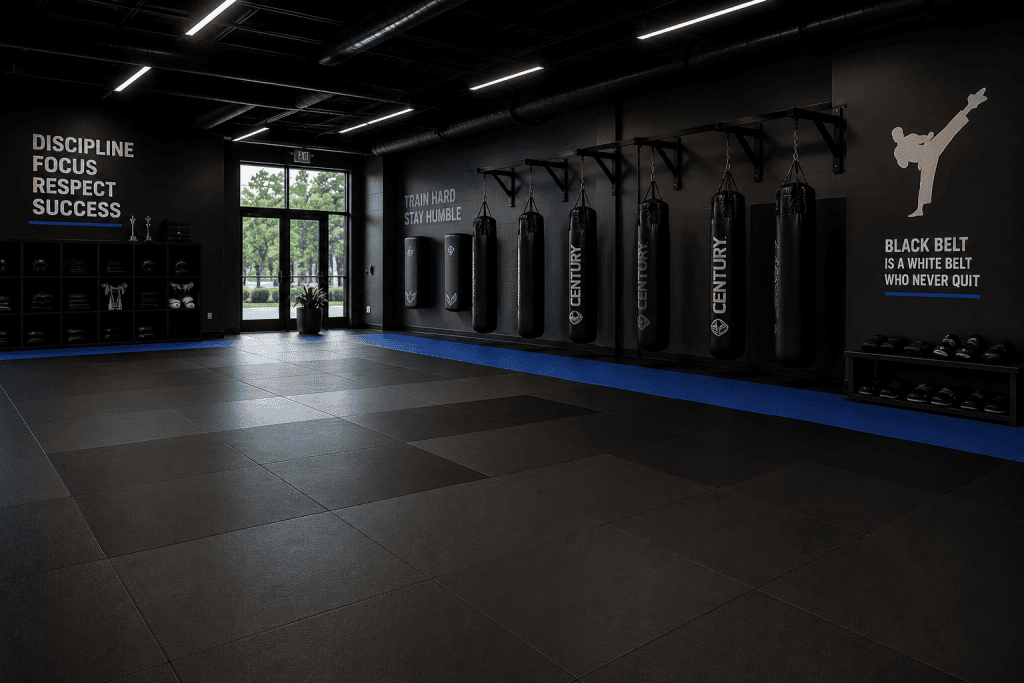
Financing Athletic Training Centers and Growing Fitness Businesses in 2026
Building or expanding a successful fitness business requires more than purchasing exercise equipment. Owners may need capital for commercial real estate, renovations, strength and cardio machines, athletic-performance equipment, technology, additional employees, marketing, and working capital. Understanding how each expense contributes to revenue can help owners make better financing decisions.
For entrepreneurs operating gyms, health clubs, sports-performance centers, and training facilities, financing should support a specific business objective. This guide for GymYield.com explains how athletic training center funding, fitness center growth loans, health club expansion funding, gym membership revenue financing, and gym capital solutions may fit into a broader growth strategy.
1. Financing an Athletic Training Center
Owners investigating athletic training center funding may be developing facilities that look considerably different from conventional gyms. A performance center might contain indoor turf, sprint lanes, power racks, free weights, sleds, plyometric equipment, recovery areas, testing technology, and specialized coaching spaces.
Existing businesses can consider fitness center growth loans when demand has exceeded the capacity of the original facility. Expansion could involve adding square footage, purchasing equipment, renovating training areas, increasing staff, or establishing another location.
For larger facilities, health club expansion funding may potentially address eligible investments such as new exercise areas, locker rooms, group-fitness studios, additional equipment, technology, or facility improvements, depending on the financing provider.
Businesses evaluating gym membership revenue financing should carefully understand how the particular product works, including how payments are determined and what happens if membership revenue decreases. Revenue-based structures can differ substantially from conventional installment loans.
The broader category of gym capital solutions can include term loans, equipment financing, commercial real-estate financing, lines of credit, SBA-backed programs, and other business financing. Not every structure is appropriate for every expense.
2. Calculating the Complete Project Cost
Before requesting athletic training center funding, create an itemized project budget. Construction, equipment, deposits, permits, flooring, technology, furniture, signage, insurance, professional fees, opening marketing, and operating reserves should all be considered.
Applicants researching fitness center growth loans should base expansion costs on actual quotes whenever possible. Contractor estimates and equipment proposals are more useful than assuming an arbitrary amount will be sufficient.
Businesses seeking health club expansion funding should also account for the operating consequences of becoming larger. More square footage can increase utilities, insurance, cleaning, maintenance, property costs, and staffing requirements.
When considering gym membership revenue financing, owners should analyze historical membership revenue and seasonal changes. January revenue, for example, may not accurately represent every month of the year. Financing decisions should reflect realistic cash-flow patterns.
Comparing several gym capital solutions can help an owner match different expenses with appropriate financing. Long-lived construction improvements may justify longer repayment periods than marketing campaigns or rapidly changing technology.
3. SBA Programs for Fitness Businesses
Applicants considering athletic training center funding can investigate SBA-backed programs alongside conventional financing. The SBA 7(a) program can support eligible uses including working capital, equipment, furniture, fixtures, real estate, and certain other qualifying business purposes.
SBA 7(a) Loan Program
Established operators evaluating fitness center growth loans may find SBA financing worth investigating when an expansion includes multiple eligible expenses rather than a single equipment purchase.
For projects involving owner-occupied real estate or qualifying major fixed assets, businesses seeking health club expansion funding can also research the SBA 504 program.
SBA 504 Loan Program
Businesses considering gym membership revenue financing should compare its structure with conventional loans and SBA-backed products rather than assuming one financing method is automatically preferable. Repayment terms, fees, eligibility, collateral, and cash-flow impact can differ.
Owners researching gym capital solutions can also review SBA Lender Match to learn about connecting with participating lenders.
4. Expanding an Existing Fitness Center
One of the strongest reasons to pursue athletic training center funding is demonstrated demand. If athletes are regularly being turned away because classes are full or specialized training areas have reached capacity, expansion may solve a measurable business problem.
Similarly, fitness center growth loans should ideally support growth that can be justified by operating data. Owners can review memberships, retention, personal-training utilization, class attendance, revenue per member, and peak-hour capacity before committing to a larger facility.
With health club expansion funding, businesses should determine whether expansion should occur at the existing location or through an additional facility. A second location introduces management, staffing, marketing, and technology challenges that do not exist when simply enlarging the original property.
Owners evaluating gym membership revenue financing should stress-test future payment obligations. A useful exercise is determining whether the business can continue meeting its obligations if membership revenue temporarily falls below projections.
Multiple gym capital solutions may also be combined when appropriate and permitted. For example, equipment might be financed separately while a different product supports real estate or working capital. Owners should carefully monitor total leverage when using multiple obligations.
5. Equipment, Technology, and Facility Improvements
Businesses obtaining athletic training center funding may devote a large percentage of their project budget to specialized equipment. Strength racks, platforms, turf, sleds, cardio machines, testing systems, and recovery equipment can represent a significant investment.
Owners using fitness center growth loans should distinguish essential purchases from equipment that can be added later. Opening an expanded location with sufficient working capital may be more important than immediately filling every available square foot with machines.
The same principle applies to health club expansion funding. Locker rooms, bathrooms, HVAC systems, electrical improvements, access control, flooring, and accessibility work can consume capital that owners initially expected to spend on exercise equipment.
With gym membership revenue financing, management should calculate how the financed investment is expected to affect membership revenue. Borrowing should be connected to a clear business purpose rather than simply justified by historical sales.
When comparing gym capital solutions, owners should consider the useful life of the financed asset. Commercial equipment, permanent building improvements, software, and advertising have dramatically different replacement cycles.
6. Example $1 Million Fitness Expansion
Consider a hypothetical business using athletic training center funding to develop a larger performance and fitness facility. Management estimates the complete project will require $1 million.
The company could evaluate fitness center growth loans for construction, equipment, or other qualifying expansion expenses while maintaining a portion of its existing cash as operating reserves.
A larger project supported through health club expansion funding might allocate money toward locker rooms, building systems, additional training space, and new member amenities.
If the owner considers gym membership revenue financing, its repayment characteristics should be modeled against conservative monthly revenue assumptions before accepting an agreement.
The business can then compare available gym capital solutions based on the project’s individual components rather than assuming the entire $1 million should be financed under a single product.
Illustrative $1 Million Project Budget
| Project Category | Example Amount |
|---|
| Construction and facility improvements | $300,000 |
| Fitness and performance equipment | $225,000 |
| Working capital reserve | $150,000 |
| Locker rooms/building systems | $100,000 |
| Technology and access systems | $70,000 |
| Marketing and membership growth | $55,000 |
| Professional fees | $35,000 |
| Contingency reserve | $65,000 |
| Total | $1,000,000 |
Example Capital Allocation Graph
This graph is illustrative only. Actual costs vary substantially according to facility size, location, construction requirements, equipment selection, and business model.
7. Using Membership Revenue to Evaluate Growth
Applicants seeking athletic training center funding should understand how different customer segments contribute to revenue. A sports-performance facility might earn money from individual memberships, personal coaching, team programs, camps, clinics, or facility rentals.
For owners considering fitness center growth loans, historical revenue can help establish whether the business has enough financial capacity to support expansion. Consistent revenue and positive operating cash flow can also provide a clearer picture of business performance.
Companies seeking health club expansion funding should examine membership retention alongside new-member acquisition. Rapidly acquiring customers while losing existing members at an equally rapid pace may indicate that expansion is premature.
With gym membership revenue financing, the relationship between revenue and repayment becomes especially important. Owners should understand the exact contractual payment calculation rather than relying on general assumptions about revenue-based financing.
When evaluating gym capital solutions, management can model several scenarios. A base case, conservative case, and stronger-growth case can show whether the business remains financially stable under different membership conditions.
8. Comparing Financing Offers
Owners researching athletic training center funding should compare the complete financing obligation rather than simply looking at the maximum approval. A larger approval is not automatically a better financing offer.
When evaluating fitness center growth loans, compare interest or financing costs, origination charges, repayment frequency, maturity, collateral requirements, guarantees where applicable, and prepayment provisions.
Applicants considering health club expansion funding should calculate the total amount expected to be repaid. A financing product with a smaller periodic payment can ultimately cost more if the repayment period is substantially longer.
Businesses researching gym membership revenue financing should pay particular attention to how payments respond to changing revenue, whether minimum payments apply, what fees are charged, and whether the agreement creates restrictions affecting future financing.
Owners comparing gym capital solutions should place competing offers side by side using the same requested amount whenever possible. Comparing financing on an equivalent basis makes it easier to identify differences in cost and structure.
The SBA Business Loans Overview provides additional information about government-backed small-business financing programs.
9. Building a Sustainable Growth Strategy
The objective of athletic training center funding should be creating productive capacity rather than simply building a larger facility. Owners should know approximately how many athletes, members, or training clients are required to cover operating expenses and financing payments.
Businesses considering fitness center growth loans should also preserve adequate liquidity. Expansion frequently produces unexpected expenses, and revenue may not increase immediately when additional space becomes available.
With health club expansion funding, management should prioritize investments according to measurable member demand. Additional training areas, locker-room improvements, new equipment, or technology should solve identifiable problems or create realistic revenue opportunities.
Owners evaluating gym membership revenue financing should examine how changes in membership pricing, cancellations, seasonal trends, and economic conditions could affect both revenue and repayment capacity.
Ultimately, the best gym capital solutions are those that fit the business’s actual needs, cash flow, assets, and growth strategy. Financing should complement a viable operation rather than substitute for profitability or sound management.
Internal Links for GymYield.com
You can link this article directly to your existing GymYield financing page:
Apply for Gym Financing — GymYield.com
That page already covers equipment financing, startup funding, expansion loans, working capital, facility build-outs, equipment purchases, renovations, and business expansion, making it a strong internal destination for readers of this article.
You can also connect this article to your existing pages covering equipment financing, commercial real estate, working capital, additional locations, gym renovations, startup financing, and fitness-business acquisitions. Descriptive anchor text is preferable to repeatedly using generic phrases such as “click here.”
Conclusion
Growing a gym, health club, or sports-performance business requires a balance between ambition and financial discipline. Construction, equipment, working capital, technology, locker rooms, marketing, and professional services can all contribute to the total project cost.
Before applying, owners should prepare current financial statements, realistic cash-flow projections, equipment quotes, contractor estimates, lease or property information, and a detailed explanation of how requested capital will be used. Expansion decisions should be supported by measurable demand rather than growth assumptions alone.
Financing offers should be evaluated according to their complete economics. Rates or financing costs, fees, payment frequency, maturity, collateral requirements, guarantees, prepayment conditions, eligible uses, and total repayment obligations can all influence whether an offer is appropriate.
For GymYield.com, content covering performance facilities, health-club expansion, membership-based financing, and broader capital strategies can also strengthen the site’s internal topic structure by connecting readers with relevant startup, equipment, expansion, real-estate, and working-capital resources.
Disclosure: GymYield.com is an affiliate marketing website and may receive compensation from lending partners. It is not a lender, does not make credit decisions, and does not guarantee financing approval. Rates, amounts, fees, and terms are determined by individual financing providers. This article is educational and is not financial, legal, tax, or accounting advice.