Financing a Training Complex, Athlete Development Center, and Fitness Technology Business in 2026
Building a modern fitness or athletic training business requires more than purchasing weights and signing a commercial lease. Today’s facilities can include indoor turf, strength-training areas, recovery spaces, performance-testing systems, membership software, wearable technology, digital marketing platforms, locker rooms, and specialized coaching areas. Owners researching Training complex funding, athlete development center financing, fitness tracking technology financing, fitness marketing funding, and ways to compare gym loans should start with a detailed financial plan.
The right financing structure depends on what the business is purchasing and how long the investment is expected to provide value. Real estate and major construction are long-term investments, while advertising campaigns and rapidly changing technology generally have much shorter economic lives. Matching financing terms to the purpose of the investment can help businesses avoid taking on inappropriate debt.
GymYield.com provides educational resources for fitness-business owners researching financing for facilities, equipment, technology, expansion, and other business needs.
1. Financing a Modern Training Complex
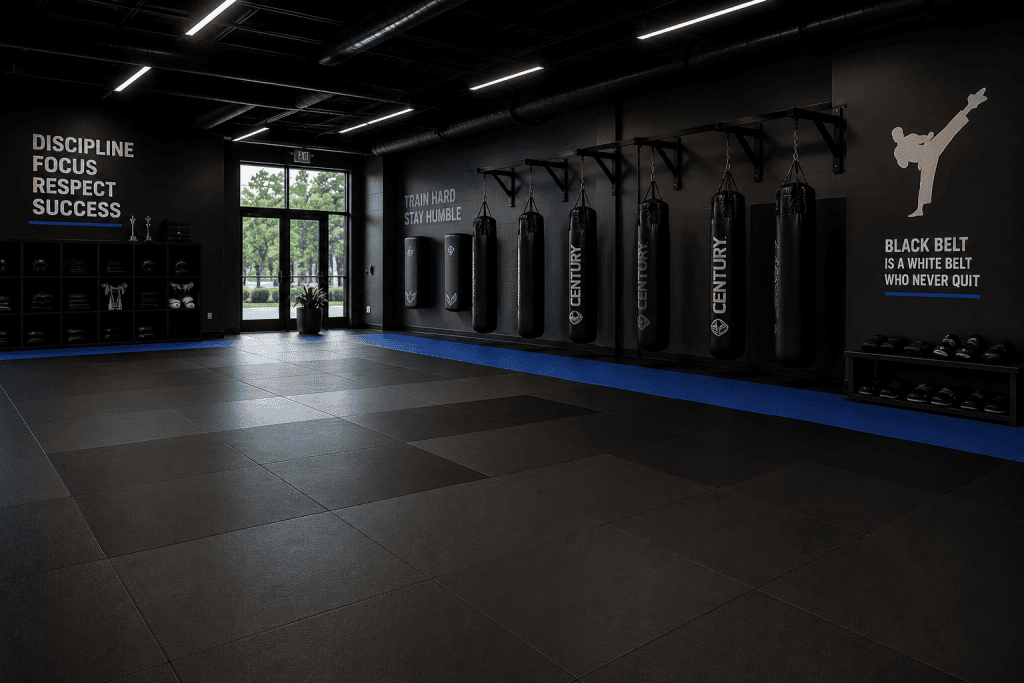
Entrepreneurs considering Training complex funding should begin by defining the facility’s purpose. A sports-performance center designed for competitive athletes may require very different equipment and construction from a traditional membership-based gym.
For businesses seeking athlete development center financing, expenses might include indoor turf, sprint lanes, strength equipment, testing areas, recovery rooms, coaching offices, locker rooms, and sport-specific equipment. Owners should obtain actual vendor and contractor quotes instead of relying solely on generalized estimates.
Technology is increasingly important as well. fitness tracking technology financing could potentially help qualified businesses finance eligible hardware or technology investments such as performance monitors, member-tracking systems, assessment equipment, or other fitness-related technology, depending on the provider.
Once the facility is ready, fitness marketing funding may be considered for eligible customer-acquisition and promotional expenses. A sophisticated training center still needs athletes, members, teams, coaches, and other customers to generate revenue.
Owners should also compare gym loans based on more than the maximum approved amount. Interest or financing costs, fees, repayment frequency, collateral requirements, guarantees, maturity, and total repayment obligations can all affect the real cost of financing.
2. Creating a Complete Project Budget
Applicants pursuing Training complex funding should develop a sources-and-uses statement showing exactly how every major portion of the requested capital will be spent. Construction, equipment, technology, marketing, deposits, professional fees, and working capital should be identified separately.
With athlete development center financing, the construction budget can be substantial. Large open spaces may require specialized flooring, high ceilings, HVAC improvements, electrical work, bathrooms, locker rooms, showers, accessibility modifications, and parking improvements.
Businesses considering fitness tracking technology financing should account for more than the purchase price. Installation, employee training, integration, software subscriptions, maintenance, replacement hardware, and technical support can increase the total investment.
Similarly, fitness marketing funding should be based on a defined campaign rather than an arbitrary number. Owners can estimate spending for search advertising, social media, local sponsorships, direct outreach, website development, content, signage, and opening promotions.
When owners compare gym loans, they should use the same project budget for each financing proposal. Comparing one lender’s $300,000 offer with another lender’s $500,000 offer provides limited insight unless the borrower knows exactly how much the project actually requires.
3. Exploring SBA Financing Programs
Entrepreneurs researching Training complex funding can investigate SBA-backed programs alongside conventional commercial financing. The SBA 7(a) program can support eligible uses including working capital, equipment, furniture, fixtures, real estate, and certain other business expenses.
SBA 7(a) Loan Program
Applicants considering athlete development center financing may also want to research the SBA 504 program when a project involves eligible owner-occupied commercial property, construction, improvements, or certain long-term equipment.
SBA 504 Loan Program
For fitness tracking technology financing, borrowers should confirm that the intended technology purchases are eligible under the specific program or commercial product they are considering. Technology expenses can differ considerably from real estate or conventional equipment.
The same verification is important with fitness marketing funding because lenders can impose restrictions on how loan proceeds are used.
Business owners who want to compare gym loans can also review SBA Lender Match to learn about connecting with participating SBA lenders.
4. Building an Athlete Development Business
A company seeking Training complex funding should develop its revenue model before deciding how large a facility to build. Bigger is not automatically better if additional square footage does not generate sufficient revenue to justify its cost.
With athlete development center financing, owners can model revenue from appropriate sources such as memberships, personal coaching, small-group training, team programs, camps, clinics, facility rentals, testing, or performance services.
Technology purchased with fitness tracking technology financing may enhance the athlete experience by providing measurable performance information. However, owners should determine whether customers actually value the technology enough to justify its cost.
Businesses using fitness marketing funding can develop separate campaigns for athletes, parents, coaches, schools, clubs, teams, and general fitness customers when those audiences fit the business model.
Before committing to debt, owners should compare gym loans using conservative revenue projections. A financing payment that works only when the facility reaches nearly 100% of projected capacity can expose the company to unnecessary financial pressure.
5. Using Technology to Improve the Fitness Experience
Applicants for Training complex funding should include technology in their initial project budget rather than treating it as an afterthought. Modern training facilities may depend on software and hardware for scheduling, billing, athlete assessment, facility access, communications, and performance analysis.
For businesses using athlete development center financing, technology can potentially differentiate the operation from a conventional gym. Performance testing and progress measurement can help coaches evaluate training programs when used appropriately.
Owners considering fitness tracking technology financing should compare competing systems carefully. Hardware compatibility, data security, subscriptions, warranties, integrations, maintenance, technical support, and replacement cycles should all be evaluated.
Technology can also support fitness marketing funding initiatives by helping operators understand which campaigns generate inquiries, trials, memberships, or training packages. Marketing attribution can help owners direct future advertising dollars toward channels that produce stronger results.
When businesses compare gym loans, technology should not automatically be financed over the same term as construction. A building improvement may provide value for decades, while a particular technology platform could become outdated considerably sooner.
6. Illustrative $1.25 Million Training Facility Budget
A business using Training complex funding might need to finance several categories simultaneously. Consider a hypothetical $1.25 million project combining construction, equipment, working capital, technology, and marketing.
For an operation pursuing athlete development center financing, construction and specialized training equipment could represent the largest portions of the investment.
A portion devoted to fitness tracking technology financing could cover eligible performance and operational technology, depending on the financing arrangement.
The project might also allocate money toward fitness marketing funding so that the business has resources to promote the facility before and after opening.
Owners should compare gym loans against this complete capital requirement rather than focusing on one expense category.
Illustrative $1.25 Million Project
| Project Category | Example Amount |
|---|
| Construction and buildout | $375,000 |
| Training and performance equipment | $275,000 |
| Working capital reserve | $200,000 |
| Technology and tracking systems | $100,000 |
| Locker rooms and building systems | $100,000 |
| Marketing and launch | $75,000 |
| Professional fees | $50,000 |
| Contingency reserve | $75,000 |
| Total | $1,250,000 |
Example Capital Allocation Graph
These figures are illustrative only. They are not industry averages, loan recommendations, or estimates for a specific business. Actual costs depend on location, square footage, equipment, contractors, technology, property condition, and the facility’s operating model.
7. Financing Marketing Without Losing Financial Discipline
Companies obtaining Training complex funding should reserve sufficient resources for the period between construction and stable operations. A completed building does not automatically generate enough customers to cover payroll, rent, utilities, insurance, and debt payments.
The same principle applies to athlete development center financing. An impressive training environment still requires a customer-acquisition strategy and strong coaching services.
With fitness tracking technology financing, operators should avoid purchasing expensive technology primarily because it looks impressive in advertising. Technology should solve a specific operational or customer problem and have a reasonable business purpose.
Owners using fitness marketing funding should establish measurable objectives. Useful metrics can include cost per lead, trial registrations, conversion rate, cost per acquired customer, recurring membership revenue, customer retention, and return on advertising expenditure.
When owners compare gym loans, they should also examine whether marketing expenditures are being financed over an appropriate period. Short-lived advertising should generally be evaluated differently from long-lived property improvements.
8. Comparing Financing Offers Correctly
Businesses considering Training complex funding should request enough information to understand the complete financing obligation. A quoted interest rate or payment does not necessarily tell the whole story.
Applicants evaluating athlete development center financing should examine origination charges, documentation fees, repayment frequency, loan maturity, collateral requirements, guarantees where applicable, prepayment terms, and the total amount expected to be repaid.
For fitness tracking technology financing, the financing term should be compared with the technology’s anticipated useful life. Repaying obsolete hardware long after replacement is needed can create an undesirable financial situation.
When evaluating fitness marketing funding, calculate the financing expense alongside the expected economic benefit of the campaign. Borrowing for advertising does not guarantee that the advertising will generate sufficient new business to repay the debt.
Most importantly, owners should compare gym loans on an apples-to-apples basis. Compare the same amount borrowed over similar periods and calculate the total financing cost whenever the information is available.
The SBA Business Loans Overview provides additional information for businesses researching government-backed financing programs.
9. Creating a Sustainable Growth Strategy
The purpose of Training complex funding should be to support a viable facility rather than simply build the largest possible project. Owners should understand their maximum customer capacity, expected utilization, staffing requirements, operating expenses, and break-even point.
Similarly, athlete development center financing should be based on realistic demand. Agreements with teams, strong community relationships, existing coaching clients, or demonstrated market demand can provide more useful planning information than optimistic assumptions alone.
Investments made through fitness tracking technology financing should be reviewed periodically. Owners can measure whether technology improves operational efficiency, coaching capabilities, customer experience, retention, or another defined business objective.
The same measurement discipline should apply to fitness marketing funding. Campaigns that consistently fail to generate qualified leads should be changed rather than continued simply because money was budgeted for advertising.
As businesses compare gym loans, they should stress-test projected payments. Calculate what happens if membership or training revenue reaches only 70%, 80%, or 90% of the original forecast while major expenses remain unchanged.
Internal Linking Strategy for GymYield.com
On GymYield.com, connect this article to your pages covering gym startup financing, fitness equipment loans, commercial property, construction funding, gym technology, working capital, sports-performance facilities, expansion financing, and business acquisitions.
Readers planning large facilities can move toward construction and commercial-property content. Owners interested primarily in performance equipment can move toward equipment-financing pages, while operators researching customer acquisition can be directed toward business-growth resources.
Using descriptive anchor text helps visitors and search engines understand the relationship between these pages. I have not invented specific internal URLs that I cannot verify, so you can insert the actual URLs for your existing GymYield.com pages.
Conclusion
Financing a modern athletic or fitness operation requires coordinating multiple investments rather than thinking about the project as a single purchase. Construction, equipment, working capital, technology, and customer acquisition have different costs and useful lives.
Owners should begin with actual contractor bids, vendor quotes, technology pricing, lease or property information, and conservative operating projections. Maintaining sufficient cash reserves after opening can be just as important as obtaining enough money to complete construction.
When reviewing financing, examine the rate or financing cost, fees, repayment frequency, maturity, collateral requirements, guarantees, prepayment provisions, eligible uses, and total repayment amount. For significant transactions, professional legal, accounting, or financial advice may also be appropriate.
GymYield.com can provide educational information and help fitness and athletic-business owners research potential financing providers for facilities, equipment, technology, construction, expansion, and operating needs.
Disclosure: GymYield.com is an affiliate/marketing website and is not a lender or credit decision-maker. Financing availability, approval, rates, fees, terms, and amounts depend on the individual provider and applicant qualifications. This article is informational and does not constitute financial, legal, accounting, or tax advice.